With the gold-silver ratio returning to around 66, which discount path is silver following?
2026-09-22 19:08:13
On Tuesday, September 22, spot silver was trading around $65.5 per ounce, a slight pullback from the previous trading day, but still within the consolidation range following the mid-September rebound. Spot gold traded between $4320 and $4350 per ounce on the same day, with a gold-silver ratio of approximately 66. The Federal Reserve raised the target range for the federal funds rate by 25 basis points to 3.75% to 4.00% on September 16. The median of the dot plot shows a policy rate of approximately 4.1% at the end of 2026, with 12 of the 18 officials favoring another increase this year. At the post-meeting press conference, Fed Chairman Warsh echoed the Jackson Hole rhetoric, stating that "this summer's inflation readings have not told me that the underlying trend has shown meaningful improvement." The market initially interpreted the rate hike as a hawkish repricing, but quickly reversed course: the dot plot path was not steeper than pre-meeting pricing, and Warsh refused to bind himself to the dot plot, thus precious metals did not decline according to the mechanical logic of "rate hikes equal downward pressure." Meanwhile, expectations of easing tensions in the Gulf region have lowered oil prices, and inflation premiums and the pace of subsequent interest rate hikes are being re-discussed. Reports indicate that Iran has proposed restoring navigation in the Strait of Hormuz within seven days if the US eases its port blockade. Related contacts are underway during the UN General Assembly cycle in New York. Silver possesses both monetary and industrial attributes, and its pricing is broken down into three components: policy path, energy inflation premium, and the marginal impact of positioning and data. 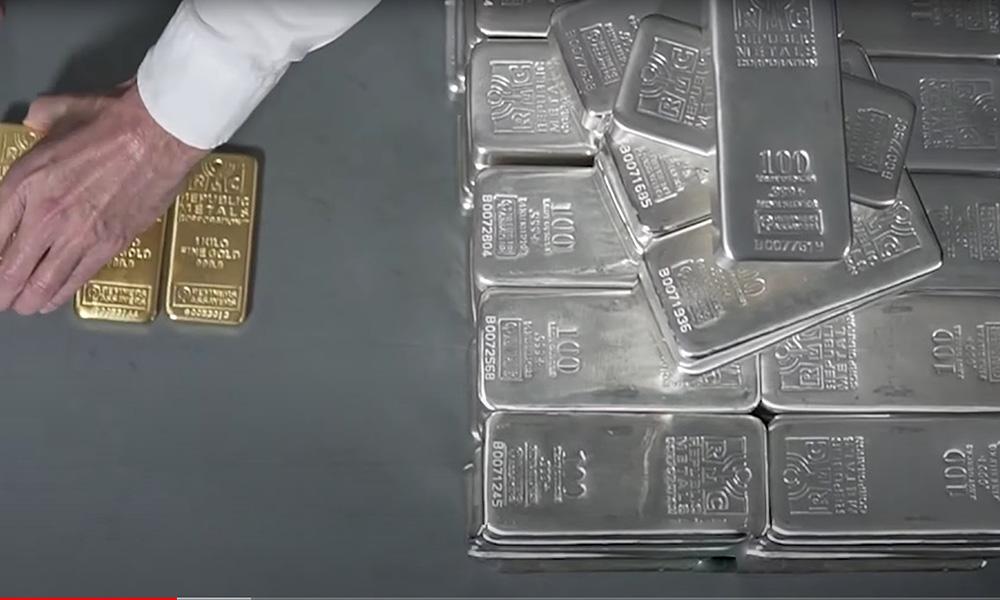
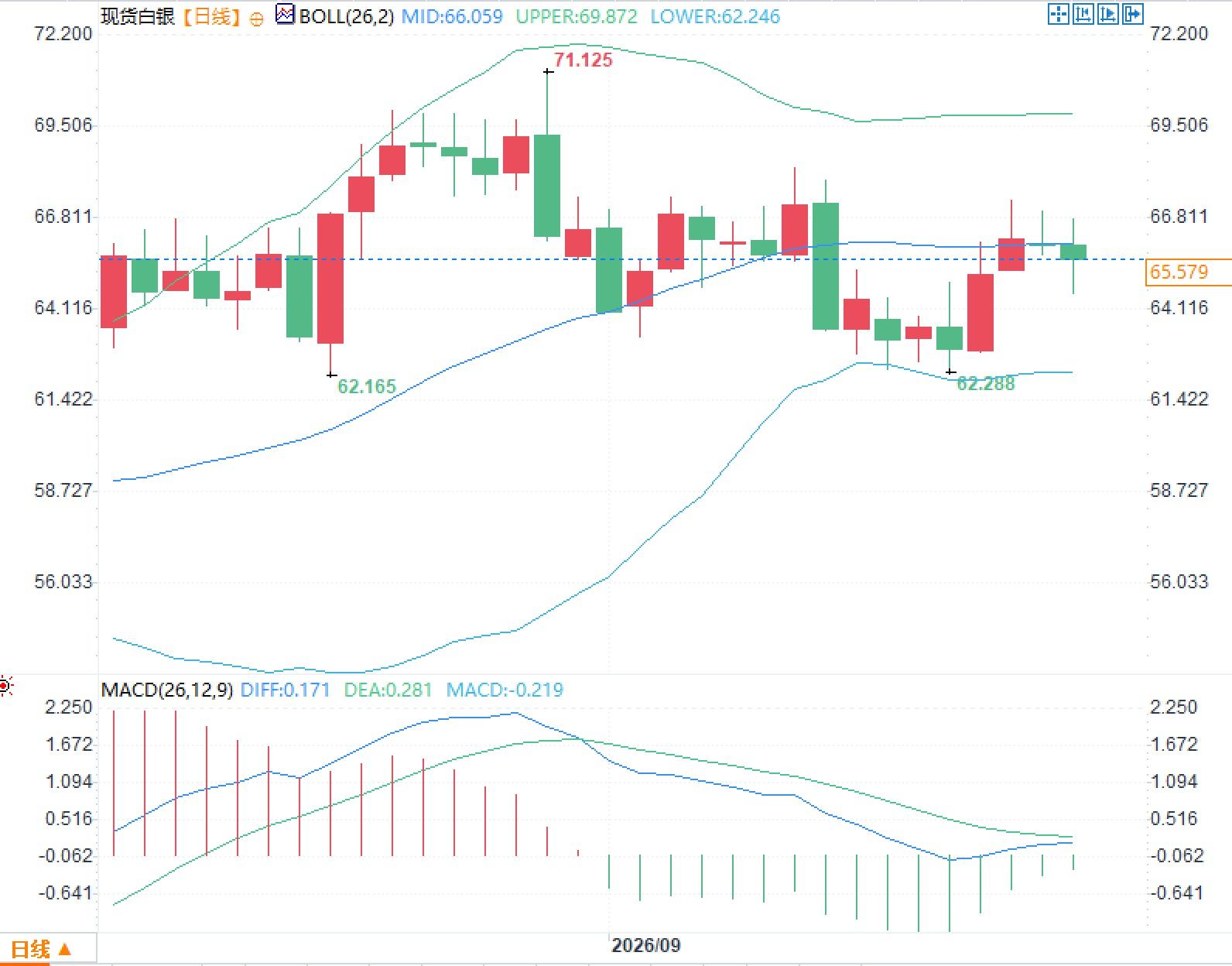
Policy pricing: The market is pricing in rate hikes, not a steepening of the trading path.
The key to this Fed meeting wasn't the 25 basis points themselves, but whether the dot plot, the statement, and the chairman's tone all raised the final rate in tandem. The effective federal funds rate has already risen to approximately 3.88%. The median of the dot plot sets the policy rate at 4.1% at the end of 2026, still at 4.1% in 2027, 3.9% in 2028, and 3.2% in the longer term. The median is only revised upward by about 30 basis points from June, which doesn't equate to raising the tightening slope to the most hawkish level in one go. Warsh himself did not submit the dot plot and publicly opposed forward guidance. Therefore, the market interpreted "most officials adding another point" as a probability distribution within the committee, rather than a path already locked in by the chairman. Warsh said at Jackson Hole on August 28th, "The standard is clear: you have to be sure that underlying inflation is moving toward the target at a sufficient pace and clearly, or there's still work to be done." He attributed the responsibility for 65 consecutive months of inflation above target to the central bank and called the 2% PCE target "definite and fixed." On September 16, he reiterated that this summer's readings do not prove that the underlying trend has improved, that the rate hike is a partial withdrawal of easing, and that "it is difficult to describe current financial conditions as restrictive." This statement is tight, but lacks a timetable. Precious metals trading is about real interest rate expectations and risk premiums, not the actions on the day of the rate meeting. When the path slope is lower than pre-meeting pricing, silver can remain relatively resilient after the rate hike; this is an expectation gap, not sentimental rhetoric. The data anchors are also specific. The US July PCE was 3.7% year-on-year, and core PCE was 3.4% year-on-year; the August CPI was 3.4% year-on-year, and core CPI was about 2.4% year-on-year, with a 0.3% month-on-month increase in core CPI, with the energy component contributing to the overall figure. The US added 162,000 non-farm payrolls in August, and the unemployment rate was 4.1%. Warsh also mentioned that a considerable proportion of the PCE sub-indices still have a year-on-year growth rate higher than 3%. For silver, the real sensitive issue is whether subsequent data will increase or decrease the probability of that particular rate hike in the dot plot. Once positions and expectations are stretched, even if the data is only slightly below expectations, it will rewrite the pricing of real interest rates, and the discount rate of precious metals will fluctuate accordingly.Energy Price Decline Rewrites Inflation Premium: The Transmission Chain of Hormuz's Easing Expectations
In this round of silver pricing, energy is a more solid variable than mere rhetoric. After the conflict pushed up oil prices, the US PCE year-on-year growth rate rose from about 2.5% a year ago to around 4% around mid-year. The Federal Reserve revised its September forecast upwards to 3.7% for the 2026 PCE year-on-year growth rate and 3.4% for the core PCE, indicating that it would not return to the median of the dot plot until around 2029. The fall in oil prices below $100/barrel directly weakened the linear extrapolation that "energy inflation will force continuous upward revisions of policy." The Strait of Hormuz carries a significant share of global crude oil and refined oil transshipment. When navigation is disrupted, oil prices incorporate the conflict premium into inflation expectations; when navigation expectations recover, the premium is given back. Reports indicate that Iran has proposed resuming navigation within seven days if the other side eases the port blockade and adjusts its military operations around the strait. Qatar hopes that even a temporary arrangement can restore navigation and create space for negotiations. The decline in oil prices first alters near-month inflation expectations, then changes the pricing of the Fed's response function, and finally affects the real interest rate discounting of precious metals. Silver's industrial demand is sensitive to the economic cycle, while its monetary attributes are sensitive to real interest rates and safe-haven premiums; these two lines may temporarily move in the same direction during an energy shock. If easing expectations persist, the inflation premium will decline, the final rate hike will be re-discussed, and the cost pressure of holding silver will ease. If negotiations are protracted and shipping risks resurface, a pullback in oil prices will again increase the probability of a rate hike. Current oil prices are still significantly higher than the level of around $60/barrel a year ago; the decline is merely a pullback from the extreme premium after a surge and cannot be interpreted as the disappearance of the inflation problem.Data Window: After position and expectation stretch, the weight of marginal information increases.
Current market pricing has already factored in the Fed's "one more rate hike" into the dot plot midpoint, and also included the Holmuz easing as part of the oil price decline. There's crowding on both sides. On the policy side, the market initially traded on a steeper rate hike path, but then realized that Warsh both raised rates and refused to accept the dot plot as a commitment, thus removing the overheated hawkish premium. On the energy side, the trading in easing geopolitical news was conditional: the resumption of flights within 7 days depends on whether the blockade is eased, not on whether the routes have returned to normal. After the crowding, the weight of the next data release will be higher than usual. Next, on September 30th, the third estimate of US Q2 GDP and August personal income and spending (including PCE) will be released; on October 2nd, the US September jobs report will be released; and on October 14th, the September CPI will be released. Warsh's reaction function emphasizes trends rather than single months, but market pricing often reacts to single-month errors first, and then corrects for them in subsequent meetings. If the data remains consistently below the already inflated pricing of interest rate hikes, real interest rate expectations will decline, easing the discounting pressure on precious metals. If the core components accelerate again, the probability of that particular rate hike in the dot plot will be fully re-increased. Silver also needs to be considered separately in terms of supply and demand elasticity. It is both a precious metal and a raw material for photovoltaics, electronics, and industrial catalysts. Policy interest rates and oil prices determine holding costs and inflation premiums, while industrial orders determine the slope of physical demand. When the macroeconomic narrative shifts from "conflict premiums driving up energy inflation" to "easing expectations lowering the final value of interest rate hikes," the weight of financial attributes will temporarily outweigh that of industrial attributes; once channel risk is repriced, the two lines may intertwine again.- Risk Warning and Disclaimer
- The market involves risk, and trading may not be suitable for all investors. This article is for reference only and does not constitute personal investment advice, nor does it take into account certain users’ specific investment objectives, financial situation, or other needs. Any investment decisions made based on this information are at your own risk.