Federal Reserve officials signaled two things: inflation may fall rapidly, but multiple risks could keep prices stuck at high levels.
2026-09-23 09:52:11
On Tuesday (September 22), Richmond Federal Reserve President Thomas Barkin spoke at a CFA Institute (Chartered Financial Analysts) forum in Baltimore, offering a relatively dialectical assessment of the current U.S. inflation trend and the path of monetary policy. While not ruling out the possibility of a rapid decline in inflation, he also warned that, due to a combination of factors including geopolitical conflicts, tariffs, and the expansion of AI infrastructure, prices could exhibit stronger stickiness. This statement, following the Fed's resumption of interest rate hikes after several years, adds a new dimension of reference for the market to judge the future direction of interest rates.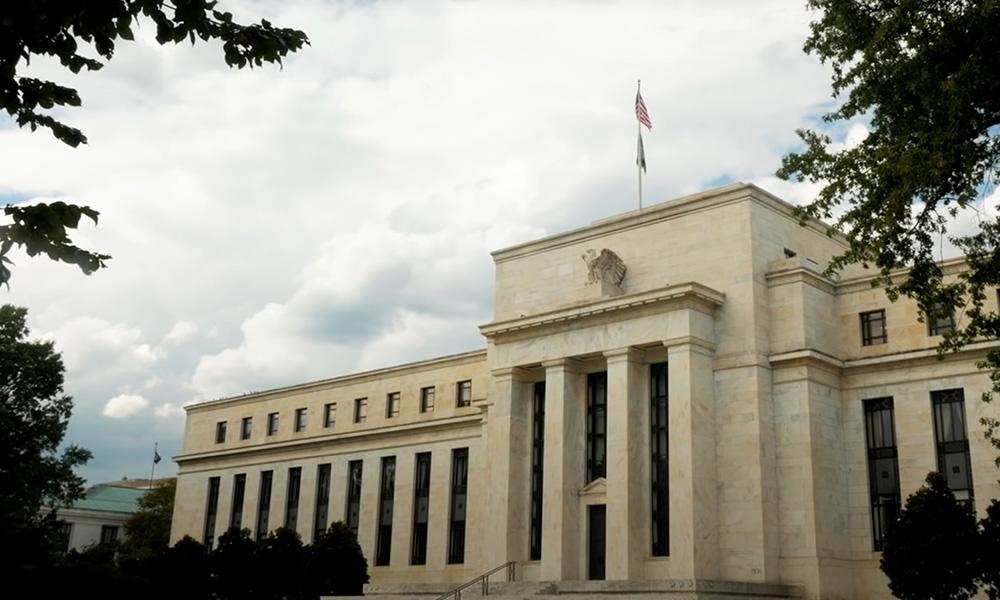
There is a potential path for a rapid decline in inflation, driven by multiple variables.
Thomas Barkin stated that he is open to the possibility of a rapid decline in inflation in the short term. He explained that the various disruptive factors that previously impacted the US economy may subside or reverse. The resilience of household consumption will not last forever. As households gradually reach the upper limit of their consumption budgets, coupled with a slowdown in business investment and a moderate rise in the unemployment rate, if these conditions are met simultaneously, inflation has a chance to fall towards the Federal Reserve's long-term target level of 2%. Looking back at inflation trends, the US annual inflation rate, measured by the Consumer Price Index (CPI), has risen from 2.4% in February to 3.4% last month. Affected by the energy shock caused by geopolitical conflicts in the Middle East, inflation briefly touched 4.2% in May, a three-year high. Faced with persistently rebounding price pressures, the Federal Reserve raised interest rates last week, increasing the benchmark rate by 25 basis points to a range of 3.75% to 4%. This is the first interest rate hike by the Federal Open Market Committee (FOMC) since July 2023.While acknowledging the necessity of this interest rate hike, the pace of future rate increases remains uncertain.
Barkin, who currently does not have a vote on the FOMC, stated that the committee responsible for interest rate decisions must take action to curb inflation, a view echoing that of Federal Reserve Chairman Kevin Warsh last week. He said, "We are committed to bringing inflation back to our 2% target level, and last week's rate hike will help. Whether further rate hikes are needed, and how many more, remains to be seen." At this FOMC meeting, all members unanimously voted to raise rates. Chairman Warsh stated that this rate hike would help push inflation back to the 2% target range more quickly, but he also admitted that he could not predict the committee's future policy decisions. According to the quarterly summary of economic projections, 16 of the 18 FOMC officials expect at least one more rate hike this year. According to the meeting schedule, this 12-member policymaking committee will hold two more policy meetings before entering 2027, at the end of October and the beginning of December, where subsequent policy directions will be gradually implemented.The risk of sticky inflation cannot be ignored; the sources of inflation are no longer limited to geopolitics and tariffs.
While discussing an optimistic scenario, Barkin also raised another scenario beyond the benchmark that warrants attention: inflation may be more stubborn than the market anticipates. He said, "Short-term shocks could continue to escalate, and new cost pressures will continue to emerge. Strong demand will be transmitted to end prices, and the lagged effects of this round of inflation itself will also push up prices." He also cautioned that the sources of inflationary pressures are not solely from geopolitical conflicts in the Middle East, nor are they limited to import tariffs imposed by the Trump administration. He cited data showing that the Personal Consumption Expenditures Price Index (PCE), the inflation indicator preferred by the Federal Reserve, saw more than 60% of its components rise above 3% year-on-year in July. Barkin said, "Current cost pressures are occurring more frequently and with increasing impact. Tariffs and oil prices are certainly contributing factors, but in addition, the spillover effects of large-scale AI infrastructure expansion, healthcare services, transportation, and various commodity prices are all continuously fueling inflation." It is worth noting that he will gain a voting right on the FOMC next year, at which point his views will directly influence interest rate decisions.Conclusion
Overall, Thomas Barkin's speech did not provide unilateral policy guidance, but rather outlined two possible paths for inflation. On the one hand, peaking consumption, weakening investment, and a cooling labor market could collectively suppress prices. On the other hand, the continuation of the energy shock, tariff costs, and new structural factors such as AI development are all prolonging the duration of inflation. The Federal Reserve has already taken the first step towards restarting interest rate hikes, with most officials favoring one more rate hike this year. However, whether this will ultimately materialize depends heavily on subsequent inflation and employment data. For financial markets, it is unwise to simply bet on a rapid decline in inflation and prematurely anticipate rate cuts. Given the multiple structural cost disturbances, the tug-of-war over high inflation may last longer than expected. Continued monitoring of CPI, PCE, and employment data is necessary to await further clarification of the policy path.- Risk Warning and Disclaimer
- The market involves risk, and trading may not be suitable for all investors. This article is for reference only and does not constitute personal investment advice, nor does it take into account certain users’ specific investment objectives, financial situation, or other needs. Any investment decisions made based on this information are at your own risk.