Falling oil prices coupled with hawkish signals from the Federal Reserve have led to a continued strengthening of the US dollar against the Canadian dollar.
2026-09-23 13:50:13
The US dollar continued to rise against the Canadian dollar in Asian trading on Wednesday, trading around 1.4080 and approaching the highest level since July 29 reached in the previous session. Over the past two weeks, USD/CAD has formed a relatively clear upward structure, driven by both a stronger US dollar and falling oil prices, putting continued pressure on the Canadian dollar.  The recent rapid correction in the crude oil market is one of the key factors contributing to the strengthening of the US dollar against the Canadian dollar. WTI crude oil fell to its lowest level in over two weeks on Tuesday, fueled by rising market expectations of a diplomatic easing of regional conflict between the US and Iran. Iran also signaled a possible reopening of the Strait of Hormuz, and Saudi Arabia's gradual restoration of key export routes significantly reduced the previously accumulated premium for oil supply risks. For Canada, which is highly dependent on energy exports, weaker oil prices typically diminish the commodity attributes of the Canadian dollar, thus providing upward momentum for USD/CAD. The drop in oil prices also altered market expectations for short-term global inflation. Lower energy prices mean that inflationary pressures previously driven by oil supply risks have eased, preventing US Treasury yields from continuing their rapid climb to higher levels. Theoretically, this change could limit further upside for the US dollar, as its interest rate advantage depends in part on US Treasury yields and market expectations for future monetary policy. However, this impact is currently insufficient to reverse the overall strength of the US dollar. The dollar itself remains supported by expectations of Federal Reserve policy. The US central bank recently raised its policy rate by 25 basis points and signaled the possibility of further rate hikes this year. As the market reassesses the path of US interest rates, the US dollar index remains near its highest level since July 30. The dollar's interest rate advantage and the decline in oil prices are driving the USD/CAD pair with strong upward momentum in the short term. Meanwhile, the market is also watching whether further declines in oil prices will create new macroeconomic transmission. If energy prices continue to weaken, US inflationary pressures may be somewhat alleviated, reducing the urgency for the Federal Reserve to continue tightening policy and potentially limiting further dollar expansion. However, if US economic data continues to show resilience and the Fed maintains higher interest rates for an extended period, the dollar may still find support. For USD/CAD, oil prices and Fed policy expectations thus constitute two interacting core variables. As for the Canadian dollar, recent movements have been significantly influenced by changes in the energy market. If Middle East supply risks further decrease and global oil supply gradually recovers, continued declines in WTI crude could put additional pressure on the Canadian dollar. Conversely, if regional tensions re-emerge and supply disruptions become a risk, a rapid rebound in oil prices could improve Canada's terms of trade and weaken the current upward trend of USD/CAD. Therefore, whether oil prices can stabilize at low levels is a crucial window for judging the short-term performance of the Canadian dollar. Market sentiment is currently biased towards the US dollar, but after a rapid rise, USD/CAD is approaching a key technical resistance level. If US economic data falls short of expectations, or US Treasury yields continue to decline, dollar bulls may take profits. If crude oil prices fall further while the US dollar index remains strong, USD/CAD may continue to test previous highs. Investors should pay close attention to US economic data, the US dollar index, US Treasury yields, WTI futures, and Canadian economic data and central bank policy expectations. From a daily chart perspective, USD/CAD has regained several Fibonacci retracement levels and continued its upward trend after breaking through the 61.8% retracement level at 1.4051, maintaining an overall bullish short-term structure. Currently, the price is around 1.4070, with the first resistance level to watch being the 78.6% retracement level at 1.4137. A decisive break above this level would target the previous cycle high of 1.4246. While the current uptrend remains intact, after consecutive gains, short-term caution is warranted regarding potential high-level consolidation and profit-taking. Looking at the downside, 1.4051 is the first support level and a crucial point for determining the validity of a breakout. If the price falls back below this level, the short-term upward momentum may slow, with the next support level to watch at 1.3991, the 50% Fibonacci retracement level; further down, watch the 38.2% retracement level near 1.3931. If the price can hold above 1.4051, the upward structure remains relatively intact. On the 4-hour chart, USD/CAD has entered a previous area of dense trading after its continuous rise, and short-term momentum remains strong. However, as the price approaches the 1.4137 resistance level, the risk of chasing the price higher is increasing. If the price breaks through 1.4137 and holds effectively, it may test the 1.4246 high; if it encounters resistance and falls below 1.4051, a technical pullback should be anticipated, with 1.3991 becoming the next level to watch. Overall, the short-term structure remains upward, but changes in oil prices and the dollar's performance could cause significant intraday volatility.
 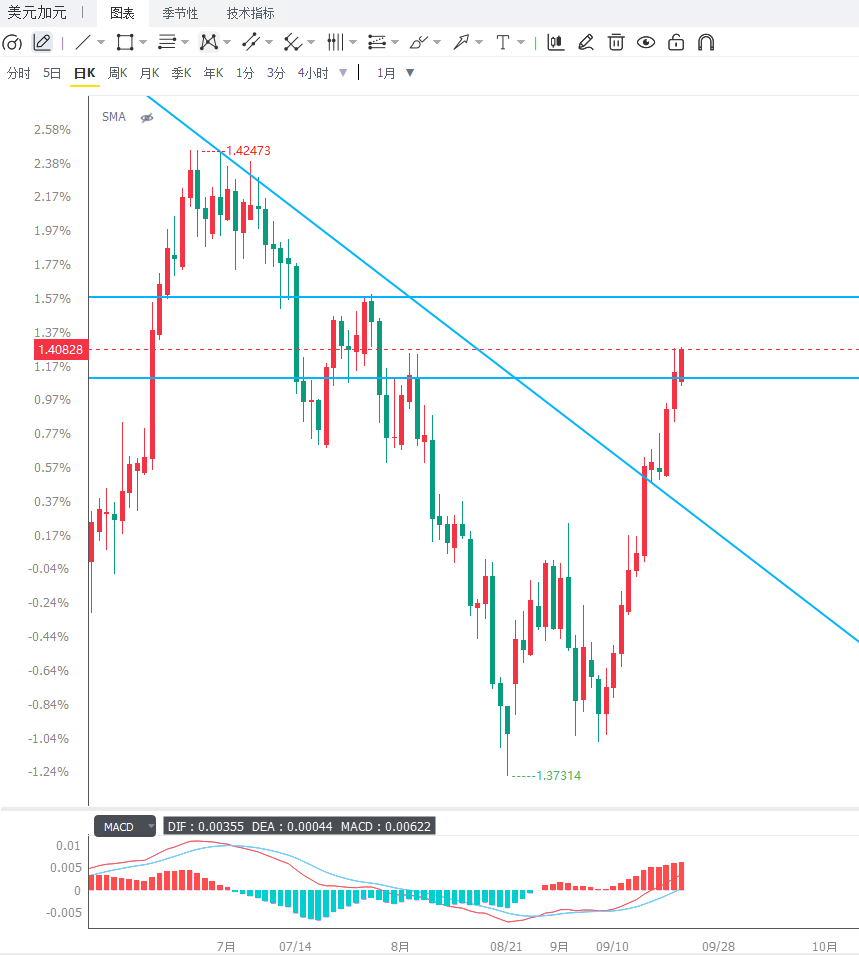 The recent rise in USD/CAD has been driven primarily by two factors: firstly, the decline in international oil prices has weakened the Canadian dollar's commodity currency support; and secondly, the Federal Reserve's hawkish stance has maintained the US dollar's interest rate advantage. As expectations of easing supply risks in the Middle East intensify, the decline in the oil risk premium may continue to impact the Canadian dollar's performance. In the short term, 1.4137 is a significant resistance level for further upward movement in USD/CAD, while 1.4051 is a key support level for maintaining the current upward structure . If oil prices continue to weaken and the US dollar remains strong, the exchange rate may further test 1.4246; if oil prices stabilize and rebound or the US dollar's interest rate advantage weakens, USD/CAD may experience a technical pullback. The market will need to dynamically assess the situation based on changes in oil prices, US dollar interest rate expectations, and the Canadian dollar's own fundamentals.
The recent rapid correction in the crude oil market is one of the key factors contributing to the strengthening of the US dollar against the Canadian dollar. WTI crude oil fell to its lowest level in over two weeks on Tuesday, fueled by rising market expectations of a diplomatic easing of regional conflict between the US and Iran. Iran also signaled a possible reopening of the Strait of Hormuz, and Saudi Arabia's gradual restoration of key export routes significantly reduced the previously accumulated premium for oil supply risks. For Canada, which is highly dependent on energy exports, weaker oil prices typically diminish the commodity attributes of the Canadian dollar, thus providing upward momentum for USD/CAD. The drop in oil prices also altered market expectations for short-term global inflation. Lower energy prices mean that inflationary pressures previously driven by oil supply risks have eased, preventing US Treasury yields from continuing their rapid climb to higher levels. Theoretically, this change could limit further upside for the US dollar, as its interest rate advantage depends in part on US Treasury yields and market expectations for future monetary policy. However, this impact is currently insufficient to reverse the overall strength of the US dollar. The dollar itself remains supported by expectations of Federal Reserve policy. The US central bank recently raised its policy rate by 25 basis points and signaled the possibility of further rate hikes this year. As the market reassesses the path of US interest rates, the US dollar index remains near its highest level since July 30. The dollar's interest rate advantage and the decline in oil prices are driving the USD/CAD pair with strong upward momentum in the short term. Meanwhile, the market is also watching whether further declines in oil prices will create new macroeconomic transmission. If energy prices continue to weaken, US inflationary pressures may be somewhat alleviated, reducing the urgency for the Federal Reserve to continue tightening policy and potentially limiting further dollar expansion. However, if US economic data continues to show resilience and the Fed maintains higher interest rates for an extended period, the dollar may still find support. For USD/CAD, oil prices and Fed policy expectations thus constitute two interacting core variables. As for the Canadian dollar, recent movements have been significantly influenced by changes in the energy market. If Middle East supply risks further decrease and global oil supply gradually recovers, continued declines in WTI crude could put additional pressure on the Canadian dollar. Conversely, if regional tensions re-emerge and supply disruptions become a risk, a rapid rebound in oil prices could improve Canada's terms of trade and weaken the current upward trend of USD/CAD. Therefore, whether oil prices can stabilize at low levels is a crucial window for judging the short-term performance of the Canadian dollar. Market sentiment is currently biased towards the US dollar, but after a rapid rise, USD/CAD is approaching a key technical resistance level. If US economic data falls short of expectations, or US Treasury yields continue to decline, dollar bulls may take profits. If crude oil prices fall further while the US dollar index remains strong, USD/CAD may continue to test previous highs. Investors should pay close attention to US economic data, the US dollar index, US Treasury yields, WTI futures, and Canadian economic data and central bank policy expectations. From a daily chart perspective, USD/CAD has regained several Fibonacci retracement levels and continued its upward trend after breaking through the 61.8% retracement level at 1.4051, maintaining an overall bullish short-term structure. Currently, the price is around 1.4070, with the first resistance level to watch being the 78.6% retracement level at 1.4137. A decisive break above this level would target the previous cycle high of 1.4246. While the current uptrend remains intact, after consecutive gains, short-term caution is warranted regarding potential high-level consolidation and profit-taking. Looking at the downside, 1.4051 is the first support level and a crucial point for determining the validity of a breakout. If the price falls back below this level, the short-term upward momentum may slow, with the next support level to watch at 1.3991, the 50% Fibonacci retracement level; further down, watch the 38.2% retracement level near 1.3931. If the price can hold above 1.4051, the upward structure remains relatively intact. On the 4-hour chart, USD/CAD has entered a previous area of dense trading after its continuous rise, and short-term momentum remains strong. However, as the price approaches the 1.4137 resistance level, the risk of chasing the price higher is increasing. If the price breaks through 1.4137 and holds effectively, it may test the 1.4246 high; if it encounters resistance and falls below 1.4051, a technical pullback should be anticipated, with 1.3991 becoming the next level to watch. Overall, the short-term structure remains upward, but changes in oil prices and the dollar's performance could cause significant intraday volatility. The recent rise in USD/CAD has been driven primarily by two factors: firstly, the decline in international oil prices has weakened the Canadian dollar's commodity currency support; and secondly, the Federal Reserve's hawkish stance has maintained the US dollar's interest rate advantage. As expectations of easing supply risks in the Middle East intensify, the decline in the oil risk premium may continue to impact the Canadian dollar's performance. In the short term, 1.4137 is a significant resistance level for further upward movement in USD/CAD, while 1.4051 is a key support level for maintaining the current upward structure . If oil prices continue to weaken and the US dollar remains strong, the exchange rate may further test 1.4246; if oil prices stabilize and rebound or the US dollar's interest rate advantage weakens, USD/CAD may experience a technical pullback. The market will need to dynamically assess the situation based on changes in oil prices, US dollar interest rate expectations, and the Canadian dollar's own fundamentals.
- Risk Warning and Disclaimer
- The market involves risk, and trading may not be suitable for all investors. This article is for reference only and does not constitute personal investment advice, nor does it take into account certain users’ specific investment objectives, financial situation, or other needs. Any investment decisions made based on this information are at your own risk.