The right of way in the Hormuz is directly linked to sanctions! Iran draws a red line, further solidifying the bottom support for oil prices.
2026-09-24 08:14:11
Brent crude futures opened slightly lower in Asian trading on Thursday (September 24), currently trading around $102.80 per barrel. Overnight, Brent crude futures surged nearly 5%, reaching a high of $103.81 per barrel. Amid the overnight price spike, the latest remarks by the Iranian president at the UN General Assembly became a key variable in the market's reassessment of supply risks in the Strait of Hormuz. Iranian President Masoud Pezehizian stated on Wednesday (September 23) that Iran would not allow freedom of navigation in the Strait of Hormuz while sanctions and the US blockade remain in place. This statement highlights the significant difficulty in reaching a peace agreement with Washington despite efforts to restart negotiations this week. Pezehizian made these remarks while addressing the UN General Assembly in New York. 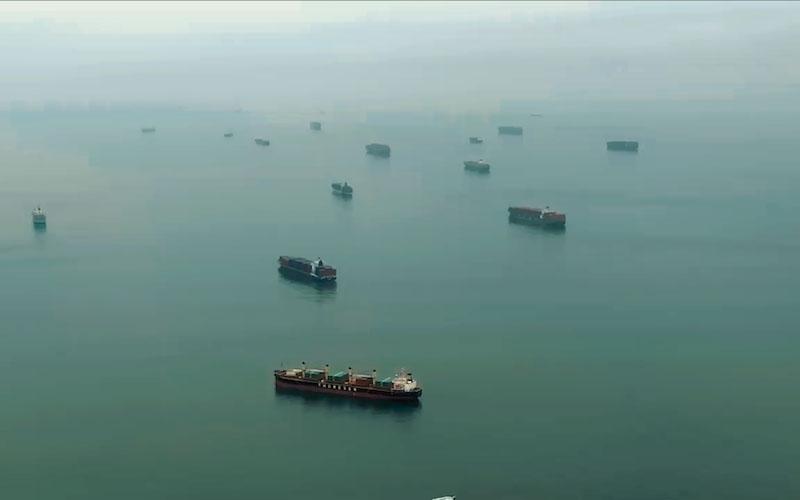
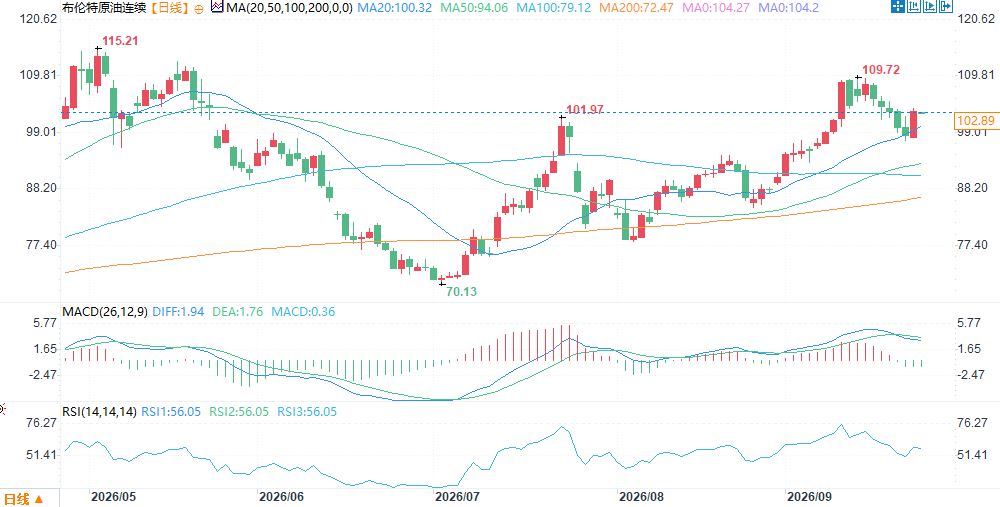 (Brent crude oil futures daily chart, source: EasyTrade) At 8:09 Beijing time, Brent crude oil futures were trading at $102.85 per barrel.
Passage through the Strait of Hormuz is linked to sanctions.
In his public address to the UN General Assembly, Iranian President Peskov explicitly linked the right to navigation in the Strait of Hormuz to US sanctions against Iran, presenting a highly targeted diplomatic stance. He stated bluntly that the Strait of Hormuz, as a crucial global energy shipping route, has historically been a core waterway protected by Iran, and Iran is the historical guardian of this vital waterway. While most countries in the international community can now utilize this waterway for trade and enjoy shipping benefits, Iran, the sole guardian of the route, has long suffered from unilateral oppressive sanctions and blockades by the United States, severely hindering its economic development and foreign trade. Iran will never accept this extremely unfair situation. This statement completely shattered the US-advocated "unconditional freedom of navigation" rhetoric, clearly defining Iran's core bargaining condition: as long as the US does not lift all sanctions and the comprehensive blockade, Iran will not allow the Strait of Hormuz to return to its pre-war normal state of normalcy. The United States has consistently prioritized unrestricted navigation through the Strait of Hormuz and the restoration of pre-war stability as its core demands, attempting to constrain Iran with so-called international navigation rules. Iran's recent strong stance directly clashes with these core demands, bringing the conflict between the US and Iran over control of the strait and sanctions into the open and further complicating the geopolitical situation along the Middle East's energy shipping routes.Willing to negotiate but rejecting threats; no concessions on nuclear rights.
On the issue of negotiations regarding the US-Iran conflict, Pezechzian released a diplomatic signal that combined both soft and hard approaches, demonstrating a willingness to engage in dialogue while clearly upholding Iran's core interests. He publicly stated that Iran is willing to take the initiative to ease tensions and restart diplomatic negotiations on the nearly seven-month-long US-Iran conflict, resolving differences and ending confrontation through equal dialogue, fully demonstrating Iran's positive attitude towards seeking regional peace and resolving disputes. However, at the same time, Iran firmly refuses to conduct negotiations under the passive situation of external military threats and high-pressure tactics, and will not accept any diplomatic games with a coercive nature. Regarding the highly concerned Iranian nuclear issue, Pezechzian reiterated Iran's nuclear position, emphasizing that Iran has never intended to develop or manufacture nuclear weapons, has always adhered to the international norms of peaceful use of nuclear energy, and has no intention of seeking nuclear armament. However, Iran will resolutely not give up its legitimate right to independently develop civilian nuclear technology. Nuclear technology research and application are important supports for the country's economic development and people's livelihood, falling within the scope of national sovereignty, and Iran will not compromise or concede in negotiations. This statement clarified Iran's red lines for negotiations, significantly raising the threshold for the US and Iran to restart talks. It means that while a ceasefire can be negotiated, there is absolutely no room for negotiation on core sovereign interests.Accusing the US and Israel of exacerbating global instability
In his speech at the UN General Assembly, Peskov directly criticized the Middle East strategies of the United States and Israel, accusing the two countries of being the main instigators of regional and global instability. He publicly accused the US and Israel of long-term instigation of confrontation and conflict in the Middle East, continuously undermining regional peace and stability and exacerbating global geopolitical uncertainty through various means such as interfering in regional affairs, supporting powerful forces, and launching military provocations. He also strongly condemned the various illegal military strikes launched by the US and Israel against Iran, stating that these attacks not only damaged Iranian infrastructure and disrupted normal social operations but also caused numerous civilian casualties, seriously violating international humanitarian norms and constituting blatant acts of hegemony. During the current UN General Assembly, diplomatic channels are fully open, and the US and Iran have an indirect diplomatic window for communication, leading to a slight warming of the diplomatic atmosphere. However, judging from their public statements and hardline stances, the differences in interests and strategic antagonism between the US and Iran, and between Iran and Israel, are deeply rooted. The open power struggle has not eased, and their positions remain sharply opposed. This also means that the current round of diplomatic interactions at the UN General Assembly is unlikely to promote substantive reconciliation, and the overall atmosphere for the US and Iran to restart effective negotiations and achieve easing of tensions remains far from optimistic.Pezzich's tough stance provides bottom support for Brent crude oil.
Pezechian's speech at the UN General Assembly was bullish for Brent crude futures, primarily because he directly linked freedom of navigation in the Strait of Hormuz to the lifting of sanctions. This effectively closed the possibility of the strait returning to normal navigation in the short term. Previously, the market had squeezed out some geopolitical risk premiums due to the completion of a round of indirect negotiations between the US and Iran and the restart of Saudi Arabia's east-west pipeline, causing Brent crude futures to fall to a low of around $97.37 per barrel, the lowest level since September 9th. However, Pezechian clearly stated that as long as sanctions and US blockades remain in place, Iran will not allow freedom of navigation in the strait. This means that the supply-side risk premium is unlikely to be significantly squeezed out further, limiting the downside potential for oil prices. More importantly, while Pezechian expressed willingness to resume negotiations, he refused to negotiate under threats, refused to relinquish nuclear technology rights, and accused the US and Israel of inciting global instability. This "willing to talk but not to compromise" stance creates a structural conflict with the US demand to restore the pre-war status quo in the strait, determining that even if negotiations continue, the path to a substantive agreement remains long. For Brent crude, this means that the risk of supply disruptions will remain a persistent factor in pricing, rather than a short-term disturbance that dissipates quickly. If further negotiations stall or traffic through the Strait of Hormuz declines again, the risk premium could re-accumulate; even if negotiations progress, Iran's high-threshold conditions mean that the decline in oil prices can only be gradual. Until traffic through the Strait of Hormuz substantially recovers, the floor support for Brent crude remains solid.Summarize
Pezzichian's speech at the UN General Assembly sent a strong signal to the United States: freedom of navigation in the Strait of Hormuz will not be restored until sanctions and blockades are lifted; Iran is willing to negotiate but rejects threats and will not relinquish its nuclear technology rights. This stance directly conflicts with the US's core demand to restore the pre-war status quo in the Strait, highlighting the difficulty of reaching a peace agreement. Although a round of indirect negotiations between the US and Iran was completed this week, and the mediation mechanism continues to operate, Iran's high-threshold conditions and publicly tough statements indicate that an agreement remains a distant prospect. For the oil market, the link between Strait of Hormuz access and sanctions means that the supply-side risk premium is unlikely to dissipate quickly, limiting the downside potential for oil prices. Future attention should be paid to whether US-Iran negotiations continue, whether Iran softens its conditions, and changes in the actual volume of traffic in the Strait of Hormuz. (Brent crude oil futures daily chart, source: EasyTrade) At 8:09 Beijing time, Brent crude oil futures were trading at $102.85 per barrel.
- Risk Warning and Disclaimer
- The market involves risk, and trading may not be suitable for all investors. This article is for reference only and does not constitute personal investment advice, nor does it take into account certain users’ specific investment objectives, financial situation, or other needs. Any investment decisions made based on this information are at your own risk.