Weekly Forex Market Review: Yen Plunges Again, Intervention Signals Emerge; Hawkish Fed Helps Dollar's "Return to Power"
2026-09-26 11:44:12
This week, the global foreign exchange market exhibited a clear pattern of a stronger US dollar and a rebound in the Japanese yen, influenced by a confluence of factors. Following the Federal Reserve's rate hike last week, officials continued to release hawkish signals, coupled with strong economic data and recurring Middle East tensions that fluctuated oil prices, pushing the US dollar index to a near two-month high. Meanwhile, the Bank of Japan raised interest rates to a 31-year high but failed to provide clear hawkish guidance, causing the yen to weaken further in a low-liquidity holiday environment, with market concerns about intervention risks persisting. On Friday (September 25), Japanese officials' strengthened stance on intervention ultimately led to a significant rebound in the yen, providing a relatively dramatic conclusion to the week. Overall, the interest rate outlook and geopolitical factors were the core drivers of the foreign exchange market this week. 
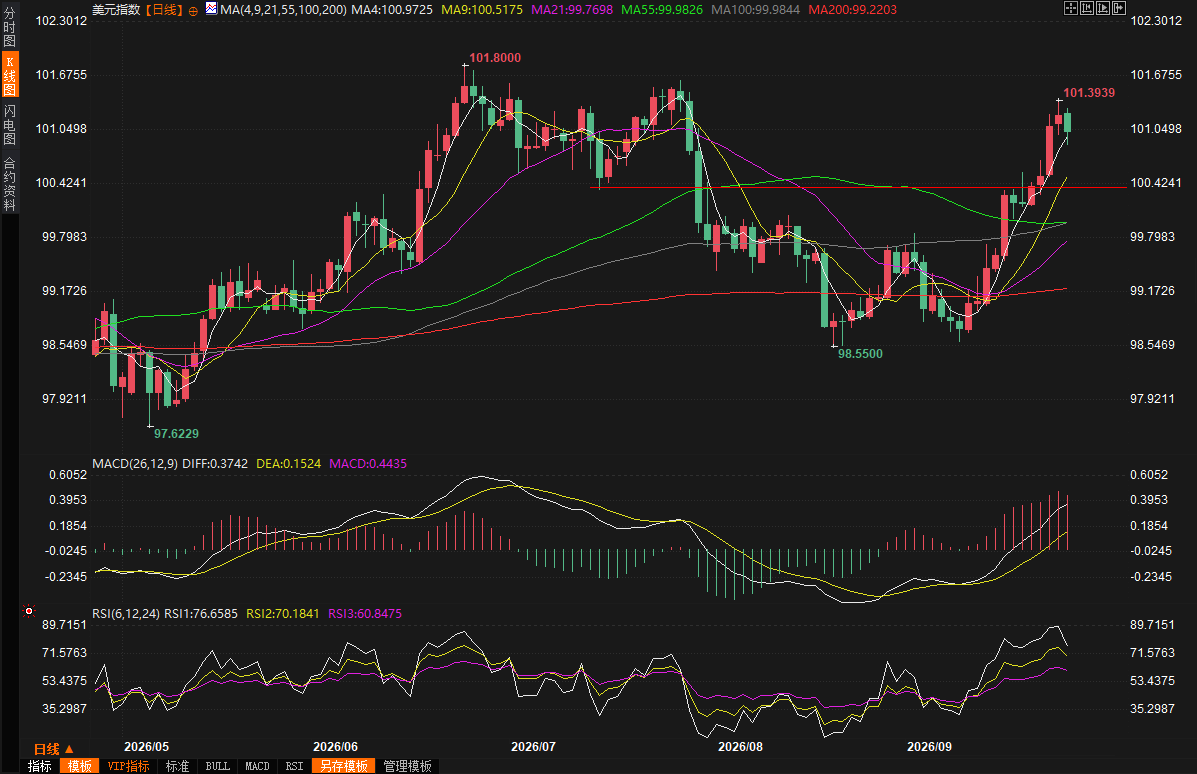 (US Dollar Index Daily Chart, Source: FX678)
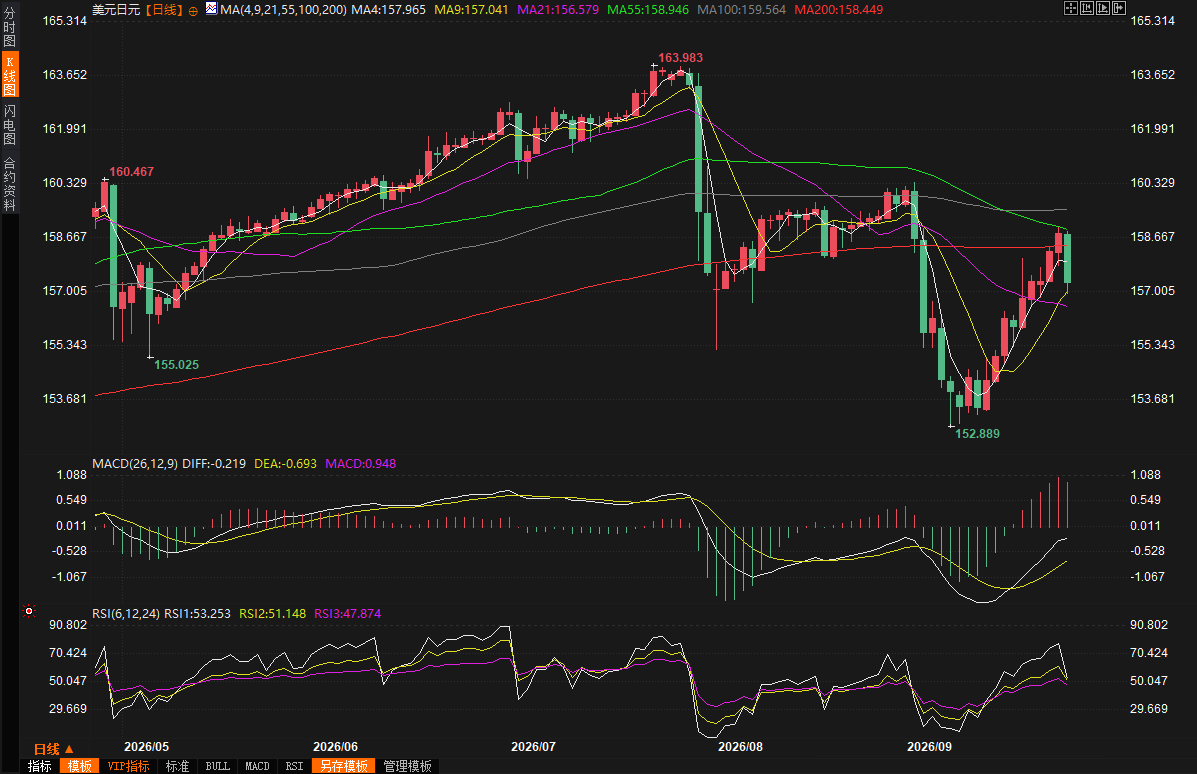 (USD/JPY daily chart, source: FX678)
The US dollar index climbed sharply as expectations of a hawkish stance from the Federal Reserve continued to rise.
The US dollar generally strengthened this week, with the dollar index reaching a near two-month high of 101.39 on Thursday (September 24), indicating a repricing of the market's expectations for the Federal Reserve's future interest rate hike path. Following the Fed's raising of the interest rate range to 3.75%-4.00% last week, several officials repeatedly emphasized in public speeches this week that the necessity for further tightening policy remains if inflation fails to cool significantly. Officials from the Chicago, St. Louis, Boston, Richmond, New York, Philadelphia, and Cleveland Fed banks expressed a high degree of consistency, pointing out that current inflationary pressures stem not only from energy and tariff shocks, but also from strong demand itself, which could be a significant factor driving up prices. This collective hawkish sentiment significantly raised market expectations for an October rate hike. CME FedWatch data showed that the probability of at least a 25 basis point rate hike in October rose from about 43.5% a week ago to around 70%, remaining at a high level of around 66% on Friday. Economic data also provided support for the dollar this week. The S&P Global US Composite PMI preliminary reading jumped sharply to 58.4 from 56.0, reaching a new high since July 2021, indicating accelerated expansion in business activity. Initial jobless claims fell to 197,000, lower than market expectations, demonstrating continued resilience in the labor market. Manufacturing capital goods orders increased more than expected, further strengthening economic growth momentum. Meanwhile, US Treasury yields climbed sharply, with the 10-year and 30-year yields hitting near 20-year and 22-year highs respectively, providing the dollar with an interest rate advantage. However, oil prices fell by more than 2% on Friday, causing the dollar index to decline by about 0.3%, ending a four-day winning streak. Nevertheless, the dollar still recorded a significant weekly gain (approximately 0.82%), marking its second consecutive week of gains, indicating that the dollar maintained a generally strong tone amidst volatility. (US Dollar Index Daily Chart, Source: FX678)The yen rebounded strongly after coming under pressure, but the risk of intervention continues to loom over the market.
The Japanese yen experienced significant volatility this week. The Bank of Japan raised interest rates to a 31-year high of 1.25% last week, but two dissenting votes and a lack of clear guidance on future rate hikes dampened market confidence in the BOJ's policy path. The USD/JPY pair rose to around 157.48 on Monday and continued to climb in the following trading days, briefly touching 159.03, its highest level since September 2nd, marking five consecutive days of gains. Reduced liquidity due to a three-day holiday in the Japanese market further amplified exchange rate volatility, with traders closely watching for any signs of potential intervention. A previous Nikkei report that Japanese officials had conducted currency inquiries was seen by the market as a precursor to intervention, causing the yen to stabilize slightly near its lower levels, but it remained in a weak range overall. Analysts generally believe that direct intervention around 157 to 157.5 is unlikely, but market sentiment is clearly tense. Marc Chandler, chief market strategist at Bannockburn Capital Markets in New York, pointed out that as long as US interest rates remain firm, the yen is likely to continue trading within a range. The situation changed on Friday. Japanese Finance Minister Satsuki Katayama stated that US President Trump expressed concern about the yen's weakness during his meeting with the Japanese Prime Minister. A subsequent statement from the Ministry of Finance revealed that Katayama and US Treasury Secretary Bessenter held a phone conversation, during which both reiterated concerns about the yen's undervaluation and emphasized strengthening cooperation. Bessenter also confirmed that they discussed the necessity of a stronger yen and the importance of maintaining close communication. Driven by this, the yen rose more than 1% against the dollar in a single day; the dollar fell below the 157 level against the yen, closing at 157.31, marking its largest single-day drop since September 7th and ending a four-day winning streak. Despite this, the yen still fell 0.3% for the week due to the Bank of Japan's cautious policy guidance, and the shadow of intervention is unlikely to completely dissipate in the short term. (USD/JPY daily chart, source: FX678)The euro and pound sterling remained under pressure, with geopolitical tensions and oil price volatility roiling market sentiment.
The euro weakened this week, falling for several consecutive days and briefly dropping to around 1.1358 against the dollar, its lowest level since the end of July. The performance of far-right parties in Germany's northeastern state elections raised concerns about political stability in Europe, while personnel changes within the European Central Bank added uncertainty to the policy outlook. Although preliminary Eurozone composite PMI data showed some resilience in the economy, pressure from the Middle East conflict pushing up energy costs persisted, resulting in the euro's third consecutive weekly decline, which would be its longest losing streak this year. The pound also came under pressure, briefly approaching a three-month low against the dollar. Although hawkish comments from Bank of England Governor Bailey provided some support on Friday, the overall trend remained weak. Oil price volatility was a key variable influencing risk sentiment this week. Repeated changes in statements from Iran and the United States regarding the Strait of Hormuz and ceasefire negotiations caused oil prices to initially fall, then rise, and then fall again. Trump stated at the United Nations that US and Iranian officials had held a successful meeting, but also hinted that an agreement might not be reached until after the November midterm elections; Iran, on the other hand, stated that it would not reopen the Strait unless its conditions were met. Oil prices fell more than 2% on Friday, easing inflation concerns to some extent, but prices remained above $100 a barrel, continuing to put pressure on global central bank policies. Furthermore, the Norwegian central bank raised interest rates, the Swedish central bank hinted at a possible follow-up, while the Swiss National Bank kept rates unchanged, indicating a divergence in the paths taken by global central banks in responding to the energy shock.Summary and Outlook
In summary, this week's foreign exchange market clearly reflected the interplay between interest rate expectations and geopolitical tensions. The US dollar initially surged, supported by a hawkish stance from the Federal Reserve and strong economic data, but a pullback in oil prices allowed it to catch its breath over the weekend. The yen, meanwhile, fluctuated between policy disappointment and intervention expectations, ultimately rebounding after hawkish statements from Japanese officials. The euro and pound continued to be under pressure, indicating that non-US currencies are generally in a relatively passive position. Looking ahead to next week, the market will continue to closely monitor speeches by Federal Reserve officials, US economic data, and any new developments in the Middle East. If oil prices rise again or inflation data exceeds expectations, the US dollar may regain its upward momentum; as for the yen, unless the Bank of Japan provides a clearer path for interest rate hikes, the risk of intervention will remain a variable that the market cannot ignore. In an environment of both liquidity and policy uncertainty, currency market volatility may further increase, and investors need to remain highly vigilant.- Risk Warning and Disclaimer
- The market involves risk, and trading may not be suitable for all investors. This article is for reference only and does not constitute personal investment advice, nor does it take into account certain users’ specific investment objectives, financial situation, or other needs. Any investment decisions made based on this information are at your own risk.