With high oil prices and the 10-year and 30-year US Treasury yields exceeding 5%, the US dollar index is poised to rise for its second consecutive day.
2026-09-29 10:54:14
On Tuesday (September 29) during the Asian session, the US dollar index fluctuated at high levels, currently trading around 101.20. The dollar was supported by continued uncertainty surrounding US-Iran negotiations, which kept oil prices high. Persistent pressure on energy costs has exacerbated market expectations that the Federal Reserve will need to further tighten monetary policy to combat inflation. The stalled US-Iran negotiations pushed up US Treasury yields, with both the 10-year and 30-year yields rising above 5%. The market is pricing in a roughly 70% probability of another Fed rate hike in October. 
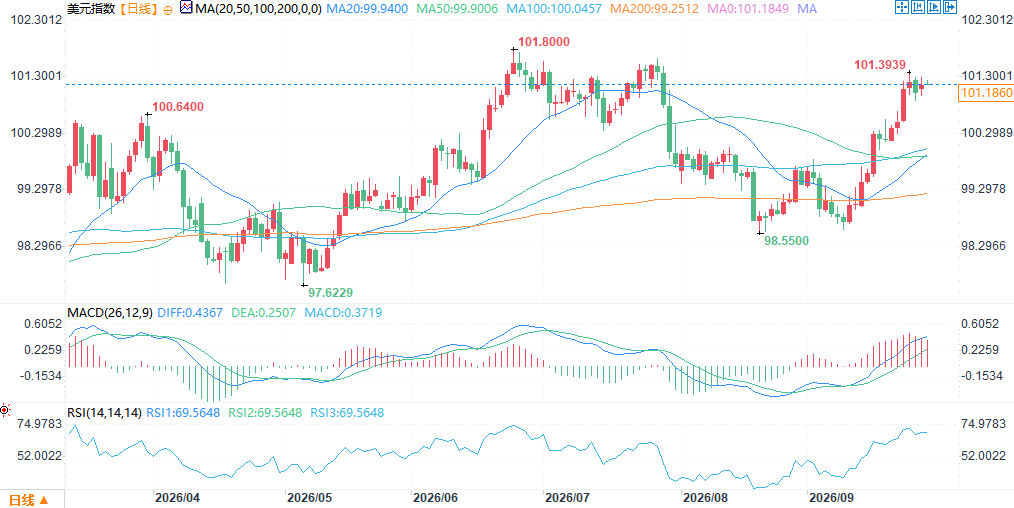 (US Dollar Index Daily Chart, Source: FX678) At 10:53 Beijing time, the US Dollar Index was at 101.20.
Stalled US-Iran negotiations push up oil prices and reinforce expectations of Federal Reserve tightening.
The ongoing diplomatic stalemate between the US and Iran has become a key driver of the recent rebound in international oil prices. Iranian officials have publicly expressed doubts about reaching a comprehensive agreement before the US midterm elections in November, while US President Trump has explicitly rejected the latest proposal from Tehran, causing the previously easing momentum of negotiations to quickly stall. Significant differences remain between the two sides on key issues such as passage through the Strait of Hormuz and the lifting of sanctions, and geopolitical risk premiums have returned to the oil market. Brent crude oil prices have therefore rebounded to high levels, and US crude oil futures have also strengthened, further transmitting energy cost pressures downstream. High oil prices have directly exacerbated market concerns about sticky inflation, and energy-related components may continue to support overall price levels, thereby reinforcing investors' expectations that the Federal Reserve will maintain or even further tighten monetary policy. This transmission chain is clearly visible: the negotiation stalemate pushes up oil prices, rising oil prices exacerbate inflationary pressures, inflation concerns translate into expectations of interest rate hikes, and ultimately become an important logic supporting the strengthening of the US dollar. The market generally believes that as long as the tensions in the Middle East do not substantially ease, the pattern of high-level oil price fluctuations will be difficult to fundamentally change, and the US dollar's interest rate advantage and safe-haven attributes will continue to be strengthened.US Treasury yields rose above 5%, with the market pricing in a 70% probability of a rate hike in October.
Rising inflation concerns coupled with expectations of further interest rate hikes have pushed US Treasury yields to multi-year highs. Both 10-year and 30-year Treasury yields have broken through the key 5% mark, with the 10-year yield reaching its highest level since 2007 and the 30-year yield hitting its highest level since 2004. This sharp rise in yields reflects the market's repricing of the Federal Reserve's policy path. Earlier this month, the Fed completed its first interest rate hike in three years, raising the target range for the federal funds rate to 3.75%-4.00%. Since then, the CME FedWatch tool has shown that the probability of another 25 basis point rate hike in October has risen to around 70%. Higher yields have increased the relative attractiveness of dollar assets, attracting international capital inflows into US Treasuries and related markets, thereby further supporting the dollar's exchange rate. At the same time, rising yields have also tightened global financial conditions, putting some downward pressure on risk assets. Investors are closely watching changes in the yield curve and whether long-term yields will continue to rise. If inflation and employment data continue to support a tightening stance, the high yield levels may persist, and the dollar's interest rate advantage will be consolidated.Speculative net long positions remained largely unchanged, with both long and short positions increasing by 2,000 contracts.
Rabobank analysts pointed out that the net change in speculative positions in the US dollar was relatively small, with "net long positions in the dollar remaining largely unchanged, as both long and short positions increased by approximately 2,000 contracts each." This data comes from the latest CFTC Commitment of Traders report, showing that large speculators' net long positions in dollar futures remained relatively stable. The simultaneous increase in positions by both long and short sides indicates that the market has not formed a one-sided bullish consensus, but rather adjusted positions on both sides. This balance reflects the continued divergence among investors regarding the future direction of the dollar: on the one hand, expectations of Fed rate hikes and high yields support the bullish logic for the dollar; on the other hand, geopolitical uncertainties, potential economic data fluctuations, and changes in global capital flows also provide room for short positions. The largely unchanged net positions indicate that market exposure adjustments are relatively cautious, and speculative forces have not yet shifted significantly. This balanced pattern adds uncertainty to the dollar's trajectory; if upcoming economic data deviates from expectations, positions may be quickly readjusted, amplifying exchange rate volatility. Analysts caution that the current positioning structure shows the market is still observing rather than fully betting on a one-sided appreciation of the dollar.The market is focused on PCE and non-farm payroll data.
This week, market attention is heavily focused on upcoming key US economic indicators for clear signals regarding future monetary policy. Wednesday will see the release of the August Personal Consumption Expenditures (PCE) inflation report, one of the Federal Reserve's most closely watched inflation measures; Friday will see the release of the September non-farm payrolls report, covering core data such as job growth, unemployment rate, and average hourly earnings. These two data points will directly impact market pricing in the Fed's October and subsequent rate hike path. If the PCE shows sticky inflation and the core reading exceeds expectations, coupled with continued strong non-farm payrolls, the market may further escalate the probability of a rate hike, thus supporting a stronger dollar. Conversely, if inflation declines significantly or employment data weakens considerably, rate hike expectations may cool, and the dollar will face downward pressure. Investors will also pay attention to data details, such as the contribution of the energy and services sub-components in the PCE, and changes in the labor force participation rate and wage growth in the non-farm payrolls. These data will not only affect short-term exchange rate fluctuations but will also shape the tone of communication by Fed officials before the October policy meeting, becoming a key variable determining the dollar's medium-term trend.Summarize
The US dollar index is poised for a second consecutive day of gains, as stalled US-Iran negotiations push up oil prices and increased energy cost pressures reinforce expectations of further tightening by the Federal Reserve. US Treasury yields have risen above 5%, with the market pricing in a roughly 70% probability of an October rate hike. Data from Rabobank shows that net long positions in the dollar remain largely unchanged, with both long and short positions increasing by 2,000 contracts, resulting in a roughly balanced market exposure. The focus now shifts to Wednesday's PCE inflation report and Friday's non-farm payroll data, which will determine whether rate hike expectations strengthen or cool. Against the backdrop of geopolitical tensions, high oil prices, and inflation concerns, the dollar is finding short-term support, but the balanced positioning suggests that direction still depends on data. If the PCE and non-farm payroll data support a hawkish stance, the dollar may strengthen further; if the data weakens, the dollar faces downward pressure. (US Dollar Index Daily Chart, Source: FX678) At 10:53 Beijing time, the US Dollar Index was at 101.20.
- Risk Warning and Disclaimer
- The market involves risk, and trading may not be suitable for all investors. This article is for reference only and does not constitute personal investment advice, nor does it take into account certain users’ specific investment objectives, financial situation, or other needs. Any investment decisions made based on this information are at your own risk.