Hawkish expectations from the Federal Reserve and energy inflation pushed the dollar higher, with USD/CAD rising to around 1.4200, a near three-month high.
2026-09-29 13:26:14
The US dollar extended its recent gains against the Canadian dollar in Asian trading on Tuesday, with USD/CAD rising to around 1.4200, its highest level since July 9. Over the past three weeks, the US dollar has been supported by interest rate expectations and safe-haven demand, while the Canadian dollar has been influenced by oil price volatility, the Bank of Canada's policy stance, and trade concerns. Current exchange rate movements indicate that the market is further widening its expectations of an interest rate differential between the US dollar and the Canadian dollar. 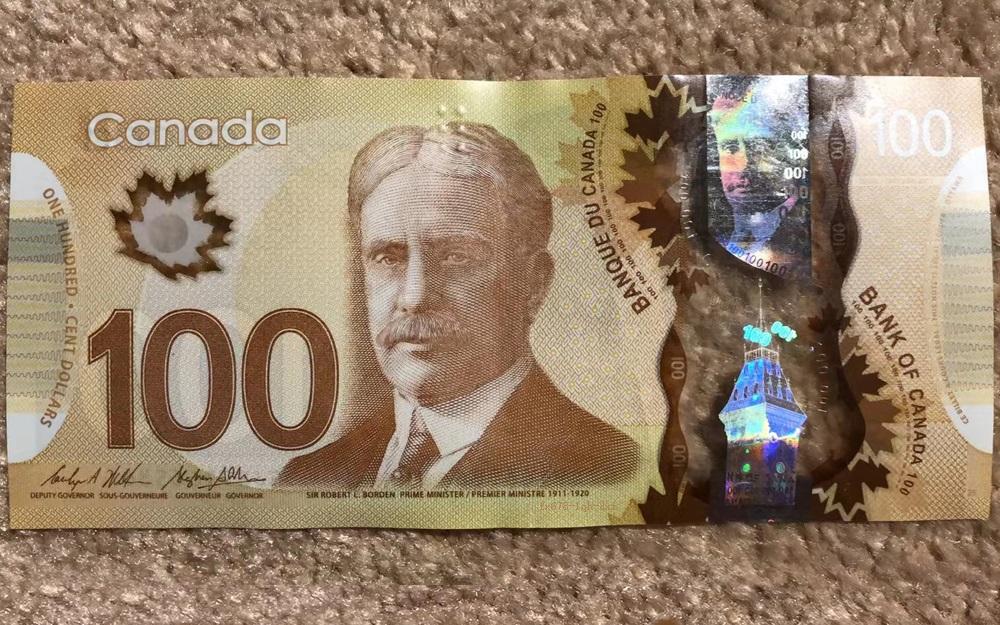 The US dollar index is currently hovering near a two-month high. The Federal Reserve previously implemented a 25-basis-point rate hike and signaled the possibility of further rate increases this year. Meanwhile, rising energy prices have reignited inflation concerns, fueling market expectations that US interest rates will remain high or even tighten further. The widening interest rate advantage of the US dollar is one of the core drivers of the recent continued rise in USD/CAD. The simultaneous strengthening of US Treasury yields has further enhanced the dollar's attractiveness. Against the backdrop of rising energy prices potentially pushing up inflation, the market's repricing of US real and nominal interest rates continues. If subsequent US inflation data remains resilient, investors may continue to raise their expectations for the duration of the high-interest-rate environment, thus providing support for the dollar. Geopolitical tensions have further strengthened the dollar's safe-haven appeal. The differences between the US and Iran over the Strait of Hormuz and related issues have not been fully resolved, and market concerns about energy transportation and global supply chains have not completely subsided. Although recent news regarding the easing of sanctions and the promotion of diplomatic communication has limited further upside potential for crude oil, the uncertainty of the situation still prompts some funds to allocate to dollar assets. For the Canadian dollar, oil price movements are particularly important. Canada is a major energy exporter, and the Canadian dollar typically benefits from higher oil prices. However, if oil prices fall due to expectations of supply recovery, the Canadian dollar's commodity currency characteristics may be suppressed. Meanwhile, the Bank of Canada's overall policy stance is relatively dovish, making the interest rate differential between Canada and the US a significant driver of USD/CAD. Furthermore, trade concerns between the US and Canada increase uncertainty for the Canadian dollar. A stronger US dollar, oil price volatility, and expectations regarding Canadian domestic monetary policy are collectively keeping USD/CAD relatively strong in the short term. Unless US yields and the US dollar index show a significant decline, the upward trend of USD/CAD currently lacks a clear reversal signal. However, the exchange rate has risen for three consecutive weeks, and further short-term gains indicate a significantly increased market sensitivity to US economic data. This week, the US will release the Personal Consumption Expenditures Price Index (PCE) and the non-farm payroll report, both of which could directly influence market expectations regarding the Federal Reserve's future policies. If inflation and employment data fall short of expectations, the US dollar may face profit-taking; if the data continues to be strong, it could further solidify bullish expectations for the US dollar. The market currently needs to pay attention to the correlation between US Treasury yields, the US dollar index, and oil prices. If oil prices rise rapidly again and further push up inflation expectations, the US dollar may be supported by interest rate expectations, but the Canadian dollar may also benefit from energy export factors, making the transmission relationship between the two more complex. Therefore, whether USD/CAD can break through recent highs still needs further confirmation from macroeconomic data and commodity prices. From the daily chart, USD/CAD continues its three-week upward trend, with the price regaining several Fibonacci retracement levels and stabilizing above the 100-day moving average of 1.3977, indicating an overall bullish trend. Currently, the 61.8% retracement level of 1.4049 and the 78.6% retracement level of 1.4137 have turned from previous resistance into important support areas. If the exchange rate can continue to hold above 1.4137, it will further test the recent cycle high of 1.4248. 1.4248 is a key level to watch for a bullish breakout; a successful break could open up further upside potential. From the 4-hour chart, USD/CAD remains in an upward channel in the short term, but after continuous gains, caution is warranted regarding potential profit-taking at higher levels. 1.4137 is the first support level; a pullback and break below this level could lead to a further test of 1.4049. The 1.3988-1.3977 range constitutes a more significant medium-term support zone. If the price can hold this area, the overall bullish structure is likely to remain intact. Conversely, a break below 1.3977 would indicate a significant cooling of the short-term upward momentum, potentially leading to further support levels at 1.3926 or even 1.3850.
 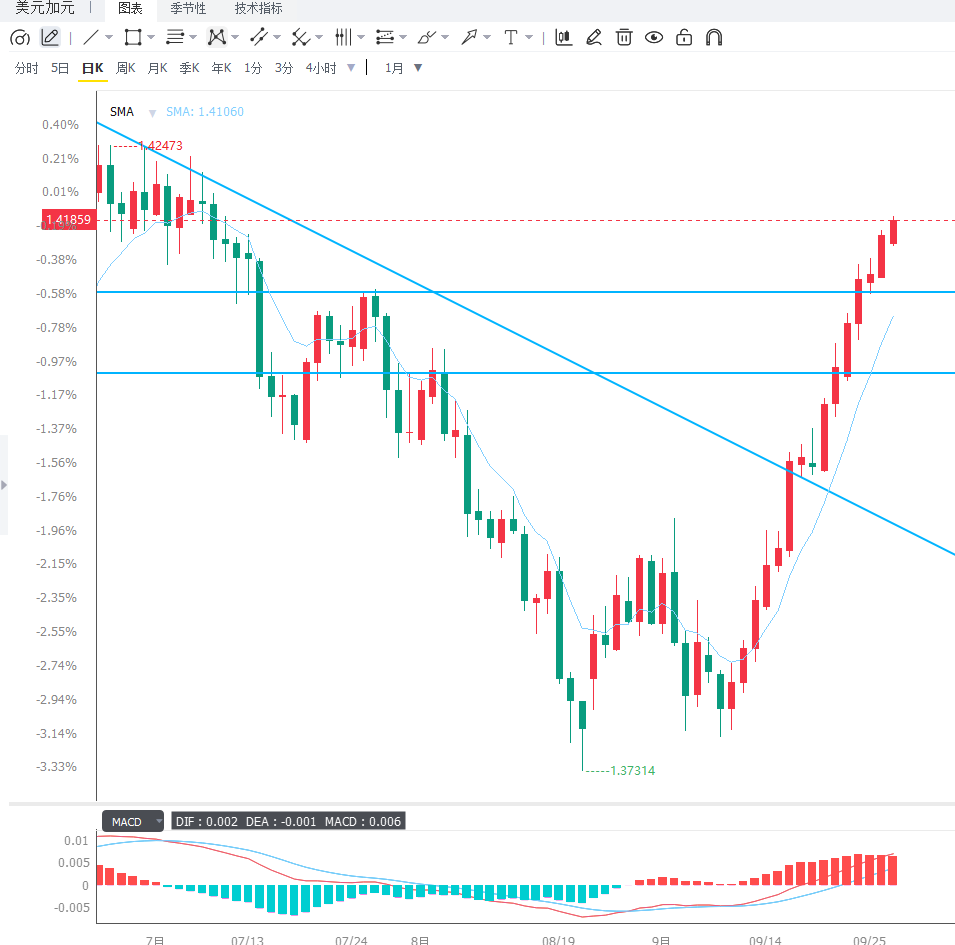 The USD/CAD pair is currently influenced by a combination of factors, including the US dollar's interest rate advantage, safe-haven demand, dovish expectations from the Bank of Canada, and oil price volatility. Overall, the fundamentals still favor the US dollar. The pair is approaching the 1.4200 level in the short term, and further gains require confirmation from new macroeconomic catalysts. Subsequent US PCE and non-farm payroll data will be crucial variables. If US inflation and employment remain strong, the dollar's strength may continue, and USD/CAD could test 1.4248. However, if the data is weaker than expected and pushes down US Treasury yields, a technical correction is possible. 1.4137 and 1.4049 are key short-term support levels, while 1.3977 is a crucial level for determining whether the medium-term bullish structure has changed.
The US dollar index is currently hovering near a two-month high. The Federal Reserve previously implemented a 25-basis-point rate hike and signaled the possibility of further rate increases this year. Meanwhile, rising energy prices have reignited inflation concerns, fueling market expectations that US interest rates will remain high or even tighten further. The widening interest rate advantage of the US dollar is one of the core drivers of the recent continued rise in USD/CAD. The simultaneous strengthening of US Treasury yields has further enhanced the dollar's attractiveness. Against the backdrop of rising energy prices potentially pushing up inflation, the market's repricing of US real and nominal interest rates continues. If subsequent US inflation data remains resilient, investors may continue to raise their expectations for the duration of the high-interest-rate environment, thus providing support for the dollar. Geopolitical tensions have further strengthened the dollar's safe-haven appeal. The differences between the US and Iran over the Strait of Hormuz and related issues have not been fully resolved, and market concerns about energy transportation and global supply chains have not completely subsided. Although recent news regarding the easing of sanctions and the promotion of diplomatic communication has limited further upside potential for crude oil, the uncertainty of the situation still prompts some funds to allocate to dollar assets. For the Canadian dollar, oil price movements are particularly important. Canada is a major energy exporter, and the Canadian dollar typically benefits from higher oil prices. However, if oil prices fall due to expectations of supply recovery, the Canadian dollar's commodity currency characteristics may be suppressed. Meanwhile, the Bank of Canada's overall policy stance is relatively dovish, making the interest rate differential between Canada and the US a significant driver of USD/CAD. Furthermore, trade concerns between the US and Canada increase uncertainty for the Canadian dollar. A stronger US dollar, oil price volatility, and expectations regarding Canadian domestic monetary policy are collectively keeping USD/CAD relatively strong in the short term. Unless US yields and the US dollar index show a significant decline, the upward trend of USD/CAD currently lacks a clear reversal signal. However, the exchange rate has risen for three consecutive weeks, and further short-term gains indicate a significantly increased market sensitivity to US economic data. This week, the US will release the Personal Consumption Expenditures Price Index (PCE) and the non-farm payroll report, both of which could directly influence market expectations regarding the Federal Reserve's future policies. If inflation and employment data fall short of expectations, the US dollar may face profit-taking; if the data continues to be strong, it could further solidify bullish expectations for the US dollar. The market currently needs to pay attention to the correlation between US Treasury yields, the US dollar index, and oil prices. If oil prices rise rapidly again and further push up inflation expectations, the US dollar may be supported by interest rate expectations, but the Canadian dollar may also benefit from energy export factors, making the transmission relationship between the two more complex. Therefore, whether USD/CAD can break through recent highs still needs further confirmation from macroeconomic data and commodity prices. From the daily chart, USD/CAD continues its three-week upward trend, with the price regaining several Fibonacci retracement levels and stabilizing above the 100-day moving average of 1.3977, indicating an overall bullish trend. Currently, the 61.8% retracement level of 1.4049 and the 78.6% retracement level of 1.4137 have turned from previous resistance into important support areas. If the exchange rate can continue to hold above 1.4137, it will further test the recent cycle high of 1.4248. 1.4248 is a key level to watch for a bullish breakout; a successful break could open up further upside potential. From the 4-hour chart, USD/CAD remains in an upward channel in the short term, but after continuous gains, caution is warranted regarding potential profit-taking at higher levels. 1.4137 is the first support level; a pullback and break below this level could lead to a further test of 1.4049. The 1.3988-1.3977 range constitutes a more significant medium-term support zone. If the price can hold this area, the overall bullish structure is likely to remain intact. Conversely, a break below 1.3977 would indicate a significant cooling of the short-term upward momentum, potentially leading to further support levels at 1.3926 or even 1.3850. The USD/CAD pair is currently influenced by a combination of factors, including the US dollar's interest rate advantage, safe-haven demand, dovish expectations from the Bank of Canada, and oil price volatility. Overall, the fundamentals still favor the US dollar. The pair is approaching the 1.4200 level in the short term, and further gains require confirmation from new macroeconomic catalysts. Subsequent US PCE and non-farm payroll data will be crucial variables. If US inflation and employment remain strong, the dollar's strength may continue, and USD/CAD could test 1.4248. However, if the data is weaker than expected and pushes down US Treasury yields, a technical correction is possible. 1.4137 and 1.4049 are key short-term support levels, while 1.3977 is a crucial level for determining whether the medium-term bullish structure has changed.
- Risk Warning and Disclaimer
- The market involves risk, and trading may not be suitable for all investors. This article is for reference only and does not constitute personal investment advice, nor does it take into account certain users’ specific investment objectives, financial situation, or other needs. Any investment decisions made based on this information are at your own risk.