The 96 mark was broken, and the US dollar hit a two-month high against the Indian rupee. Where is the bottom line for the Reserve Bank of India?
2026-09-29 16:13:13
The dollar rose to a two-month high against the Indian rupee on Tuesday (September 29), breaking through the 96.00 level. The rupee had lagged behind due to concerns about continued energy supply disruptions. Oil prices rose on Tuesday as US President Trump postponed hopes for recent diplomatic talks with Iran. Currencies of economies like India, which heavily rely on oil imports to meet their energy needs, tend to underperform in environments with high oil prices. 
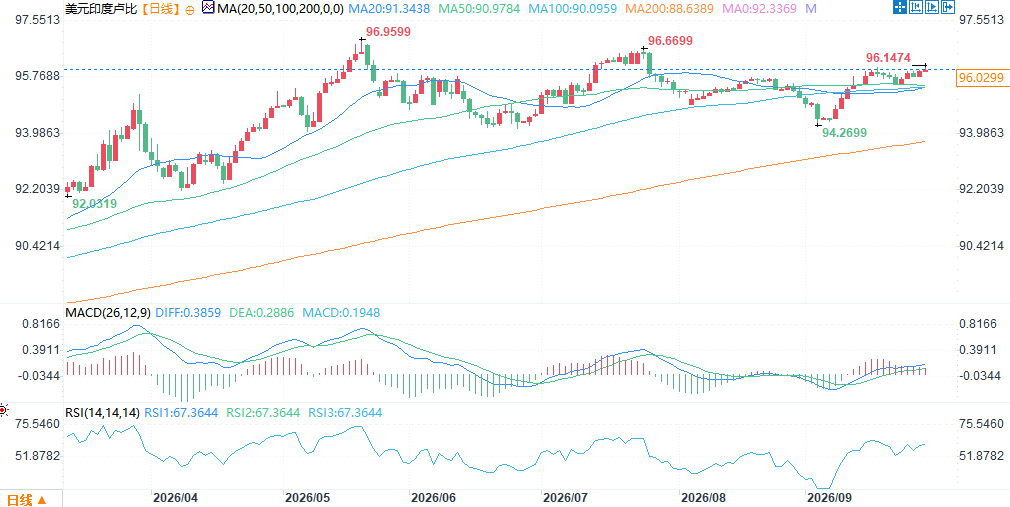 (USD/INR daily chart, source: FX678) At 15:51 Beijing time, the USD/INR exchange rate was 96.01/02.
Trump denies reports of sanctions relief; rising oil prices weigh on the rupee.
Oil prices came under pressure on Monday after an Axios report suggested Washington had agreed to lift sanctions on Iran and release frozen funds in exchange for concrete steps on Iran's nuclear program. However, Trump denied the report via social media, writing, "I offered them nothing," and calling it a "hoax." Meanwhile, Iranian Foreign Minister Araqchi confirmed that proposals for reopening the Strait of Hormuz and achieving full peace with the United States were being discussed with Qatari mediators and Washington, and that the US response would be received only through them. Araqchi added that the conditions emphasized by Iran's Supreme Leader must be met before the Strait of Hormuz would reopen. These developments perpetuated concerns about energy supply disruptions, pushing oil prices higher and putting pressure on the rupee.The Reserve Bank of India may intervene again, causing the rupee to fall below the 96 mark.
Reports indicate that the Reserve Bank of India (RBI) may be reluctant to see the rupee fall below the psychologically important 96-to-1 dollar level and may increase its intervention, having been present in the market almost daily in recent weeks. The report further adds that analysts point out that after recently accumulating foreign exchange reserves through foreign currency non-resident deposits, the RBI has greater firepower to intervene. This intervention provides short-term support for the rupee, but downward pressure on the rupee will persist if oil prices remain high and the dollar strengthens.Expectations of a Fed rate hike are weighing on the rupee, with the market pricing in a 70% probability of an October rate hike.
Increased confidence in further Federal Reserve rate hikes this year is another key concern for the Indian rupee. According to the CME FedWatch tool, the probability of a rate hike at the Fed's October meeting is close to 70%. High US Treasury yields are attracting funds to dollar assets, putting downward pressure on emerging market currencies, including the Indian rupee. Investors are awaiting the US August JOLTS job openings data, to be released at 14:00 Beijing time, which is expected to show 7.23 million new jobs, slightly lower than July's 7.271 million. This data could have a meaningful impact on Fed rate expectations.Summarize
The dollar rose to a two-month high against the Indian rupee on Tuesday, driven by higher oil prices and fading hopes for US-Iran diplomacy. Trump denied reports of sanctions relief, saying "nothing was offered," while Iran insisted that the Supreme Leader's conditions must be met. The Reserve Bank of India (RBI) may intervene again to support the rupee, with analysts saying it has more firepower after accumulating foreign exchange reserves. The market is pricing in a near 70% probability of a Fed rate hike in October, and high US Treasury yields are weighing on the rupee. Going forward, attention will be focused on US JOLTS job openings data, oil price movements, the extent of the RBI's intervention, and the progress of US-Iran negotiations. If oil prices remain high and expectations of a Fed rate hike strengthen, the rupee may continue to be under pressure; if the RBI increases intervention or oil prices fall, the rupee may find some respite. (USD/INR daily chart, source: FX678) At 15:51 Beijing time, the USD/INR exchange rate was 96.01/02.
- Risk Warning and Disclaimer
- The market involves risk, and trading may not be suitable for all investors. This article is for reference only and does not constitute personal investment advice, nor does it take into account certain users’ specific investment objectives, financial situation, or other needs. Any investment decisions made based on this information are at your own risk.