With PCE and non-farm payroll data imminent, silver is experiencing greater volatility than gold: charts reveal divergent positioning.
2026-09-30 01:12:15
Market attention is focused on US economic data, but only traders with professional insight will notice a key point: the divergence in gold and silver positions. Financial markets are dominated by various anxieties, largely stemming from the Middle East wars driving up energy prices and the persistently high energy prices. Admittedly, the US dollar is strong, but what price will this come at? The US economy maintains steady growth, yet the country's debt has climbed to a record high. Coupled with lingering inflation concerns, this has ultimately led to a sharp rise in US Treasury yields: the 10-year US Treasury yield hit a multi-decade high of 5.26% on Tuesday, with no signs of a pullback in the short term.  This market environment put pressure on precious metals, with spot gold falling about 3.3% on Monday and silver plunging nearly 5% on the same day. At the time of writing, the gold-silver ratio was 68.4. The gold-silver ratio is calculated by dividing the price of one ounce of gold by the price of one ounce of silver, and can be used to track the historical relative price movements of the two.
 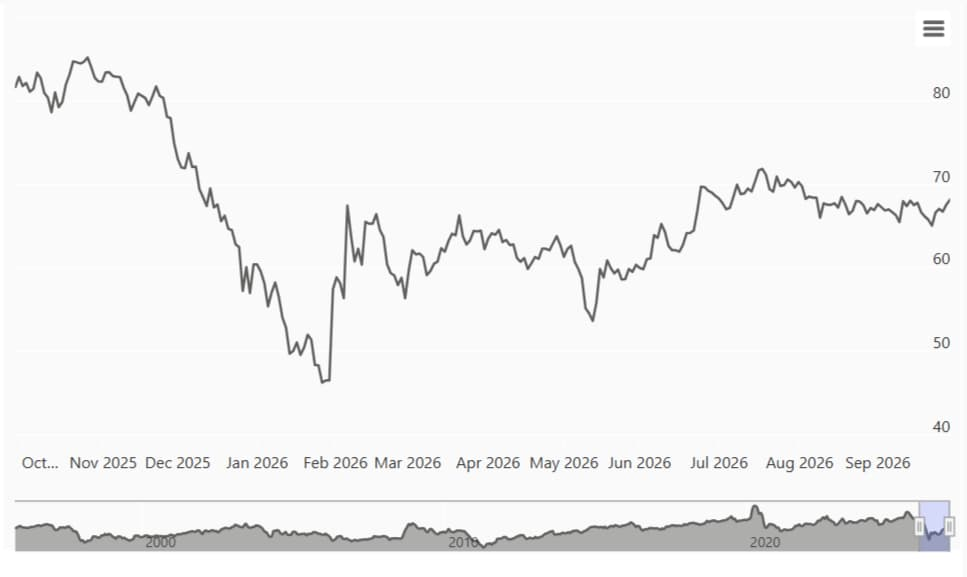 Generally speaking, a gold-silver ratio of 80 or higher indicates that silver is undervalued relative to gold; conversely, a ratio of 20 or lower suggests that gold is cheaper than silver. When this ratio reaches extreme levels, undervalued assets often rebound to correct their valuations. Currently, the gold-silver ratio is 68.4, meaning that if the precious metals market rebounds, silver is likely to recover faster than gold, and this scenario is probably not far off. But what if the market doesn't rebound? Why is silver underperforming gold? According to the Commitment of Traders (COT) report, amidst macroeconomic volatility, various funds are withdrawing from silver positions, which partially explains the divergence in gold and silver prices. Another reason is declining industrial demand: BMO Capital Markets points out that solar cell manufacturers are reducing silver consumption in their solar cells through methods including narrowing metallized grid lines, increasing copper substitution, and large-scale use of silver-plated copper paste. Currently, silver is underperforming gold, and this pattern is unlikely to reverse in the short term. The gold-silver ratio chart also shows no signs of a rapid reversal. So what is the relationship between US economic data and gold and silver prices? The biggest risk lies in the persistently high buying interest in the US dollar, which could extend the recent decline in gold and silver prices. The upcoming inflation and employment data will either confirm or refute this assessment. Simply put, the strengthening dollar stems from market bets that the Federal Reserve has no choice but to continue raising interest rates. The Fed has a dual policy objective: maximizing employment and maintaining price stability. Currently, inflation is the most worrying issue. The Personal Consumption Expenditures (PCE) price index is the Fed's most closely watched inflation indicator, and the market expects the index to rise by 3.4% year-on-year in August, almost double the central bank's 2% inflation target. This data will be released on Wednesday. Before the data release, market participants believe there is a greater than 70% probability of a Fed rate hike in October. If the PCE data is higher than market expectations, it will further increase the probability of a rate hike, stimulating dollar buying and putting downward pressure on precious metal prices. Conversely, if the data falls short of expectations, the market will question how many more rate hikes the Fed will raise. However, it's important to note that a single month's data cannot change the overall trend; at least three consecutive months of declining inflation readings are needed before speculative funds begin pricing in the possibility of a "pause in rate hikes." After the PCE data release, market focus will shift to Friday's September non-farm payroll report. Traders hope to see employment data that is "positive, but not overly strong," to support the Fed's continued rate hike path. The market predicts the unemployment rate will remain unchanged at 4.1%, with an estimated 84,000 new jobs added in the US. Data in line with expectations would indicate that there is no immediate risk in the labor market, and the Fed has no reason to stop tightening policy. If the employment data is stronger than expected—with a declining unemployment rate and strong job growth—it will further support the dollar's continued rise; however, even if the data falls short of expectations, it will be difficult to suppress the dollar, as a single weak report is insufficient to reverse the overall market sentiment. Similar to inflation data, a poor employment report is unlikely to change mainstream market expectations. In summary, gold and silver are likely to continue to face downward pressure; only when market funds collectively sell off the dollar will silver have a better chance of rebounding.
This market environment put pressure on precious metals, with spot gold falling about 3.3% on Monday and silver plunging nearly 5% on the same day. At the time of writing, the gold-silver ratio was 68.4. The gold-silver ratio is calculated by dividing the price of one ounce of gold by the price of one ounce of silver, and can be used to track the historical relative price movements of the two. Generally speaking, a gold-silver ratio of 80 or higher indicates that silver is undervalued relative to gold; conversely, a ratio of 20 or lower suggests that gold is cheaper than silver. When this ratio reaches extreme levels, undervalued assets often rebound to correct their valuations. Currently, the gold-silver ratio is 68.4, meaning that if the precious metals market rebounds, silver is likely to recover faster than gold, and this scenario is probably not far off. But what if the market doesn't rebound? Why is silver underperforming gold? According to the Commitment of Traders (COT) report, amidst macroeconomic volatility, various funds are withdrawing from silver positions, which partially explains the divergence in gold and silver prices. Another reason is declining industrial demand: BMO Capital Markets points out that solar cell manufacturers are reducing silver consumption in their solar cells through methods including narrowing metallized grid lines, increasing copper substitution, and large-scale use of silver-plated copper paste. Currently, silver is underperforming gold, and this pattern is unlikely to reverse in the short term. The gold-silver ratio chart also shows no signs of a rapid reversal. So what is the relationship between US economic data and gold and silver prices? The biggest risk lies in the persistently high buying interest in the US dollar, which could extend the recent decline in gold and silver prices. The upcoming inflation and employment data will either confirm or refute this assessment. Simply put, the strengthening dollar stems from market bets that the Federal Reserve has no choice but to continue raising interest rates. The Fed has a dual policy objective: maximizing employment and maintaining price stability. Currently, inflation is the most worrying issue. The Personal Consumption Expenditures (PCE) price index is the Fed's most closely watched inflation indicator, and the market expects the index to rise by 3.4% year-on-year in August, almost double the central bank's 2% inflation target. This data will be released on Wednesday. Before the data release, market participants believe there is a greater than 70% probability of a Fed rate hike in October. If the PCE data is higher than market expectations, it will further increase the probability of a rate hike, stimulating dollar buying and putting downward pressure on precious metal prices. Conversely, if the data falls short of expectations, the market will question how many more rate hikes the Fed will raise. However, it's important to note that a single month's data cannot change the overall trend; at least three consecutive months of declining inflation readings are needed before speculative funds begin pricing in the possibility of a "pause in rate hikes." After the PCE data release, market focus will shift to Friday's September non-farm payroll report. Traders hope to see employment data that is "positive, but not overly strong," to support the Fed's continued rate hike path. The market predicts the unemployment rate will remain unchanged at 4.1%, with an estimated 84,000 new jobs added in the US. Data in line with expectations would indicate that there is no immediate risk in the labor market, and the Fed has no reason to stop tightening policy. If the employment data is stronger than expected—with a declining unemployment rate and strong job growth—it will further support the dollar's continued rise; however, even if the data falls short of expectations, it will be difficult to suppress the dollar, as a single weak report is insufficient to reverse the overall market sentiment. Similar to inflation data, a poor employment report is unlikely to change mainstream market expectations. In summary, gold and silver are likely to continue to face downward pressure; only when market funds collectively sell off the dollar will silver have a better chance of rebounding.
- Risk Warning and Disclaimer
- The market involves risk, and trading may not be suitable for all investors. This article is for reference only and does not constitute personal investment advice, nor does it take into account certain users’ specific investment objectives, financial situation, or other needs. Any investment decisions made based on this information are at your own risk.