Falling oil prices pressured expectations of a Fed rate hike, while gold rebounded from oversold levels.
2026-09-30 10:04:19
Spot gold saw a technical rebound from recent lows during Wednesday's Asian trading session, rising to around $4,180. However, the current rebound in gold prices still faces strong macroeconomic pressures, particularly as rising energy prices have reignited inflation expectations, fueling market anticipation of further monetary tightening by the Federal Reserve.  The core logic behind the recent pressure on gold is expanding from the dollar factor alone to a transmission chain of "oil prices—inflation—interest rates—dollars." Previously high oil prices mean rising energy costs could be passed on to overall prices through multiple stages, including transportation, manufacturing, and consumption. If energy prices remain high, market concerns about renewed inflation could intensify, raising expectations of persistently high interest rates. Changes in US Treasury yields are also further suppressing gold. The yield on the 30-year US Treasury note briefly rose above 5.61% on Tuesday, reaching its highest level since 2002, indicating continued pressure on long-term interest rates. In contrast, the yield on the 2-year US Treasury note, which is more sensitive to expectations of Federal Reserve policy, fell by about 5 basis points before stabilizing at around 4.88%, reflecting a market reassessment of the short-term policy path. For gold, a high-yield environment typically means a higher opportunity cost of holding non-interest-bearing assets. Although gold is traditionally considered an inflation hedge, when inflationary pressures cause interest rates and bond yields to rise simultaneously, actual capital allocation may shift back towards dollar assets, thus limiting gold's upside potential. Meanwhile, the recent relative strength of the US dollar has also increased pressure on dollar-denominated gold. When the dollar strengthens, the cost of buying gold for non-dollar investors increases relatively, and a sustained rise in gold prices usually requires stronger capital inflows. Therefore, even though gold has rebounded after falling to an eight-week low, it is currently closer to a technical correction than a complete trend reversal. The market is currently focused on US inflation and employment data. The US August Personal Consumption Expenditures Price Index will provide new evidence for the market to judge the inflation trend, while the subsequent non-farm payroll report may further influence investors' judgment on the Fed's interest rate path. If the core PCE and employment data are weak, the dollar and US Treasury yields may come under pressure, and gold will have room for a phased recovery; conversely, if inflation and employment continue to be resilient, gold may still face further interest rate pressure. From a market sentiment perspective, the recent drop in gold prices below $4,200 triggered some technical selling, accelerating the short-term correction. Market analysts believe that inflation concerns caused by rising oil prices, higher US Treasury yields, and a strong dollar have collectively contributed to the recent downward pressure on gold. Meanwhile, after the $4,200 mark was breached, some technical trading funds amplified the decline, causing significant short-term volatility in gold prices. However, gold prices quickly found support after falling below $4,100, indicating continued investor interest at lower levels. The market will need to closely observe whether energy prices continue to push up inflation expectations and whether US economic data can alter current interest rate pricing. If US economic data shows a significant cooling, gold may regain support from both safe-haven demand and expectations of interest rate cuts; if oil prices continue to rise and drive up yields, the gold price rebound may be limited. From a daily chart perspective, spot gold is currently still in a weak zone after a correction. Although prices have rebounded from below $4,100 to around $4,180, the overall trend remains suppressed by the 100-day simple moving average. Currently, the 100-day moving average is around $4,295, while the Bollinger Band middle line is around $4,325, meaning that for gold prices to confirm a short-term trend improvement, they first need to break through $4,295 again, and then further rise above $4,325. Stronger resistance is seen around the upper Bollinger Band at $4490. On the downside, the lower Bollinger Band at around $4165 provides relatively direct technical support. A break below this level could lead to a retest of the $4100 area and further downside potential. The daily RSI is currently around 40.11, still in weak territory but out of oversold territory, indicating that while bearish momentum remains dominant, the short-term selling pressure has eased. Looking at the 4-hour chart, gold rebounded after a rapid decline, forming a short-term corrective structure, but the current rebound strength is insufficient to confirm a trend reversal. The $4180 area is a short-term price battleground. If bulls can further recover $4200 and push towards $4250, the 4-hour rebound momentum could be strengthened; however, if prices encounter resistance below $4200 again, the weak structure formed by the previous break below key psychological levels may continue. Short-term trading requires close observation of the US dollar index, US Treasury yields, and the immediate reaction to the release of US economic data. In particular, it is necessary to guard against a rapid breakout or reversal in gold prices after the data release.
 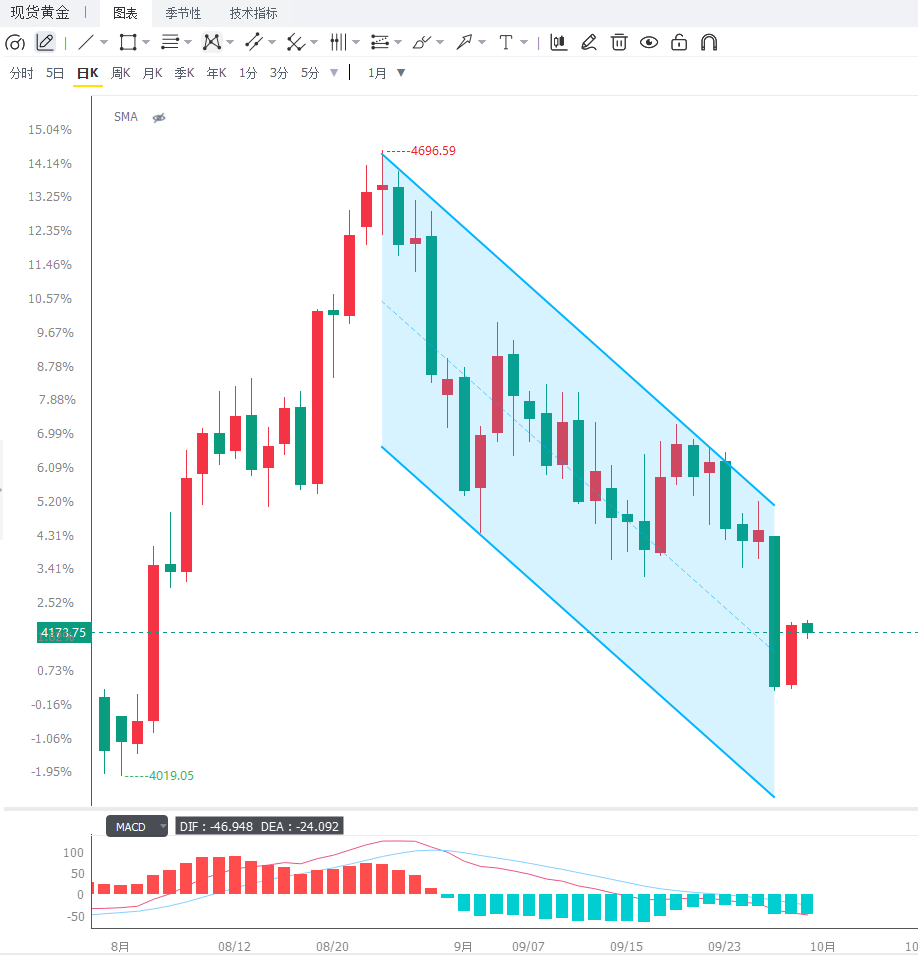 Editor's Summary: The core issue for spot gold right now is not whether safe-haven demand exists, but whether rising energy prices will reshape US inflation and interest rate expectations. Rising oil prices are fueling inflation expectations, while high US Treasury yields and a strong dollar are collectively limiting gold's upside potential. In the short term, PCE inflation data and the non-farm payroll report will be key catalysts influencing gold prices. If US economic data cools and yields and the dollar decline, gold could gain further upward momentum; however, if inflation remains resilient and oil prices continue to rise, market expectations for monetary policy tightening may strengthen, putting downward pressure on gold prices. Technically, $4200 is a key short-term level to watch, while the $4295-$4325 range will determine whether the rebound can extend further.
The core logic behind the recent pressure on gold is expanding from the dollar factor alone to a transmission chain of "oil prices—inflation—interest rates—dollars." Previously high oil prices mean rising energy costs could be passed on to overall prices through multiple stages, including transportation, manufacturing, and consumption. If energy prices remain high, market concerns about renewed inflation could intensify, raising expectations of persistently high interest rates. Changes in US Treasury yields are also further suppressing gold. The yield on the 30-year US Treasury note briefly rose above 5.61% on Tuesday, reaching its highest level since 2002, indicating continued pressure on long-term interest rates. In contrast, the yield on the 2-year US Treasury note, which is more sensitive to expectations of Federal Reserve policy, fell by about 5 basis points before stabilizing at around 4.88%, reflecting a market reassessment of the short-term policy path. For gold, a high-yield environment typically means a higher opportunity cost of holding non-interest-bearing assets. Although gold is traditionally considered an inflation hedge, when inflationary pressures cause interest rates and bond yields to rise simultaneously, actual capital allocation may shift back towards dollar assets, thus limiting gold's upside potential. Meanwhile, the recent relative strength of the US dollar has also increased pressure on dollar-denominated gold. When the dollar strengthens, the cost of buying gold for non-dollar investors increases relatively, and a sustained rise in gold prices usually requires stronger capital inflows. Therefore, even though gold has rebounded after falling to an eight-week low, it is currently closer to a technical correction than a complete trend reversal. The market is currently focused on US inflation and employment data. The US August Personal Consumption Expenditures Price Index will provide new evidence for the market to judge the inflation trend, while the subsequent non-farm payroll report may further influence investors' judgment on the Fed's interest rate path. If the core PCE and employment data are weak, the dollar and US Treasury yields may come under pressure, and gold will have room for a phased recovery; conversely, if inflation and employment continue to be resilient, gold may still face further interest rate pressure. From a market sentiment perspective, the recent drop in gold prices below $4,200 triggered some technical selling, accelerating the short-term correction. Market analysts believe that inflation concerns caused by rising oil prices, higher US Treasury yields, and a strong dollar have collectively contributed to the recent downward pressure on gold. Meanwhile, after the $4,200 mark was breached, some technical trading funds amplified the decline, causing significant short-term volatility in gold prices. However, gold prices quickly found support after falling below $4,100, indicating continued investor interest at lower levels. The market will need to closely observe whether energy prices continue to push up inflation expectations and whether US economic data can alter current interest rate pricing. If US economic data shows a significant cooling, gold may regain support from both safe-haven demand and expectations of interest rate cuts; if oil prices continue to rise and drive up yields, the gold price rebound may be limited. From a daily chart perspective, spot gold is currently still in a weak zone after a correction. Although prices have rebounded from below $4,100 to around $4,180, the overall trend remains suppressed by the 100-day simple moving average. Currently, the 100-day moving average is around $4,295, while the Bollinger Band middle line is around $4,325, meaning that for gold prices to confirm a short-term trend improvement, they first need to break through $4,295 again, and then further rise above $4,325. Stronger resistance is seen around the upper Bollinger Band at $4490. On the downside, the lower Bollinger Band at around $4165 provides relatively direct technical support. A break below this level could lead to a retest of the $4100 area and further downside potential. The daily RSI is currently around 40.11, still in weak territory but out of oversold territory, indicating that while bearish momentum remains dominant, the short-term selling pressure has eased. Looking at the 4-hour chart, gold rebounded after a rapid decline, forming a short-term corrective structure, but the current rebound strength is insufficient to confirm a trend reversal. The $4180 area is a short-term price battleground. If bulls can further recover $4200 and push towards $4250, the 4-hour rebound momentum could be strengthened; however, if prices encounter resistance below $4200 again, the weak structure formed by the previous break below key psychological levels may continue. Short-term trading requires close observation of the US dollar index, US Treasury yields, and the immediate reaction to the release of US economic data. In particular, it is necessary to guard against a rapid breakout or reversal in gold prices after the data release. Editor's Summary: The core issue for spot gold right now is not whether safe-haven demand exists, but whether rising energy prices will reshape US inflation and interest rate expectations. Rising oil prices are fueling inflation expectations, while high US Treasury yields and a strong dollar are collectively limiting gold's upside potential. In the short term, PCE inflation data and the non-farm payroll report will be key catalysts influencing gold prices. If US economic data cools and yields and the dollar decline, gold could gain further upward momentum; however, if inflation remains resilient and oil prices continue to rise, market expectations for monetary policy tightening may strengthen, putting downward pressure on gold prices. Technically, $4200 is a key short-term level to watch, while the $4295-$4325 range will determine whether the rebound can extend further.
- Risk Warning and Disclaimer
- The market involves risk, and trading may not be suitable for all investors. This article is for reference only and does not constitute personal investment advice, nor does it take into account certain users’ specific investment objectives, financial situation, or other needs. Any investment decisions made based on this information are at your own risk.