Crude oil trading alert: Middle East crude oil supply risk premiums have narrowed, causing a sharp decline in US crude oil prices, which have returned to the lower edge of their trading range.
2026-09-30 09:54:17
WTI crude oil prices rebounded modestly during Wednesday's Asian trading session after a sharp drop in the previous session, hovering around $89.50 per barrel. The previous day's price decline was nearly 4.5%, primarily due to improved energy supply conditions in the Middle East, which eased the previously accumulated supply premium in the market.  From the supply side, the recovery of crude oil exports from the Middle East has accelerated significantly recently. Market data shows that the 10-day average of crude oil exports from the region has rebounded to approximately 17.5 million barrels per day, reaching about 98% of pre-conflict levels. This change indicates that the supply gap previously created by transportation disruptions, infrastructure constraints, and increased shipping risks is narrowing, easing market concerns about further deterioration in short-term crude oil supply. Saudi Arabia has resumed crude oil transportation through the East-West Pipeline, currently operating at about half of normal capacity, while some crude oil transportation activity continues in the Strait of Hormuz. The continued recovery of actual energy flow in the Middle East is one of the core factors behind the recent rapid decline in WTI crude oil prices. For funds that previously pushed up oil prices due to expectations of supply disruptions, the actual supply recovery means that some risk premiums are being repriced. US supply policies are also putting pressure on oil prices. The US government plans to release up to 40 million barrels of crude oil from its strategic petroleum reserves to alleviate pressure from rising domestic fuel costs. While the release of strategic reserves cannot completely offset the potential global supply gap, it can increase available crude oil resources in the short term and reduce market sensitivity to further tightening of supply. Meanwhile, US crude oil inventories also increased. Industry data shows that US crude oil inventories rose by about 1 million barrels last week. With supply recovery and inventory rebound occurring simultaneously, market sentiment regarding the short-term fundamentals of crude oil has weakened, leading to significant profit-taking in WTI after its previous rapid rise. However, the recent pullback in oil prices does not mean that the upward logic has completely disappeared. WTI is still expected to record its third consecutive monthly increase, indicating that the market's pricing of global supply risks remains relatively high. The prolonged tensions between the US and Iran, along with potential disruptions to energy infrastructure, maritime transport, and key shipping lanes, continue to limit the downside for oil prices. The market is currently paying particular attention to the progress of related negotiations. Market strategists believe that one of the key reasons for the recent rebound in oil prices is the new uncertainty in the negotiations between the US and Iran, and the change in the US's attitude towards reopening the Strait of Hormuz. As the Strait of Hormuz is a vital global energy transport route, any news regarding the resumption or further restrictions on passage could quickly alter the risk premium in the crude oil market. From a global market perspective, the high volatility of crude oil prices will continue to be transmitted to inflation expectations through fuel costs. If supply recovery expands further, upward pressure on energy prices may gradually weaken, thus alleviating market concerns about energy-driven inflation. Conversely, if geopolitical tensions deteriorate again and disrupt shipping, oil prices may quickly absorb risk premiums again, having a ripple effect on global inflation expectations, bond yields, and major central bank policy expectations. Therefore, current market sentiment is shifting between supply improvement and geopolitical risks. On the one hand, the recovery of Middle Eastern energy flows, the release of US strategic reserves, and increased inventories are all bearish; on the other hand, the relationship between the US and Iran remains highly uncertain, and key shipping routes have not yet fully returned to normal. For investors, whether oil prices can regain the $90 mark will depend on the rebalancing between the speed of supply recovery and geopolitical risk premiums. From a daily chart perspective, WTI experienced a significant pullback after its previous rapid rise, with a drop of nearly 4.5% in the previous trading day, indicating concentrated profit-taking at higher levels and a weakening of short-term bullish momentum. However, prices are currently still above the previous upward structure and have not completely broken the medium-term rebound pattern. The current area around $88 is a key observation zone. If the price can stabilize in this area and break through $90 again, the short-term downward pressure may be alleviated, and the resistance around $92 can be further monitored. If the rebound continues to be blocked and falls below $88 again, the market may further test the $86-$85 area. In terms of technical indicators, the upward momentum on the daily chart has cooled significantly compared to the previous period, and it is necessary to observe whether the price and momentum indicators can recover in sync in the short term. From the 4-hour chart, WTI has temporarily rebounded after a rapid decline, and the short-term trend has shifted from a strong upward trend to a consolidation and correction phase. The area around $88 is currently a key battleground between bulls and bears. If the price breaks through the $89.50-$90 range again, the 4-hour rebound structure is expected to extend further; if the trading momentum is insufficient during the rebound and the price falls below $88 again, the previous rapid decline may continue, and the next support area to watch is around $86. Overall, the 4-hour indicators are still in the process of correction, and the risk of a rapid price breakout or reversal triggered by geopolitical news should not be ignored in the short term.
 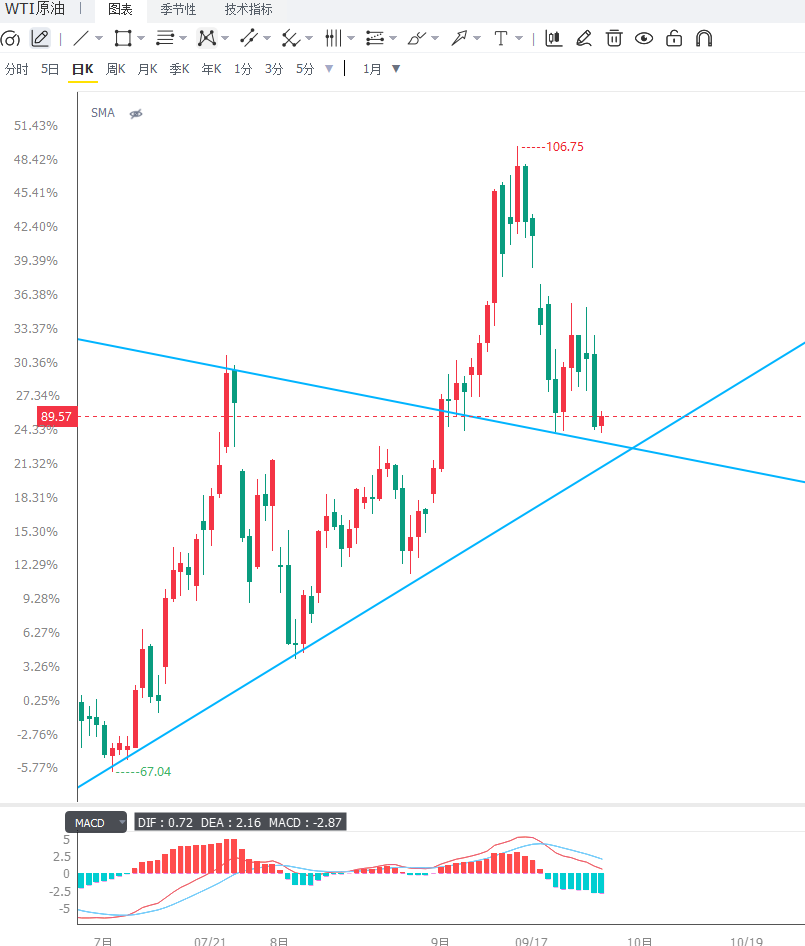 The recent sharp pullback in WTI crude oil prices, as summarized by the editor , is essentially a repricing following a rapid decline in the supply risk premium. The resumption of Middle Eastern crude oil exports, Saudi Arabia's partial resumption of East-West pipeline transport, the US plan to release strategic petroleum reserves, and increased inventories have collectively weakened the short-term supply tightness logic. However, the situation between the US and Iran, as well as risks to key shipping routes, continue to provide a floor for oil prices. Future oil price movements will depend more on the shifting forces of the two main drivers: "supply recovery" and "geopolitical risks." If energy flows continue to recover, the risk premium for oil prices may be further compressed; if negotiations stall or transportation activities are disrupted again, the crude oil market may face renewed upward pressure. In the short term, the $88 to $90 range will be a crucial technical observation window for determining the next direction of WTI crude oil prices.
From the supply side, the recovery of crude oil exports from the Middle East has accelerated significantly recently. Market data shows that the 10-day average of crude oil exports from the region has rebounded to approximately 17.5 million barrels per day, reaching about 98% of pre-conflict levels. This change indicates that the supply gap previously created by transportation disruptions, infrastructure constraints, and increased shipping risks is narrowing, easing market concerns about further deterioration in short-term crude oil supply. Saudi Arabia has resumed crude oil transportation through the East-West Pipeline, currently operating at about half of normal capacity, while some crude oil transportation activity continues in the Strait of Hormuz. The continued recovery of actual energy flow in the Middle East is one of the core factors behind the recent rapid decline in WTI crude oil prices. For funds that previously pushed up oil prices due to expectations of supply disruptions, the actual supply recovery means that some risk premiums are being repriced. US supply policies are also putting pressure on oil prices. The US government plans to release up to 40 million barrels of crude oil from its strategic petroleum reserves to alleviate pressure from rising domestic fuel costs. While the release of strategic reserves cannot completely offset the potential global supply gap, it can increase available crude oil resources in the short term and reduce market sensitivity to further tightening of supply. Meanwhile, US crude oil inventories also increased. Industry data shows that US crude oil inventories rose by about 1 million barrels last week. With supply recovery and inventory rebound occurring simultaneously, market sentiment regarding the short-term fundamentals of crude oil has weakened, leading to significant profit-taking in WTI after its previous rapid rise. However, the recent pullback in oil prices does not mean that the upward logic has completely disappeared. WTI is still expected to record its third consecutive monthly increase, indicating that the market's pricing of global supply risks remains relatively high. The prolonged tensions between the US and Iran, along with potential disruptions to energy infrastructure, maritime transport, and key shipping lanes, continue to limit the downside for oil prices. The market is currently paying particular attention to the progress of related negotiations. Market strategists believe that one of the key reasons for the recent rebound in oil prices is the new uncertainty in the negotiations between the US and Iran, and the change in the US's attitude towards reopening the Strait of Hormuz. As the Strait of Hormuz is a vital global energy transport route, any news regarding the resumption or further restrictions on passage could quickly alter the risk premium in the crude oil market. From a global market perspective, the high volatility of crude oil prices will continue to be transmitted to inflation expectations through fuel costs. If supply recovery expands further, upward pressure on energy prices may gradually weaken, thus alleviating market concerns about energy-driven inflation. Conversely, if geopolitical tensions deteriorate again and disrupt shipping, oil prices may quickly absorb risk premiums again, having a ripple effect on global inflation expectations, bond yields, and major central bank policy expectations. Therefore, current market sentiment is shifting between supply improvement and geopolitical risks. On the one hand, the recovery of Middle Eastern energy flows, the release of US strategic reserves, and increased inventories are all bearish; on the other hand, the relationship between the US and Iran remains highly uncertain, and key shipping routes have not yet fully returned to normal. For investors, whether oil prices can regain the $90 mark will depend on the rebalancing between the speed of supply recovery and geopolitical risk premiums. From a daily chart perspective, WTI experienced a significant pullback after its previous rapid rise, with a drop of nearly 4.5% in the previous trading day, indicating concentrated profit-taking at higher levels and a weakening of short-term bullish momentum. However, prices are currently still above the previous upward structure and have not completely broken the medium-term rebound pattern. The current area around $88 is a key observation zone. If the price can stabilize in this area and break through $90 again, the short-term downward pressure may be alleviated, and the resistance around $92 can be further monitored. If the rebound continues to be blocked and falls below $88 again, the market may further test the $86-$85 area. In terms of technical indicators, the upward momentum on the daily chart has cooled significantly compared to the previous period, and it is necessary to observe whether the price and momentum indicators can recover in sync in the short term. From the 4-hour chart, WTI has temporarily rebounded after a rapid decline, and the short-term trend has shifted from a strong upward trend to a consolidation and correction phase. The area around $88 is currently a key battleground between bulls and bears. If the price breaks through the $89.50-$90 range again, the 4-hour rebound structure is expected to extend further; if the trading momentum is insufficient during the rebound and the price falls below $88 again, the previous rapid decline may continue, and the next support area to watch is around $86. Overall, the 4-hour indicators are still in the process of correction, and the risk of a rapid price breakout or reversal triggered by geopolitical news should not be ignored in the short term. The recent sharp pullback in WTI crude oil prices, as summarized by the editor , is essentially a repricing following a rapid decline in the supply risk premium. The resumption of Middle Eastern crude oil exports, Saudi Arabia's partial resumption of East-West pipeline transport, the US plan to release strategic petroleum reserves, and increased inventories have collectively weakened the short-term supply tightness logic. However, the situation between the US and Iran, as well as risks to key shipping routes, continue to provide a floor for oil prices. Future oil price movements will depend more on the shifting forces of the two main drivers: "supply recovery" and "geopolitical risks." If energy flows continue to recover, the risk premium for oil prices may be further compressed; if negotiations stall or transportation activities are disrupted again, the crude oil market may face renewed upward pressure. In the short term, the $88 to $90 range will be a crucial technical observation window for determining the next direction of WTI crude oil prices.
- Risk Warning and Disclaimer
- The market involves risk, and trading may not be suitable for all investors. This article is for reference only and does not constitute personal investment advice, nor does it take into account certain users’ specific investment objectives, financial situation, or other needs. Any investment decisions made based on this information are at your own risk.