US August PCE Outlook: Inflationary pressures persist, resilient consumption may force another rate hike this year.
2026-09-30 10:24:22
Federal Reserve officials are awaiting the latest data on the core inflation indicator, the Personal Consumption Expenditures Price Index (PCE). This report, scheduled for release at 8:30 PM Beijing time on Wednesday, is likely to continue signaling sticky prices. Coupled with persistently strong US consumer spending, this offers little support for halting interest rate hikes. The market widely anticipates that this data will further solidify the Fed's policy stance of continuing to raise interest rates this year, and the path to a decline in inflation remains bumpy.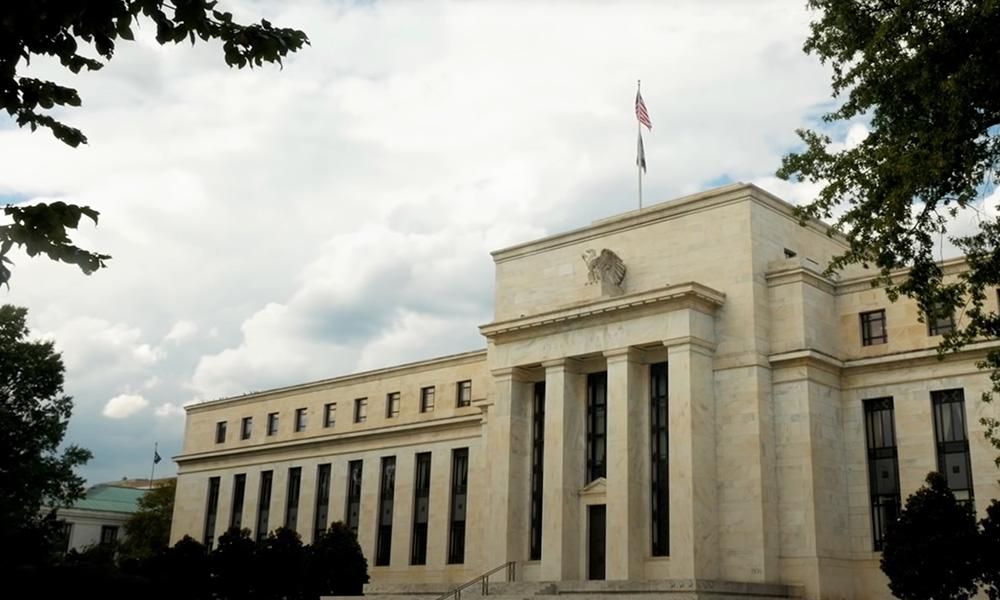
PCE inflation expectations remain high, and the decline is not progressing as smoothly as expected.
According to market consensus, both overall PCE and core PCE excluding food and energy are expected to rise by 0.3% month-on-month. Converted to an annual basis, overall inflation is expected to increase by 3.7% year-on-year, and core inflation by 3.3% year-on-year, both figures roughly unchanged from July and significantly higher than the Federal Reserve's 2% inflation target. This data sends a clear signal that inflation is unlikely to decline rapidly in the short term. Dan North, senior economist at Allianz Trade, said that the Fed, after seeing this data, will believe that core inflation remains stagnant, with no indication that inflation will fall at a credible pace. Current inflation levels are still far from the target, and inflationary pressures are deeply entrenched; the Fed cannot simply ignore or explain the current inflation situation with short-term factors. The Fed raised interest rates by 25 basis points at its September meeting and projected another rate hike by the end of the year in its dot plot. Of the 18 Federal Open Market Committee members who submitted economic projections, only two were not optimistic about further rate hikes in 2026, and most members also raised their PCE inflation forecasts. Federal Reserve Chairman Kevin Warsh stated at a press conference earlier this month that employment data, business investment, and private sector earnings all demonstrate that the fundamentals of the U.S. economy remain robust. He indicated that it is difficult to characterize broad financial conditions as restrictive, and that financial conditions are an important reference point for the Fed to adjust its interest rate policy.Federal Reserve officials hold divergent views, and the causes of inflation are subject to multiple interpretations.
Federal Reserve Governor Michael Barr stated on Tuesday that tariff policies and the ongoing conflict with Iran have disrupted the U.S.'s progress toward its 2% inflation target. He added that there is currently no clear trend indicating that inflation will fall back to the target in a timely manner. Based on this, Barr reiterated his view that the Fed will likely need to continue raising interest rates, but did not specify the final interest rate level . After the September rate hike, the Fed's benchmark interest rate range has reached 3.75% to 4%. He suggested that, under the baseline scenario, further policy adjustments are needed to ensure that inflation falls back to the target level in a timely manner, as price stability is the foundation for maintaining sustainable economic growth and achieving full employment. New York Fed President John Williams suggested that the demand for goods driven by the expansion of the artificial intelligence industry is the third largest factor pushing up inflation. He also pointed out that some indicators show positive signs: the growth rate of housing service prices has slowed, the labor market has not brought additional inflationary pressure, and the upward pressure on commodity prices from tariffs has largely subsided. Compared to Barr's hawkish stance, Williams' wording was relatively dovish. He believes that there is no need for urgent policy adjustments at present, and the Federal Reserve has ample time to continue collecting economic data. However, he also predicts that there will likely be another rate hike this year.Data revisions introduce uncertainties, but the resilience of household consumption continues to exceed expectations.
The report to be released on Wednesday also includes a variable: the U.S. Bureau of Economic Analysis will retrospectively revise historical data, adjusting the pricing methods for legal services, software, computer parts, and asset management services since 2021, which will lower historical inflation readings. Several Wall Street firms estimate that the July PCE year-on-year inflation data may be revised down by 0.2 to 0.3 percentage points, with the revised year-on-year reading potentially falling to around 3%. However, this is merely a retrospective adjustment of historical data, only changing past inflation analysis results and not altering future inflation prospects; the subsequent trend of inflation remains highly uncertain. Goldman Sachs predicts that inflation data will be weak in the next month or two before potentially returning to a healthy downward trend. Even with continued price increases and weakening consumer confidence, U.S. household consumption expenditure remains resilient. The market consensus expects personal consumption expenditure to rise 0.8% month-on-month in August , with rising gasoline prices being a major driver, while July's consumption expenditure only increased by 0.2% month-on-month. Bank of America's data also confirms the strong consumer spending. In the week ending September 19, credit and credit card spending rose 6.9% year-on-year, with gasoline spending surging 26.5%. Even after excluding gasoline, the spending growth rate still reached 5.7%.Conclusion
Persistently high inflation coupled with strong consumer spending means that the September rate hike failed to adequately curb economic activity, leaving the Federal Reserve with little grounds to pause rate hikes. Current market pricing suggests a high probability of a rate hike in October, with the possibility of further increases in December or January of the following year. The actual PCE inflation figure will directly influence the Fed's subsequent policy decisions, becoming the most crucial indicator for short-term capital markets.- Risk Warning and Disclaimer
- The market involves risk, and trading may not be suitable for all investors. This article is for reference only and does not constitute personal investment advice, nor does it take into account certain users’ specific investment objectives, financial situation, or other needs. Any investment decisions made based on this information are at your own risk.