The USD/JPY pair is consolidating around its downtrend line, awaiting a directional move.
2026-09-30 15:20:18
On Wednesday morning in Asia, the USD/JPY pair fell back to around 157.00, ending its previous strong run. The main reason for the yen's support was renewed signals from the Japanese and US Treasury departments to strengthen exchange rate cooperation, reigniting market concerns that Japan might take measures to curb excessive yen depreciation. Japanese Finance Minister Satsuki Katayama stated on Tuesday that she considered the yen's undervaluation a concern and confirmed that she had reached a consensus with US Treasury Secretary Scott Bessenter on strengthening cooperation. She also stated that the Japanese Ministry of Finance would continue to maintain close communication with the US Treasury Department to ensure the orderly operation of the foreign exchange market.  The significance of this statement lies in the fact that the market had previously been highly concerned about the potential policy response to a rapid depreciation of the yen. Recent emphasis by senior Japanese officials on exchange rate volatility risks means that with the USD/JPY exchange rate currently at high levels, the market needs to re-induce the risk of potential policy intervention. Strengthened exchange rate communication between Japan and the US has significantly increased the policy risk premium in the 157-160 yen range. Japan has previously released similar signals. Jun Mimura, Japan's chief foreign exchange officer, stated that the market should take seriously the clear signals from Tokyo and Washington regarding the exchange rate depreciation issue. The Japanese government hopes to maintain exchange rate stability, and a continued weakening of the yen could increase import costs and further push up domestic price pressures; therefore, a rapid depreciation of the yen is becoming an important policy variable that the market is focusing on. It is worth noting that the current strengthening of the yen is not entirely based on improved Japanese economic data. Japan's industrial production in August fell by 2.2% year-on-year, a significant weakening from the previous 4.0% increase, indicating that manufacturing activity is facing some pressure. The weakness in economic fundamentals alone is not enough to drive a sustained appreciation of the yen; therefore, recent exchange rate movements reflect more policy expectations and changes in market positioning. In contrast, US interest rate expectations continue to support the dollar. Federal Reserve Governor Michael Barr reiterated that further interest rate hikes may still be needed to control inflation. Cleveland Fed President Beth Hammark also previously emphasized that inflation risks remain high and that restrictive monetary policy should continue. Furthermore, Chicago Fed President Austan Goolsby recently expressed concern about the risk of overheating due to artificial intelligence-driven productivity growth, stressing the need to continuously monitor the relationship between productivity, fiscal stimulus, and inflation. These statements have reinforced market expectations that the Fed will maintain a relatively tight policy. Currently, the market prices a 47.1% chance of a Fed rate hike in October and a 92.5% chance of a December hike. This means the dollar has not lost all policy support despite the decline in USD/JPY. The yen's current relative strength stems more from Japanese policy signals and expectations of potential currency intervention, while the dollar remains supported by the Fed's hawkish stance. Going forward, US ADP employment data and the personal consumption expenditure price index will be important short-term catalysts. If US employment and inflation data continue to be resilient, the case for the Federal Reserve to maintain its restrictive policy may be further strengthened, potentially supporting the US dollar. Conversely, if the data weakens significantly, the dollar may come under pressure, further pushing USD/JPY down. Another current market focus is whether the Japanese government will continue to strengthen its exchange rate communication. If the yen continues to depreciate rapidly, warnings from Japan may escalate, and the market may reduce its long USD/JPY positions in advance. Therefore, even if the US interest rate advantage persists, USD/JPY's continued upward movement at high levels may face increasingly significant policy resistance. From a daily chart perspective, USD/JPY has recently retreated from its highs, currently trading below the 100-day simple moving average and the upper Bollinger Band, indicating a slightly bearish short-term technical structure. The area around 157.00 is a crucial price zone. If the price continues to weaken, the first support level to watch is the middle Bollinger Band around 156.10; if this level is breached, the next support level to watch is the lower Bollinger Band around 152.95. Looking at the upside, the upper Bollinger Band near 159.20 forms initial resistance, followed by the 100-day moving average near 159.55, creating a dense pressure zone. The RSI (14) is currently around 48.8, in the neutral zone, indicating that the previous upward momentum has cooled significantly, but it has not yet reached an extreme oversold state. From the 4-hour chart, USD/JPY has shifted from a high-level rise to a correction phase in the short term, with the area around 157.00 being a key battleground for both bulls and bears. If the price can regain 158.00 and further break through the 159.20 to 159.55 area, the previous high-level upward structure may be strengthened again; if the price continues to be constrained by 158.00 and falls below 156.10, the short-term correction space may further expand, and the area around 152.95 will become the next important observation area. Since the exchange rate policy signals of Japan and the US and US economic data can change market expectations in a short period of time, the 4-hour level needs to focus on guarding against rapid fluctuations caused by policy statements.
 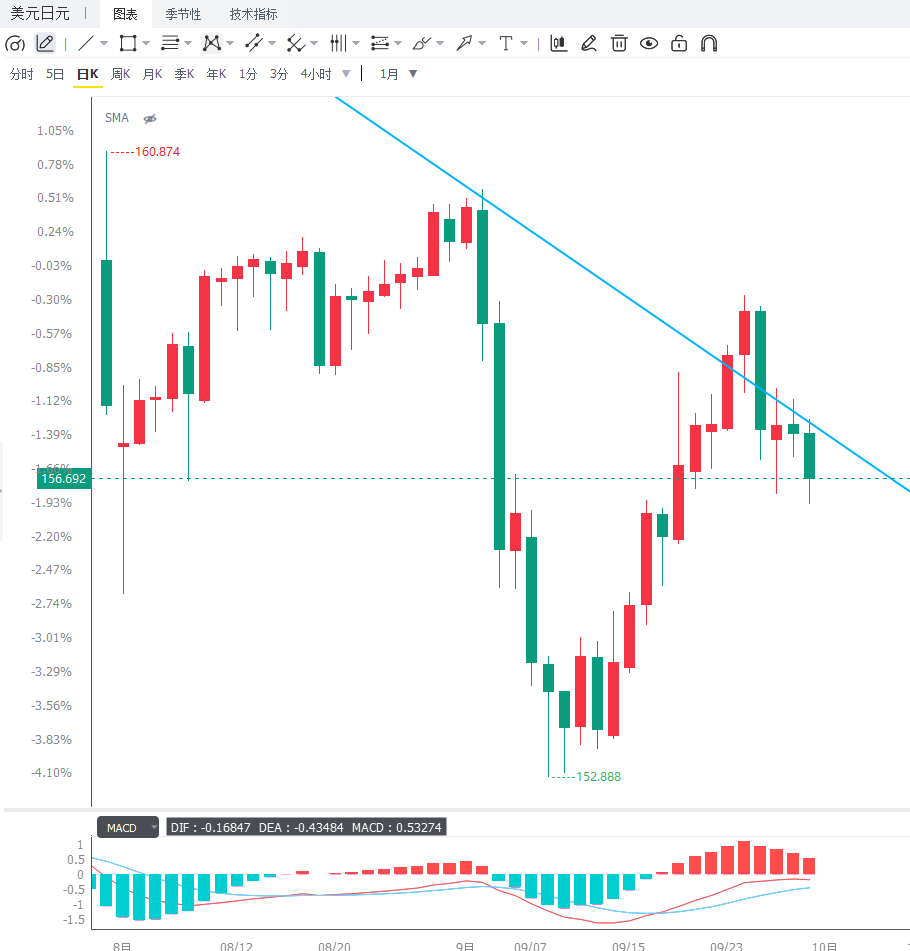 The core contradiction in the USD/JPY exchange rate is currently the interplay between the US-Japan interest rate differential and exchange rate policy risks. Federal Reserve officials continue to emphasize inflation risks, and expectations of restrictive policies continue to support the US dollar. Meanwhile, Japanese officials are intensifying their focus on yen depreciation and strengthening communication with the US Treasury Department regarding exchange rates, significantly increasing market sensitivity to potential policy intervention. In the short term, US ADP employment and PCE data will determine the strength of US interest rate expectations, while Japan's exchange rate statements may continue to influence the yen's risk premium. If US data is strong, the downside for USD/JPY may be limited; if US data weakens while Japan continues to signal a policy of stabilizing the exchange rate, USD/JPY may retreat further. Technically, 156.10 is a key short-term support level, while 159.20 to 159.55 constitutes a significant resistance zone.
The significance of this statement lies in the fact that the market had previously been highly concerned about the potential policy response to a rapid depreciation of the yen. Recent emphasis by senior Japanese officials on exchange rate volatility risks means that with the USD/JPY exchange rate currently at high levels, the market needs to re-induce the risk of potential policy intervention. Strengthened exchange rate communication between Japan and the US has significantly increased the policy risk premium in the 157-160 yen range. Japan has previously released similar signals. Jun Mimura, Japan's chief foreign exchange officer, stated that the market should take seriously the clear signals from Tokyo and Washington regarding the exchange rate depreciation issue. The Japanese government hopes to maintain exchange rate stability, and a continued weakening of the yen could increase import costs and further push up domestic price pressures; therefore, a rapid depreciation of the yen is becoming an important policy variable that the market is focusing on. It is worth noting that the current strengthening of the yen is not entirely based on improved Japanese economic data. Japan's industrial production in August fell by 2.2% year-on-year, a significant weakening from the previous 4.0% increase, indicating that manufacturing activity is facing some pressure. The weakness in economic fundamentals alone is not enough to drive a sustained appreciation of the yen; therefore, recent exchange rate movements reflect more policy expectations and changes in market positioning. In contrast, US interest rate expectations continue to support the dollar. Federal Reserve Governor Michael Barr reiterated that further interest rate hikes may still be needed to control inflation. Cleveland Fed President Beth Hammark also previously emphasized that inflation risks remain high and that restrictive monetary policy should continue. Furthermore, Chicago Fed President Austan Goolsby recently expressed concern about the risk of overheating due to artificial intelligence-driven productivity growth, stressing the need to continuously monitor the relationship between productivity, fiscal stimulus, and inflation. These statements have reinforced market expectations that the Fed will maintain a relatively tight policy. Currently, the market prices a 47.1% chance of a Fed rate hike in October and a 92.5% chance of a December hike. This means the dollar has not lost all policy support despite the decline in USD/JPY. The yen's current relative strength stems more from Japanese policy signals and expectations of potential currency intervention, while the dollar remains supported by the Fed's hawkish stance. Going forward, US ADP employment data and the personal consumption expenditure price index will be important short-term catalysts. If US employment and inflation data continue to be resilient, the case for the Federal Reserve to maintain its restrictive policy may be further strengthened, potentially supporting the US dollar. Conversely, if the data weakens significantly, the dollar may come under pressure, further pushing USD/JPY down. Another current market focus is whether the Japanese government will continue to strengthen its exchange rate communication. If the yen continues to depreciate rapidly, warnings from Japan may escalate, and the market may reduce its long USD/JPY positions in advance. Therefore, even if the US interest rate advantage persists, USD/JPY's continued upward movement at high levels may face increasingly significant policy resistance. From a daily chart perspective, USD/JPY has recently retreated from its highs, currently trading below the 100-day simple moving average and the upper Bollinger Band, indicating a slightly bearish short-term technical structure. The area around 157.00 is a crucial price zone. If the price continues to weaken, the first support level to watch is the middle Bollinger Band around 156.10; if this level is breached, the next support level to watch is the lower Bollinger Band around 152.95. Looking at the upside, the upper Bollinger Band near 159.20 forms initial resistance, followed by the 100-day moving average near 159.55, creating a dense pressure zone. The RSI (14) is currently around 48.8, in the neutral zone, indicating that the previous upward momentum has cooled significantly, but it has not yet reached an extreme oversold state. From the 4-hour chart, USD/JPY has shifted from a high-level rise to a correction phase in the short term, with the area around 157.00 being a key battleground for both bulls and bears. If the price can regain 158.00 and further break through the 159.20 to 159.55 area, the previous high-level upward structure may be strengthened again; if the price continues to be constrained by 158.00 and falls below 156.10, the short-term correction space may further expand, and the area around 152.95 will become the next important observation area. Since the exchange rate policy signals of Japan and the US and US economic data can change market expectations in a short period of time, the 4-hour level needs to focus on guarding against rapid fluctuations caused by policy statements. The core contradiction in the USD/JPY exchange rate is currently the interplay between the US-Japan interest rate differential and exchange rate policy risks. Federal Reserve officials continue to emphasize inflation risks, and expectations of restrictive policies continue to support the US dollar. Meanwhile, Japanese officials are intensifying their focus on yen depreciation and strengthening communication with the US Treasury Department regarding exchange rates, significantly increasing market sensitivity to potential policy intervention. In the short term, US ADP employment and PCE data will determine the strength of US interest rate expectations, while Japan's exchange rate statements may continue to influence the yen's risk premium. If US data is strong, the downside for USD/JPY may be limited; if US data weakens while Japan continues to signal a policy of stabilizing the exchange rate, USD/JPY may retreat further. Technically, 156.10 is a key short-term support level, while 159.20 to 159.55 constitutes a significant resistance zone.
- Risk Warning and Disclaimer
- The market involves risk, and trading may not be suitable for all investors. This article is for reference only and does not constitute personal investment advice, nor does it take into account certain users’ specific investment objectives, financial situation, or other needs. Any investment decisions made based on this information are at your own risk.