High oil prices, AI-driven price inflation, and persistently high inflation reinforce the hawkish consensus within the Federal Reserve.
2026-09-30 15:52:19
On Wednesday (September 30) during the European session, the US dollar index fluctuated slightly lower, currently trading around 101.25, still within its high range since the end of July. Comments from Federal Reserve officials regarding oil prices and AI-driven inflation have drawn market attention. Fed officials increasingly believe that higher oil prices and artificial intelligence are increasing the upside risks to inflation, potentially requiring further interest rate hikes to bring them down. Fed Governor Michael Barr stated on Tuesday that the combined effects of higher energy prices and artificial intelligence have derailed the Fed from its 2% inflation target. He noted that although the impact of tariffs has diminished, energy prices remain high, and there is uncertainty about when the price impact of the Iranian conflict will be resolved. He also pointed out that the surge in investment and demand driven by AI infrastructure has had a "measurable impact" on prices. 
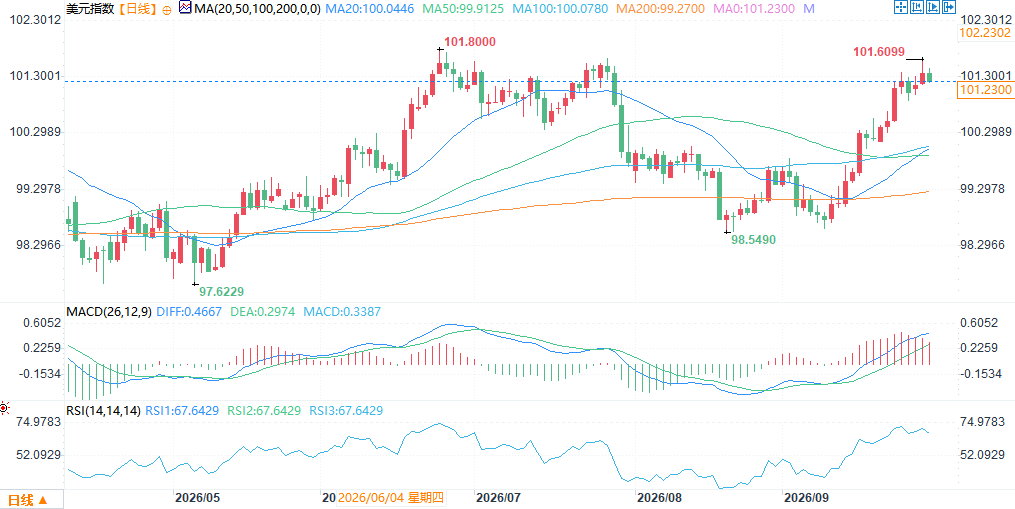 (US Dollar Index Daily Chart, Source: FX678) At 15:50 Beijing time, the US Dollar Index was at 101.23/24.
Barr: The combination of energy and AI has caused the Fed to deviate from its 2% target.
Federal Reserve Governor Barr said on Tuesday that the combined effects of higher energy prices and artificial intelligence have pushed the Fed off track from its 2% inflation target. He noted that while the impact of tariffs has diminished, energy prices remain high, and there is uncertainty about when the price impacts of the Iran conflict will be resolved. He also pointed to the “measurable impact” on prices from the surge in investment and demand driven by AI infrastructure development. Barr stated, “In the past 20 months, I’ve only seen two months of data consistent with 2% core PCE inflation. I haven’t seen a clear trend toward a timely return to 2%.” He anticipates further rate hikes will be needed to curb inflation, as inflation risks have increased. In a speech in Detroit, Barr said, “With strong economic growth and a robust labor market, we need to address the risks to our inflation target in a timely manner.”Williams: The inflationary impact of AI demand shocks is becoming increasingly significant, with the energy sector experiencing a greater and more lasting impact.
New York Fed President Williams is focusing on similar forces. “The inflationary impact of AI-related demand shocks is becoming increasingly significant, and I now expect the impact of energy prices on inflation to be slightly larger and more persistent,” Williams said. He had earlier this spring predicted a decline in oil prices and suggested that inflation might subside on its own. “While monetary policy cannot move ships or reopen pipelines and refineries, it can reduce the risk of these supply shocks spilling over into broader, more persistent inflation.” On the positive side, Williams said tariffs are no longer pushing up commodity price inflation, but he noted that the situation could change if more tariffs were implemented.The Federal Reserve has already raised interest rates, and the market is pricing in three additional rate hikes.
The Federal Reserve raised interest rates for the first time in more than three years a few weeks ago, and the median forecast of the interest rate-setting committee (excluding Chairman Kevin Warsh) is for one more rate hike this year. The market has already priced in three additional rate hikes. Chicago Fed President Goolsby said Tuesday that he is one of the more optimistic members of the central bank, but he needs "evidence that inflation is falling back, that these things that should be temporary are disappearing. Otherwise, by definition, they won't disappear until interest rates fall." Williams and Barr both believe the economy is robust and showing signs of strengthening. "The overall economic fundamentals are solid; therefore, getting inflation back to 2% is the number one task," Williams said.The effects of tariffs have subsided, but energy and AI have become new sources of inflation.
Both officials noted that the impact of tariffs on commodity price inflation has subsided, but energy and AI have emerged as new sources of inflation. Both Barr and Williams believe the economy is robust, providing room for further policy tightening. Energy prices are supported by Middle East conflicts and refining capacity constraints, while surging demand from AI infrastructure development is pushing up related commodity prices; these two forces complicate the Fed's inflation path. Monetary policy cannot directly address supply-side issues, but it can reduce the risk of supply shocks spilling over into broader inflation.Summarize
Federal Reserve officials increasingly believe that oil prices and AI are increasing upside risks to inflation, potentially requiring further rate hikes. Barr stated that the combined effects of energy and AI have pushed the Fed away from its 2% target, with only two months in the past 20 months showing data consistent with the 2% core PCE, suggesting further rate hikes are needed. Williams stated that the inflationary impact of AI demand shocks is becoming increasingly significant, with energy prices having a larger and more lasting impact; tariffs are no longer pushing up commodity prices, but further tariffs could change that. The Fed has already raised rates, and the market is pricing in three additional rate hikes. Goolsby indicated that evidence of declining inflation is needed. Both officials believe the economy is robust, providing room for further tightening. Future attention should be paid to energy price trends, price pressures on AI-related goods, changes in tariff policy, and further statements from Fed officials. If energy and AI pressures persist, the rate hike path may be further strengthened; if there are clear signs of declining inflation, policy may shift to a wait-and-see approach. (US Dollar Index Daily Chart, Source: FX678) At 15:50 Beijing time, the US Dollar Index was at 101.23/24.
- Risk Warning and Disclaimer
- The market involves risk, and trading may not be suitable for all investors. This article is for reference only and does not constitute personal investment advice, nor does it take into account certain users’ specific investment objectives, financial situation, or other needs. Any investment decisions made based on this information are at your own risk.