Saudi Arabia resumes shipments from Yanbu, and Kpler data shows exports rebounding to 16 million barrels per day. How long can the risk premium last?
2026-09-30 15:52:20
Brent crude futures traded in a volatile range during the European session on Wednesday (September 30), currently hovering around $95.80 per barrel. Goldman Sachs believes that the recovery in Persian Gulf oil exports is weakening the supply risk premium for crude oil. Goldman Sachs estimates that Persian Gulf oil exports, including so-called "covert exports," which doubled in September, have recovered to their 2025 average levels. Covert exports refer to cargoes carried by tankers with their satellite transponders turned off, making it difficult to measure the flow through the Strait of Hormuz. The bank stated that Saudi exports led the rebound and rose above their 2025 average, while Iran did not export any crude oil by sea in September. This estimate provides new support for the supply recovery theme that has dominated the oil market. 
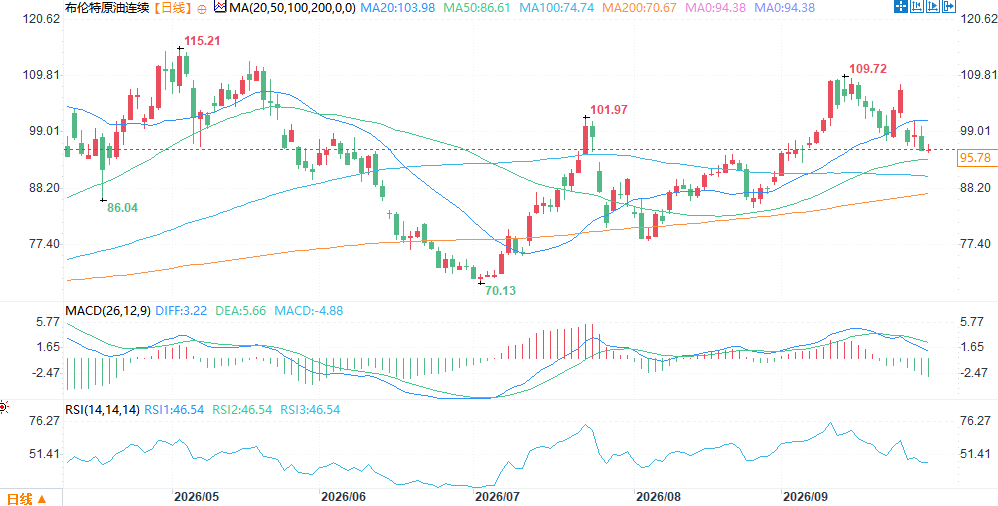 (Brent crude oil futures daily chart, source: EasyTrade) At 15:48 Beijing time, Brent crude oil futures were trading at $95.84 per barrel.
Persian Gulf exports doubled in September, returning to the 2025 average, with Saudi Arabia leading the rebound.
Goldman Sachs estimates that Persian Gulf oil exports, including covert exports, have recovered to their 2025 average levels after doubling in September. The bank stated that Saudi exports led the rebound, rising above their 2025 average, while Iran did not export any crude oil by sea in September. Covert exports refer to cargo carried by tankers with their satellite transponders switched off, making the flow through the Strait of Hormuz difficult to measure. Goldman Sachs believes that this increase in transit and more ship-to-ship transshipments indicates that producers and shipping companies are adapting to the conflict. In a report at the end of August, the bank estimated that crude oil and petroleum product exports in the region had recovered to about two-thirds of pre-war levels, or 15-16 million barrels per day, well above the low of about 5-6 million barrels per day in March, but still 7-8 million barrels per day lower than before the conflict began. The bank stated at the time that higher covert flows could mitigate the upside potential for crude oil prices, even if the disruption continues for a longer period.Other evidence supports the rebound: Saudi Arabia resumed shipments from Yanbu, and Kpler data showed a recovery in exports.
The latest data aligns with other evidence of a rebound. Saudi Arabia has reportedly resumed tanker loading from its Red Sea port of Yanbu after restarting the east-west pipeline. Kpler data shows that crude oil exports from Middle Eastern oil-producing countries rebounded to approximately 16 million barrels per day in September, the highest level since the conflict began in late February. The U.S. Department of Energy has also provided up to 40 million barrels from its strategic petroleum reserve. This evidence collectively supports the theme of supply recovery, putting downward pressure on crude oil prices.Iran's absence from maritime exports and the US naval blockade becoming the core of negotiations.
Goldman Sachs did not provide a reason for Iran's absence from seaborne crude oil exports. The US naval blockade is a core demand in Iran's stalled diplomacy. Reports indicate that Qatar's mediation efforts made little progress this week, and US officials believe Trump may order a resumption of major military operations after the midterm elections. Trump has stated he has offered Iran nothing to end the conflict. Iran's absence means that while overall Persian Gulf exports have resumed, Iranian supplies remain constrained by the blockade, and this gap could be an uncertainty factor in the supply recovery story.Restoring the story is only one aspect of the balance; risks still exist.
The recovery story is therefore only one side of the equation. Traders will be watching whether exports continue to rise, whether Iran's absence persists, and whether a breakdown in negotiations will bring supply disruptions back into the price picture. Refined products such as diesel are also in focus, with the White House urging the EU to use its emergency diesel reserves to lower global prices. Goldman Sachs, in a report at the end of August, argued that in the event of continued disruptions, refined products and European gas have more upside potential than crude oil, which aligns with market focus on diesel. The main risks are diplomatic, as stalled US-Iran negotiations and reports of a possible resumption of major military operations in Washington after the midterm elections leave tail risks for prices.Summarize
Goldman Sachs estimates that Persian Gulf oil exports, after doubling in September, have returned to their 2025 average, with Saudi Arabia leading the rebound and exceeding its 2025 average, while Iran has not exported crude oil by sea. This estimate provides new support for the supply recovery theme. Other evidence includes Saudi Arabia resuming Yanbu loading and Kpler data showing Middle East exports rebounding to approximately 16 million barrels per day. The recovery story is only one side of the equation; traders are focused on whether exports continue to rise, whether Iran's absence will persist, and whether a breakdown in negotiations will allow supply disruptions to return to prices. Refined products such as diesel are in focus, with the White House urging the EU to utilize its diesel emergency reserves. The main risks are diplomatic, with stalled US-Iran negotiations and the potential resumption of hostilities after the midterm elections leaving tail risks for prices. Going forward, attention should be paid to Persian Gulf export data, whether Iranian seaborne exports resume, the progress of US-Iran negotiations, and diesel market dynamics. (Brent crude oil futures daily chart, source: EasyTrade) At 15:48 Beijing time, Brent crude oil futures were trading at $95.84 per barrel.
- Risk Warning and Disclaimer
- The market involves risk, and trading may not be suitable for all investors. This article is for reference only and does not constitute personal investment advice, nor does it take into account certain users’ specific investment objectives, financial situation, or other needs. Any investment decisions made based on this information are at your own risk.