PCE unexpectedly cooled and GDP was revised upward: US Treasury yields plummeted and gold surged by $10 in the short term. What signals are hidden behind this?
2026-09-30 20:40:15
On Wednesday (September 30) at 8:30 PM Beijing time, the U.S. Department of Commerce simultaneously released the August Personal Consumption Expenditures (PCE) price index and the final reading of Q2 GDP. The market had widely expected core PCE to rise 0.3% month-over-month and 3.3% year-over-year, while overall PCE was expected to rise 0.4% month-over-month and 3.7% year-over-year; the final Q2 GDP annualized rate was expected to remain at 1.5%. The actual results deviated significantly: August core PCE rose only 0.2% month-over-month and 3.0% year-over-year, while overall PCE rose 0.3% month-over-month and 3.4% year-over-year; the final Q2 GDP reading was revised upward to 2.2%, and the final consumer spending reading rose to 3.8%.  Following the data release, spot gold surged by over $10 to $4,205 per ounce, while spot silver followed suit; the yield on the 10-year U.S. Treasury note fell by about 5 basis points to 5.205%, and the yield on the two-year note declined by 4.57 basis points; stock index futures rose across the board.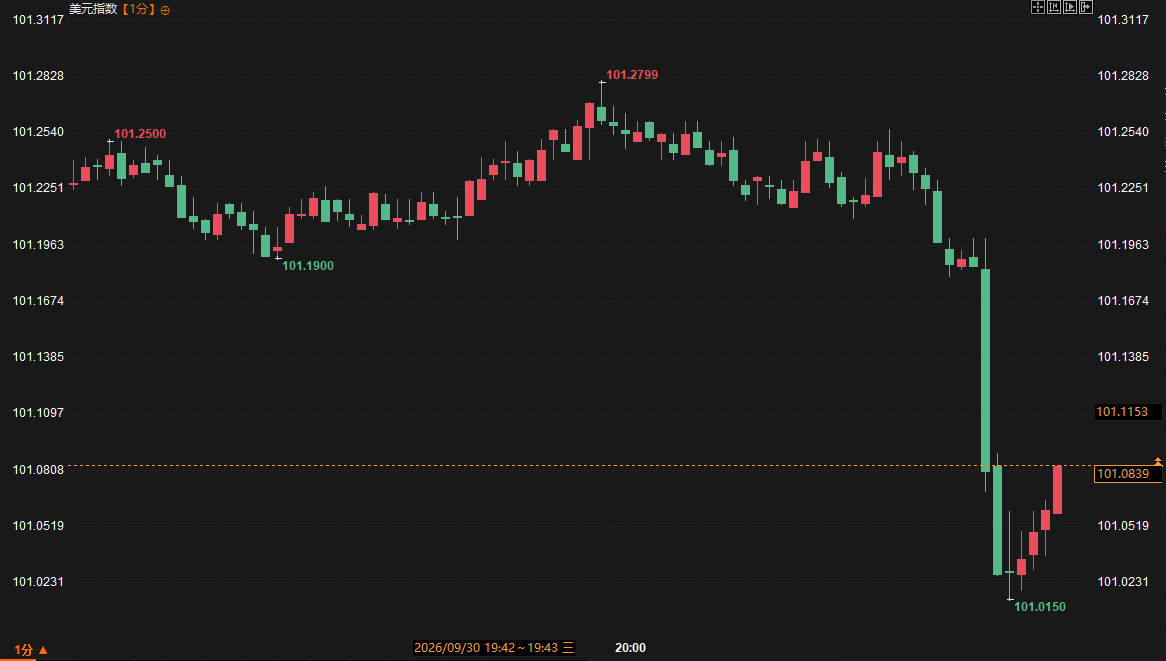
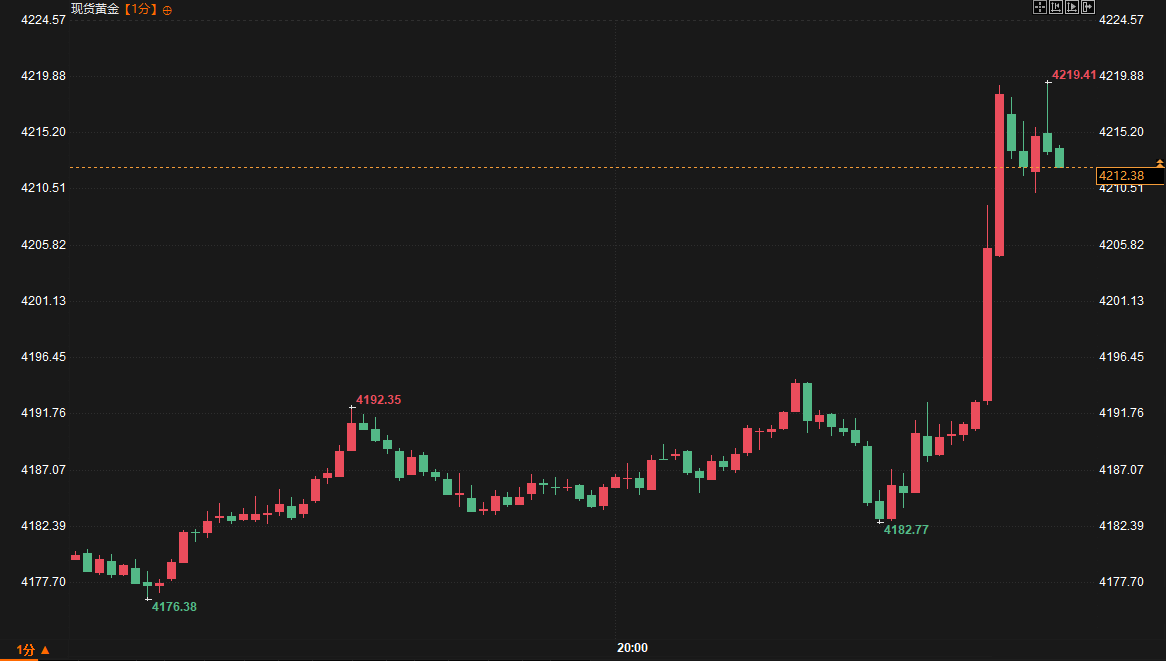
Following the data release, spot gold surged by over $10 to $4,205 per ounce, while spot silver followed suit; the yield on the 10-year U.S. Treasury note fell by about 5 basis points to 5.205%, and the yield on the two-year note declined by 4.57 basis points; stock index futures rose across the board. Deep interconnect analysis
On the fundamental front, inflation indicators were across the board below expectations, with core PCE hitting a new low since February, directly alleviating market concerns about further tightening by the Federal Reserve in the short term. Meanwhile, the upward revision of the final GDP figure and strong consumer spending indicate continued economic resilience, forming a combination of "cooling inflation + robust growth." Historically, in similar scenarios, when core inflation unexpectedly falls while growth data remains strong, US Treasury yields often fall first, with risk assets and precious metals benefiting simultaneously. Compared to previous highs, the 10-year yield has fallen rapidly from its pre-data high, while gold has broken out of its short-term consolidation range. Before the data release, institutions emphasized that methodological revisions might lower year-on-year readings, but month-on-month figures remained key, resulting in a sticky overall expectation; retail investors focused more on the potential volatility of gold and US stocks. After the release, institutional perspectives quickly shifted to the "canary combination"—cooling inflation leaves room for policy observation, while strong growth limits expectations of excessive easing; retail investors focused on the short-term surge in gold and the emotional release brought about by falling yields, showing a significant deviation in expectations. Short-term interest rate futures rose as traders reduced their bets on an October rate hike, a move corroborated by declining yields and rising stock index futures. In precious metals, gold and silver found short-term support; interest rate-sensitive assets also benefited, but the full impact on their bullish or bearish trends still requires further data verification.Trend Outlook
Extrapolating from the market logic, cooling inflation figures should help suppress upward pressure on yields, supporting gold's relatively strong performance. The rebound momentum in US stock futures is also expected to continue into the session. However, upward revisions to second-quarter growth and robust consumer spending suggest that economic momentum has not slowed significantly, and the downside potential for yields may be limited by subsequent employment and service price data. Overall, the market will likely revolve around a "policy path observation period," with short-term fluctuations in precious metals and stock indices still primarily driven by yield changes.Further Reading
Q: Why is a lower-than-expected core PCE figure considered positive for precious metals? The core PCE is the Fed's preferred inflation indicator. A lower-than-expected reading usually reduces the urgency of interest rate hikes, and a decline in expected real interest rates makes gold, a non-interest-bearing asset, relatively attractive. The more than $10 surge in gold after the data release reflects this transmission. Q: How do the upward revision of the final GDP figure and cooling inflation jointly affect US Treasury yields? Cooling inflation pushes yields down, while upward revisions to growth limit the decline. The simultaneous decline in 10-year and 2-year yields indicates that the market is more focused on inflation signals, but if subsequent employment data is strong, yields may come under pressure again. Q: What are the main differences between institutional and retail investor views before and after the data release? Before the release, institutions focused on methodological revisions and the risk of month-on-month stickiness, while retail investors focused on expectations of gold and stock index volatility. After the release, institutions emphasized the policy observation window of "solid growth + cooling inflation," while retail investors discussed short-term market breakouts and sentiment release more directly. Q: What does strong personal spending coupled with weak personal income indicate? Spending rose 0.9% month-over-month while income rose only 0.2%, and the savings rate declined, indicating that consumption remains resilient, but its sustainability depends on whether subsequent income and employment data can support it. Q: What is the immediate impact of this data on the Fed's policy path? Short-term interest rate futures show a further decline in expectations for an October rate hike, giving the market room to observe, but growth and consumption data still suggest that policy is unlikely to shift quickly. Subsequent non-farm payrolls and services inflation will be key indicators.- Risk Warning and Disclaimer
- The market involves risk, and trading may not be suitable for all investors. This article is for reference only and does not constitute personal investment advice, nor does it take into account certain users’ specific investment objectives, financial situation, or other needs. Any investment decisions made based on this information are at your own risk.