Real interest rate growth slows; gold prices await technical stabilization before rebound.
2026-10-01 17:36:15
Market expectations for a Fed rate hike in October have continued to cool, easing tightening pressures and providing bullish support for gold prices from a macro perspective. The market's repricing of inflation stickiness and global debt risks has driven nominal interest rates significantly higher, but gold, as a non-interest-bearing asset, has its price anchored to US real interest rates in the long term. However, the rise in real interest rates has not been as rapid as that of nominal interest rates, due to two core reasons: firstly, concerns about imported inflation caused by ongoing Middle East geopolitical tensions and shortages of energy and refined oil products; and secondly, macroeconomic concerns about rising debt repayment pressures and weakening sovereign debt resilience in various countries. This will lead to a slower rise in real interest rates. The pace of increase in real interest rates is slowing significantly, and even if the 10-year Treasury yield continues to rise, the decline in gold prices will be strictly limited. 
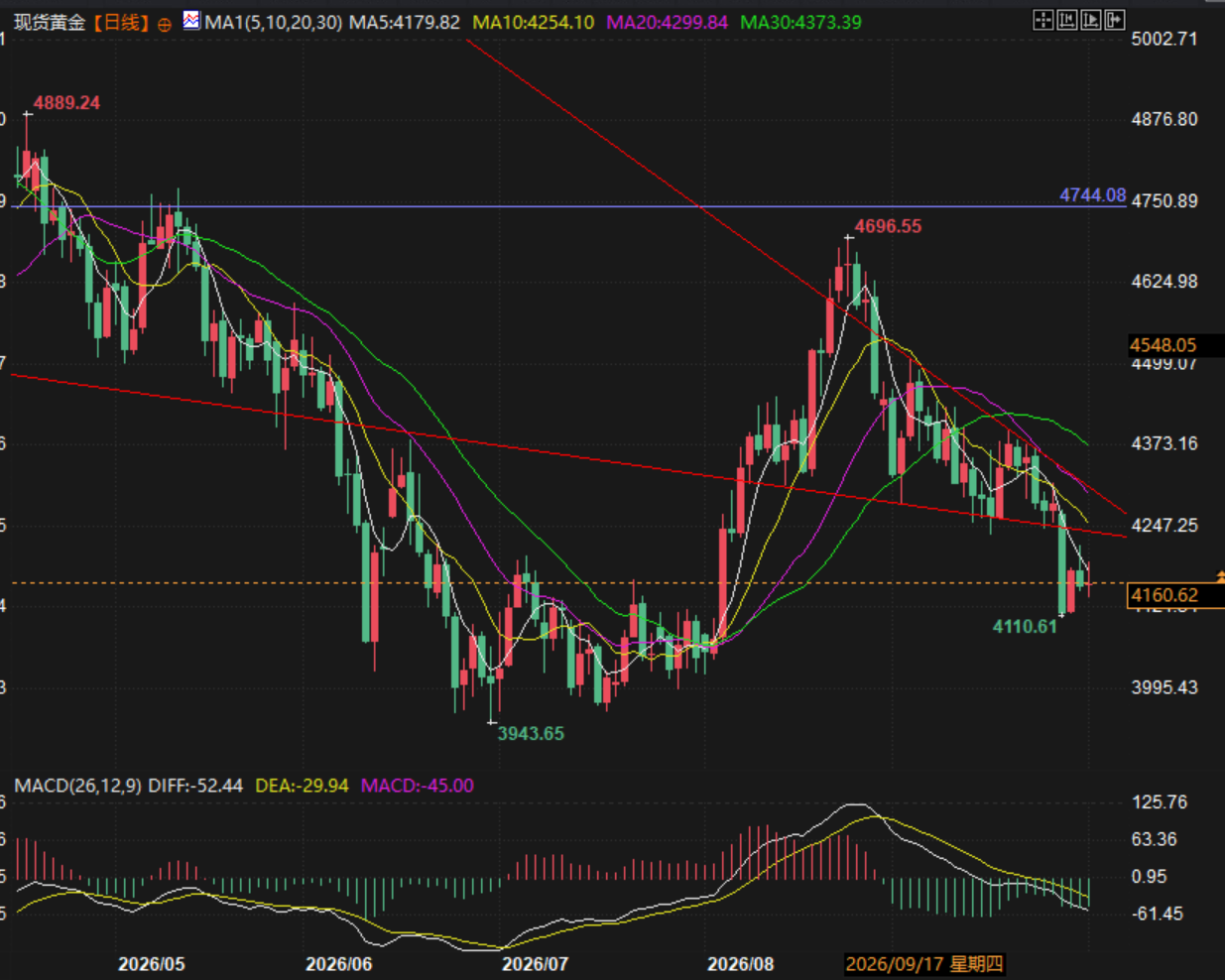 (Spot gold daily chart, source: EasyTrade) At 17:33 Beijing time, spot gold is currently trading at $4161 per ounce.
Key changes in the interest rate structure: Nominal interest rates remain strong, while the rate of increase in real interest rates has slowed marginally.
The market is currently undergoing a crucial structural shift: the core driver pushing up US Treasury yields has gradually shifted from "interest rate hike expectations and economic resilience" to a combination of inflation risk premium and debt risk premium. This creates a unique market logic: nominal interest rates are likely to remain relatively strong and volatile, more likely to rise than fall, while the upward momentum of real interest rates has been steadily weakening. Simply put, the market is no longer experiencing "tightening monetary policy suppressing gold prices," but rather "inflation and debt risk pushing up nominal interest rates." Under this structure, the slowdown and gradual leveling off of real interest rate increases means that the core negative factors suppressing gold prices are fading, laying the groundwork for a subsequent recovery in gold prices.Supply and demand diverge: Central bank gold purchases provide a floor, while gold sales by energy-producing countries create disturbances.
From a supply and demand perspective, the underlying support for gold remains solid. The long-term, continuous gold purchases by global central banks have consistently reinforced the bottom value of gold prices, which is the core underlying logic of the long-term bull market in gold in recent years. However, there is significant short-term hedging selling pressure: some countries impacted by the energy crisis and facing tight foreign exchange reserves will periodically sell their gold reserves to obtain dollar liquidity, which will be used to stabilize their currencies and offset energy import pressures. This leads to a divergence between long-term bullish factors and short-term disturbances in the gold supply and demand pattern, making it difficult for the fundamentals to provide a sustained unilateral driving force.Funding characteristics: ETFs exhibit volatile buying and selling behavior, indicating extremely unstable short-term sentiment.
At the marginal trading level, gold ETF funds are currently the primary source of short-term volatility. However, ETF funds are highly speculative, exhibiting strong characteristics of chasing highs and lows and following trends, which can amplify market fluctuations and make it difficult to predict trend reversals in advance. Therefore, relying solely on fund flows to judge market trends at this stage is unreliable; frequent fund inflows and outflows will only exacerbate repeated price swings and bottoming-out processes in gold.Current trading strategy: Avoid counter-trend trading and wait for technical stabilization before making any moves.
Considering the interest rate structure, fundamentals, and funding conditions, the current gold market is characterized by a balance between bullish and bearish forces and an unclear direction, making it unsuitable for contrarian bottom-fishing or prematurely betting on a turning point. The recommended strategy is to strictly follow the technical structure: aggressive trading is unnecessary at this stage; patiently wait for the gold price to stabilize, for short-term moving averages to gradually flatten, and for the consolidation to narrow. Once the technical pattern is repaired, coupled with a macroeconomic environment where real interest rates are struggling to rise, the probability of a phase of rebound in gold will significantly increase.Subsequent core tracking variables
Real interest rate trends: Confirm whether the core negative factors suppressing gold prices continue to weaken; Energy inflation changes: Refined oil prices and geopolitical situations determine the central level of inflation risk premium; Global debt sentiment: Whether the debt repayment pressure of various countries will further spread under high interest rates; Gold ETF fund flow: Avoid extreme emotional fluctuations; Technical pattern: Wait for the moving averages to flatten and for the price to stabilize signal to materialize. (Spot gold daily chart, source: EasyTrade) At 17:33 Beijing time, spot gold is currently trading at $4161 per ounce.
- Risk Warning and Disclaimer
- The market involves risk, and trading may not be suitable for all investors. This article is for reference only and does not constitute personal investment advice, nor does it take into account certain users’ specific investment objectives, financial situation, or other needs. Any investment decisions made based on this information are at your own risk.