Why are interest rates soaring despite cooling expectations of interest rate hikes and easing inflation?
2026-10-01 16:46:15
On Thursday (October 1st) during the Asian and European sessions, global government bond yields surged, causing a sharp drop in US stocks and triggering panic selling of US Treasuries. Currently, US Treasury yields are in a sensitive area following the recent sharp rise, exhibiting extreme volatility. However, I believe there is no need for excessive panic; after the emotional and liquidity shocks subside, a correction is highly likely. This is because after the recent rapid rise in US Treasury yields and subsequent large-scale selling, yields are already quite attractive. Some funds have begun to buy US Treasuries in batches to buy on the dip. However, this is also a high-frequency trading range for bulls and bears. Those buying on the dip hope to profit immediately, while some funds holding US Treasuries with significant losses hesitate to cut their losses, ultimately leading to a situation today where those buying on the dip may experience a long squeeze, while those hesitant to cut their losses end up selling at rock-bottom prices. 
 (TIPS 10-year yield, source: Federal Reserve)
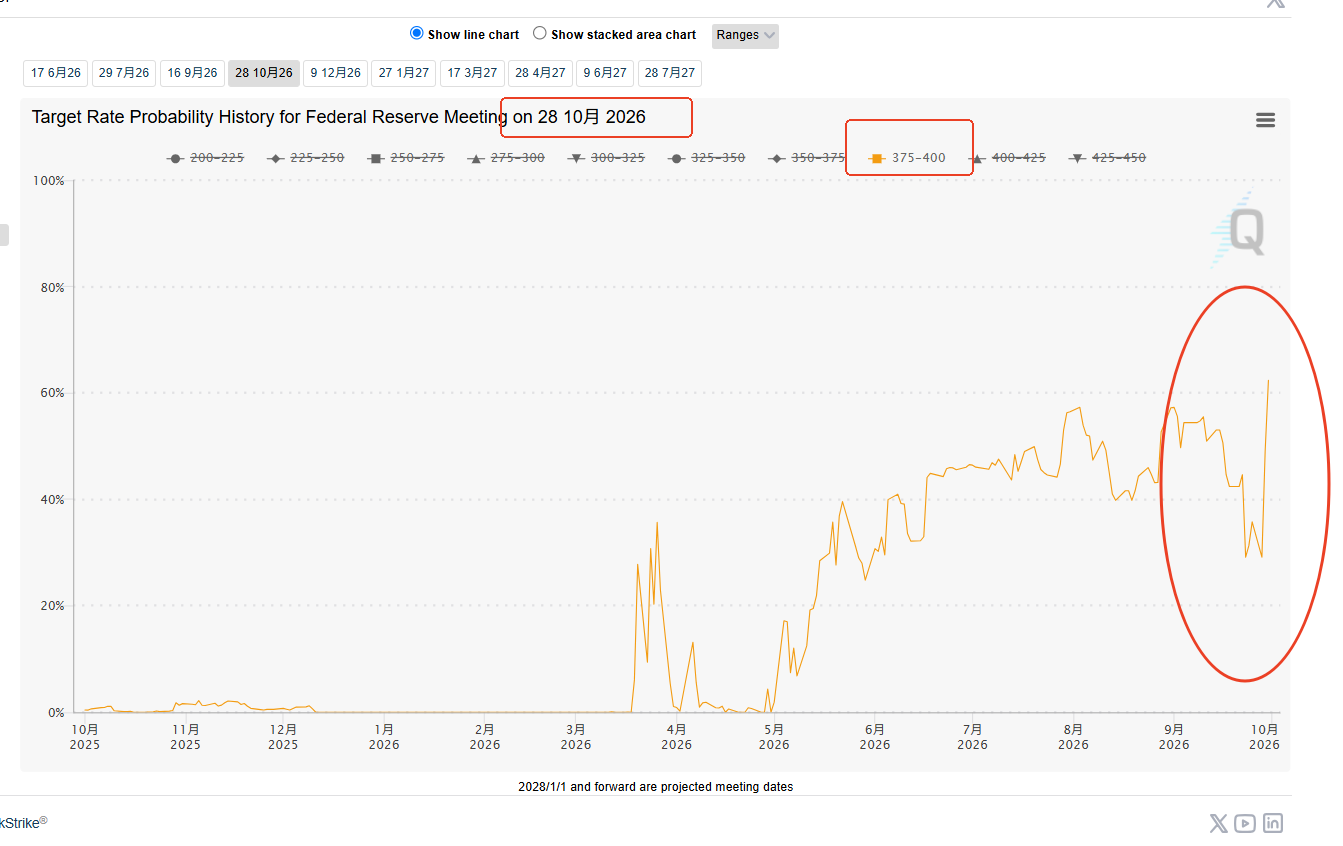 (CME FedWatch interest rate tool, source: CME Group)
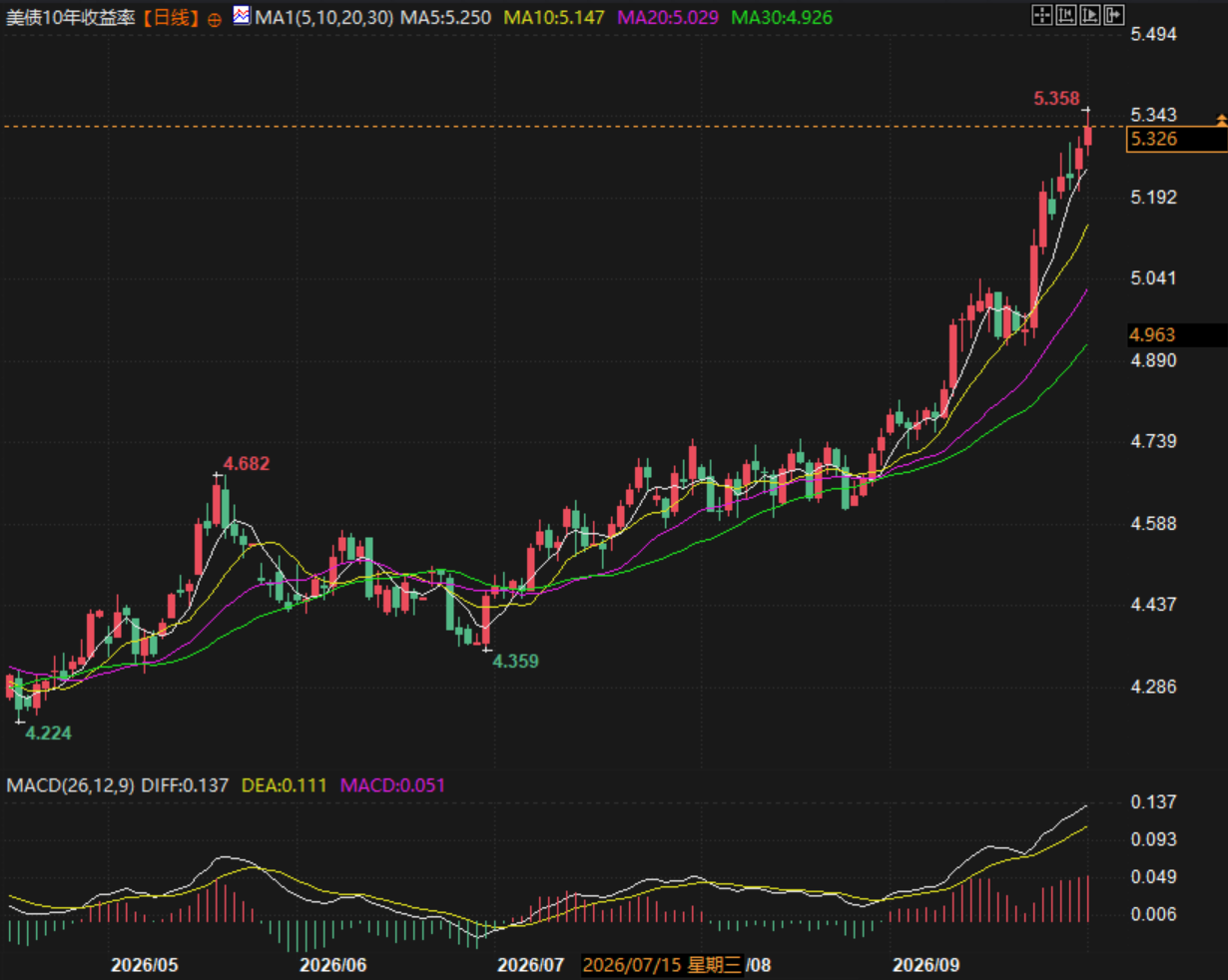 (Daily chart of 10-year Treasury bond yield, source: EasyTrade) At 16:39 Beijing time, the 10-year Treasury bond yield is currently at 5.326%.
Detailed analysis of extreme market conditions: highly destructive but with questionable sustainability.
A key characteristic of the US Treasury market in the past two days is the significant divergence between nominal interest rates and TIPS: the rise in nominal US Treasury yields has been significantly higher than the real interest rate represented by the TIPS yield. This indicates that in addition to the long-term impact of economic growth and the debt repayment capacity of US Treasury bonds, inflation has recently shown signs of marginal deterioration. This, coupled with liquidity issues caused by changes in the expectation gap before and after PCE, led to a panic sell-off in global government bonds this morning. Using the standard US Treasury pricing formula: Nominal Interest Rate = TIPS Real Interest Rate + Inflation Expectations + Inflation Risk Premium + Liquidity Premium. In this round of market activity, the rise in TIPS (real financing costs) has been extremely weak, indicating that real interest rates and tightening expectations have not increased significantly. However, the violent surge in the nominal 10-year US Treasury yield is not primarily due to growth or interest rate hikes, but rather to: the repair of the inflation risk premium + a surge in the short-term liquidity premium. This is a short-term emotional release, which may not be sustainable, but its impact is extremely significant. (TIPS 10-year yield, source: Federal Reserve)Short-term trigger: Misleading PCE statistics triggered a sell-off in the bond market, and a liquidity crunch pushed up yields.
Yesterday's PCE data showed a broad-based weakening, which the market initially interpreted as a cooling of inflation and easing pressure on the Federal Reserve. This led to a surge in buying of US Treasuries, causing bond prices to rebound and yields to fall in the short term. However, subsequent market review revealed that this PCE cooling was a "false positive" driven by purely statistical rule changes, not a genuine decline in real economic inflation. The official change to the statistical method for financial services—changing portfolio management fees from "following stock price fluctuations" to "based on working hours and wages"—manipulated the inflationary pressure from the previous stock market rally, distorting the data on paper. Real inflation in the service sector and energy sectors has not subsided at all. Once the market saw through the statistical manipulation, expectations quickly reversed. Those who bought Treasuries yesterday were forced to cut their losses and turn short, creating a violent sell-off and triggering a global panic sell-off in short-term Treasuries. This round of yield surges is a short-term liquidity-driven phenomenon and lacks long-term sustainability. Yields will naturally fall back after stop-loss orders are cleared and liquidity recovers.The breakdown of US-Iran negotiations and the refined oil crisis have driven up the real inflation premium.
The fundamental reason for the continued rise in nominal interest rates is the repricing of imported inflation risks related to energy. The US-Iran conflict has entered a stalemate, diplomatic negotiations have completely broken down, the US has rejected the Iran Strait proposal, and there are no signs of easing bilateral tensions. Although the Strait of Hormuz remains open to navigation, its militarized control has intensified, hindering the export of refined oil products and resulting in a continued global diesel supply shortage, keeping refined oil prices high. Currently, the biggest threat to US inflation is no longer domestic demand, but imported inflation driven by energy. The continued shortage of refined oil products is being transmitted to the CPI and PCE, and the market realizes that inflation stickiness cannot be alleviated quickly. Therefore, it is actively raising the inflation risk premium, directly pushing nominal yields higher.The paradox of policy expectations: Dovish expectations lower the probability of interest rate hikes, but instead further widen the gap between nominal and real interest rates.
This round of market activity exhibits a very typical "Federal Reserve expectation paradox." Recently, the market has continuously lowered its expectations for a Fed rate hike in October, reducing the probability of a rate hike and directly suppressing the rise in TIPS real interest rates. However, with the combination of cooling rate hike expectations and rising energy inflation risks, the market is concerned that the Fed's pause in tightening and dovish policy stance will prolong high inflation. Therefore, the market has actively increased the inflation compensation premium. The final market outcome is: real interest rates weakened, nominal interest rates surged, and the increase in nominal interest rates completely outpaced that of TIPS. (CME FedWatch interest rate tool, source: CME Group)Underlying funding pressure: The strong diversion of long-term funds by AI technology continues to weigh on the bond market.
Beyond inflationary logic, the continued rise in long-term interest rates is also driven by short-term overheating fundamentals. During this round of US Treasury bond adjustments, the US technology sector has remained strong, with AI industry capital expenditure booming. Large-scale bond issuance by technology companies and rising equity market returns have continuously diverted global long-term funds. Funds have consistently flowed out of low-yield, low-volatility government bonds and into highly volatile technology equities, resulting in a persistent lack of demand for US Treasuries and providing fundamental support for long-term interest rates, making a significant upward trend difficult.Subsequent key observation variables
Energy Sector: The status of refined oil transportation in the Strait of Hormuz and fluctuations in diesel prices directly determine the central position of the inflation risk premium; Federal Reserve Expectations: The hawkish or dovish stance of officials' speeches will directly revise market expectations for interest rate hikes, with hawkish statements actually suppressing the inflation premium and driving yields down; Fund Investor Sentiment: Whether stop-loss orders for Treasury bonds have been completely cleared and whether short-term liquidity panic has subsided; Equity Diversion Strength: The sustainability of the US stock market's technology and AI rallies will determine the long-term downward pressure on long-term interest rates; if this logic cannot be disproven in the short term, it will continue to exert its influence. (Daily chart of 10-year Treasury bond yield, source: EasyTrade) At 16:39 Beijing time, the 10-year Treasury bond yield is currently at 5.326%.
- Risk Warning and Disclaimer
- The market involves risk, and trading may not be suitable for all investors. This article is for reference only and does not constitute personal investment advice, nor does it take into account certain users’ specific investment objectives, financial situation, or other needs. Any investment decisions made based on this information are at your own risk.