The Fed's "original sin": Why is the 10-year US Treasury yield heading towards 8%?
2026-10-01 20:26:17
The core of global financial market pricing is now entirely focused on the ultimate trajectory of US Treasury yields. The Federal Reserve faces a significant risk of repeating the mistakes of the 1970s. If it commits the "original sin" of "easing monetary policy before inflation has subsided," coupled with the structural dilemmas of uncontrolled US fiscal deficits and a continued flood of Treasury bond supply, the 10-year US Treasury yield will break all market expectations and rise all the way to 8%. This is not a sensationalist benchmark forecast, but a realistic tail risk scenario under policy missteps. 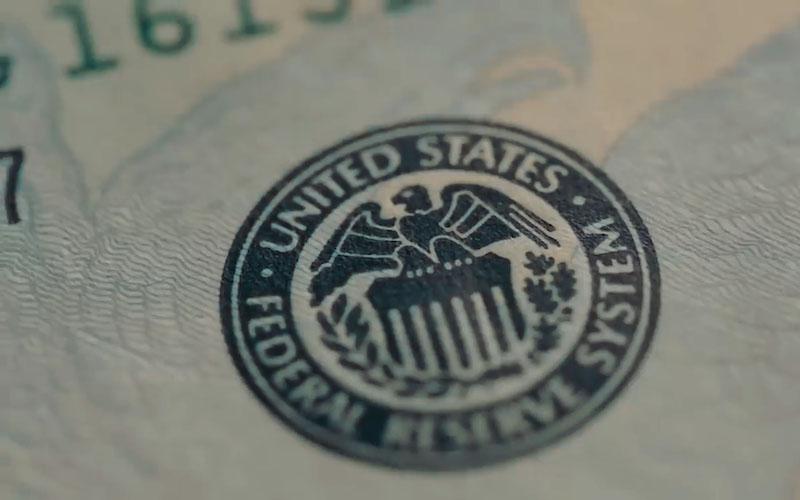 The Forgotten History: The Fed's Most Fatal Policy Mistake The massive inflation of the 1970s left a profound and painful lesson for global monetary policy. This long-forgotten history is now repeating itself with a striking resemblance, which is the core origin of the report's "Federal Reserve's Original Sin." This "original sin" is never a single, accidental policy mistake, but rather a stubborn policy inertia rooted in human nature, market pressures, and political cycles: whenever the economy experiences a temporary slowdown or employment data shows a slight cooling, the market launches strong calls for easing, and politicians pressure the central bank under the pretext of protecting growth and stabilizing employment. Even if inflationary pressures have not substantially dissipated and inflation expectations are still far from the 2% target, the Fed rushes to cut interest rates and prematurely shift to monetary easing. This operation may seem to protect economic growth and quell market panic in the short term, but it inadvertently sows the seeds of more stubborn and persistent inflation. History has provided irrefutable proof: premature easing can never cure inflation; it only causes a temporary, false decline. Once monetary easing stimulates a rebound in demand, inflation will return with even greater force. Each round of compromise-style easing pushes up the inflation and interest rate centers of the next economic cycle, creating a vicious cycle of "easing—inflation rebound—forced interest rate hikes—economic pressure—further easing." Ultimately, central banks have to pay far higher-than-expected interest rates and a more severe economic recession to regain control of inflation, inflicting heavy costs on the entire economy and society. This dangerous scenario is now quietly unfolding. Even though core inflation remains significantly above the 2% target and the labor market remains resilient, the market has already begun large-scale trading in anticipation of interest rate cuts, ignoring the risk of recurring inflation. History's warning bells have rung loudly: repeating the same fatal mistakes will inevitably incur equally high economic costs. The Dual Pressure of Fiscal and Monetary Policies: The Underlying Logic of Rising Yields Currently, the US economy is firmly gripped by two irreversible structural forces. These forces overlap and reinforce each other, forming the underlying logic of the long-term upward trend in 10-year US Treasury yields, a core contradiction that the market cannot ignore. The first core force comes from the rigid expansion of the fiscal deficit and the continuous flooding of Treasury bond supply. The two parties in the United States are locked in a long-standing deadlock on fiscal austerity. Rigid spending on social security, healthcare, and defense remains high, while debt interest payments continue to balloon with rising interest rates, keeping the fiscal deficit at historically high levels. The government can only fill the funding gap by continuously issuing large amounts of national debt, but the US net savings rate has fallen to near zero. Domestic funds simply cannot absorb such a massive supply of new national debt, forcing the government to rely heavily on overseas investors and central bank purchases. This supply-demand imbalance itself exerts a sustained and strong upward pressure on long-term US Treasury yields. The second key force comes from the enormous risk of a premature shift in monetary policy. The slightest sign of economic weakness will immediately pressure the Federal Reserve to cut interest rates, completely ignoring the core reality that inflation has not yet been eradicated. However, prematurely cutting interest rates before inflation has sustained and stabilized at the target level would be tantamount to falling back into the "original sin" trap. The massive fiscal stimulus coupled with prematurely loose monetary policy was the core formula for the stagflation of the 1970s. This directly pushes up long-term inflation expectations in the market, which in turn translates into an upward premium in bond yields. This is not a short-term market fluctuation, but a profound structural cyclical force: as long as the government continues to issue bonds and monetary policy doesn't dare to tighten decisively to the end, the long-term upward cycle of US Treasury yields is far from over, and any temporary pullback is merely a brief respite. Breaking the market consensus: 5.75% is just a stop along the way, not the end. Currently, the mainstream view in global financial markets is highly consistent: the 10-year US Treasury yield will peak and fall in the 5.75%-6% range, after which the Federal Reserve will begin a rate-cutting cycle, and the bond market will usher in a new bull market. However, this general consensus overlooks the extreme tail risk of a "repetition of the Fed's original sin" and underestimates the persistence of the dual pressures of fiscal and monetary policy. In a scenario dictated by the Federal Reserve's premature interest rate cuts and persistently high fiscal deficits, the trajectory of US Treasury yields will completely defy market expectations, following a drastically different path: First, the 10-year Treasury yield will rise to around 5.75%, leading the market to widely believe that interest rates have peaked, resulting in a massive influx of funds into the bond market, betting on further rate cuts and a bond bull market. Second, prematurely loose monetary policy will stimulate a rapid recovery in demand, causing a second wave of inflation, forcing the market to completely overturn its previous expectations and readjust the long-term equilibrium interest rate level. Third, persistently high inflation expectations combined with an oversupply of government bonds will further push long-term yields above previous highs. Ultimately, in this highly probable tail risk scenario, the 10-year Treasury yield will rise all the way to 8%. 8% is not an exaggerated, sensational prediction, nor is it a baseline scenario assumption; rather, it represents a significant risk that the market must confront under the dual failures of fiscal and monetary policy. Once this level is reached, it signifies the official end of the era of low inflation and low interest rates upon which the global economy has relied for the past 40 years, and the beginning of a new economic cycle characterized by higher interest rates, higher inflation, and higher volatility. What an 8% yield means: A complete rewriting of asset pricing logic If the 10-year US Treasury yield does indeed rise from its current level to 8%, the rules of the game and asset pricing logic of the entire global financial market will be completely overturned, and all trading paradigms familiar to investors will become ineffective. For the stock market, a significant increase in the risk-free rate will suppress valuations across all asset classes, with growth stocks, highly leveraged sectors, and long-duration technology stocks bearing the brunt. The "buy on dips, hold long-term" strategy, which has been effective in the market for decades, will become completely ineffective. Moderate corporate profit growth will be unable to offset the devastating valuation impact of a sharp rise in the discount rate, and the stock market will undergo a sustained process of de-bubbling. For the bond market, long-duration government bonds and corporate bonds will continue to suffer huge capital losses, and the long-awaited bond bull market will be significantly delayed. Fixed-income investment will shift from "prudent hedging" to "risk-bearing," and investors will need to rebuild a bond investment framework adapted to a high-interest-rate environment. For precious metals such as gold and silver, price movements will exhibit a clear phased divergence: In the early stages of rising yields, a significant increase in real interest rates will continue to suppress gold and silver prices. Silver, due to its stronger industrial attributes, will experience significantly greater volatility than gold. Only when the core driver of rising yields shifts from "rising real interest rates" to "inflation expectation premiums" and the US dollar index begins to weaken will precious metals see a genuine opportunity for a trend-based recovery. For the real economy, mortgage, corporate, and government financing costs will all rise sharply. Highly indebted households, highly leveraged enterprises, and local government finances will face drastically increased pressure, forcing a downward shift in the economic growth center and significantly increasing the risk of debt default. The entire economy will adapt to a new environment of high interest rates. 8% is not destiny, but a result of policy choices . Through all the data and analysis, the core truth must be clearly understood: an 8% 10-year US Treasury yield is never an inevitable destiny, but rather a result of policy choices. For this extreme risk scenario to materialize, two indispensable preconditions must be met simultaneously: First, the Federal Reserve must be pressured to cut interest rates before inflation is completely eradicated and stabilizes back to the 2% target; second, the US fiscal deficit must remain high, preventing the implementation of substantial fiscal tightening policies and ensuring that the pressure on Treasury bond supply remains unresolved. Conversely, if the Federal Reserve can thoroughly learn from the lessons of the Great Inflation of the 1970s and withstand all pressure to maintain a tightening policy until inflation sustainably and stably returns to the target level; or if the US domestic political landscape changes, truly implementing fiscal tightening and significantly reducing the fiscal deficit and the scale of Treasury bond issuance, the extreme scenario of an 8% yield will not occur at all. The biggest misconception in the current market is that it treats "policy mistakes are inevitable" as a given fact while simultaneously accepting "interest rates will soon peak and fall" as an inevitable trend. The true macroeconomic logic has always been: where US Treasury yields ultimately go has never depended on market fantasies, but on the choices made by policymakers. Whether the Federal Reserve can resist the enormous temptation of premature easing and whether the US government can effectively control the runaway fiscal deficit—these two core variables will directly determine whether the 10-year US Treasury yield peaks and falls back in the 5%-6% range, or breaks through resistance all the way to 8%. This is no longer simply an economic issue, but a crucial choice concerning historical cycles, policy resolve, and the long-term economic fate.
The Forgotten History: The Fed's Most Fatal Policy Mistake The massive inflation of the 1970s left a profound and painful lesson for global monetary policy. This long-forgotten history is now repeating itself with a striking resemblance, which is the core origin of the report's "Federal Reserve's Original Sin." This "original sin" is never a single, accidental policy mistake, but rather a stubborn policy inertia rooted in human nature, market pressures, and political cycles: whenever the economy experiences a temporary slowdown or employment data shows a slight cooling, the market launches strong calls for easing, and politicians pressure the central bank under the pretext of protecting growth and stabilizing employment. Even if inflationary pressures have not substantially dissipated and inflation expectations are still far from the 2% target, the Fed rushes to cut interest rates and prematurely shift to monetary easing. This operation may seem to protect economic growth and quell market panic in the short term, but it inadvertently sows the seeds of more stubborn and persistent inflation. History has provided irrefutable proof: premature easing can never cure inflation; it only causes a temporary, false decline. Once monetary easing stimulates a rebound in demand, inflation will return with even greater force. Each round of compromise-style easing pushes up the inflation and interest rate centers of the next economic cycle, creating a vicious cycle of "easing—inflation rebound—forced interest rate hikes—economic pressure—further easing." Ultimately, central banks have to pay far higher-than-expected interest rates and a more severe economic recession to regain control of inflation, inflicting heavy costs on the entire economy and society. This dangerous scenario is now quietly unfolding. Even though core inflation remains significantly above the 2% target and the labor market remains resilient, the market has already begun large-scale trading in anticipation of interest rate cuts, ignoring the risk of recurring inflation. History's warning bells have rung loudly: repeating the same fatal mistakes will inevitably incur equally high economic costs. The Dual Pressure of Fiscal and Monetary Policies: The Underlying Logic of Rising Yields Currently, the US economy is firmly gripped by two irreversible structural forces. These forces overlap and reinforce each other, forming the underlying logic of the long-term upward trend in 10-year US Treasury yields, a core contradiction that the market cannot ignore. The first core force comes from the rigid expansion of the fiscal deficit and the continuous flooding of Treasury bond supply. The two parties in the United States are locked in a long-standing deadlock on fiscal austerity. Rigid spending on social security, healthcare, and defense remains high, while debt interest payments continue to balloon with rising interest rates, keeping the fiscal deficit at historically high levels. The government can only fill the funding gap by continuously issuing large amounts of national debt, but the US net savings rate has fallen to near zero. Domestic funds simply cannot absorb such a massive supply of new national debt, forcing the government to rely heavily on overseas investors and central bank purchases. This supply-demand imbalance itself exerts a sustained and strong upward pressure on long-term US Treasury yields. The second key force comes from the enormous risk of a premature shift in monetary policy. The slightest sign of economic weakness will immediately pressure the Federal Reserve to cut interest rates, completely ignoring the core reality that inflation has not yet been eradicated. However, prematurely cutting interest rates before inflation has sustained and stabilized at the target level would be tantamount to falling back into the "original sin" trap. The massive fiscal stimulus coupled with prematurely loose monetary policy was the core formula for the stagflation of the 1970s. This directly pushes up long-term inflation expectations in the market, which in turn translates into an upward premium in bond yields. This is not a short-term market fluctuation, but a profound structural cyclical force: as long as the government continues to issue bonds and monetary policy doesn't dare to tighten decisively to the end, the long-term upward cycle of US Treasury yields is far from over, and any temporary pullback is merely a brief respite. Breaking the market consensus: 5.75% is just a stop along the way, not the end. Currently, the mainstream view in global financial markets is highly consistent: the 10-year US Treasury yield will peak and fall in the 5.75%-6% range, after which the Federal Reserve will begin a rate-cutting cycle, and the bond market will usher in a new bull market. However, this general consensus overlooks the extreme tail risk of a "repetition of the Fed's original sin" and underestimates the persistence of the dual pressures of fiscal and monetary policy. In a scenario dictated by the Federal Reserve's premature interest rate cuts and persistently high fiscal deficits, the trajectory of US Treasury yields will completely defy market expectations, following a drastically different path: First, the 10-year Treasury yield will rise to around 5.75%, leading the market to widely believe that interest rates have peaked, resulting in a massive influx of funds into the bond market, betting on further rate cuts and a bond bull market. Second, prematurely loose monetary policy will stimulate a rapid recovery in demand, causing a second wave of inflation, forcing the market to completely overturn its previous expectations and readjust the long-term equilibrium interest rate level. Third, persistently high inflation expectations combined with an oversupply of government bonds will further push long-term yields above previous highs. Ultimately, in this highly probable tail risk scenario, the 10-year Treasury yield will rise all the way to 8%. 8% is not an exaggerated, sensational prediction, nor is it a baseline scenario assumption; rather, it represents a significant risk that the market must confront under the dual failures of fiscal and monetary policy. Once this level is reached, it signifies the official end of the era of low inflation and low interest rates upon which the global economy has relied for the past 40 years, and the beginning of a new economic cycle characterized by higher interest rates, higher inflation, and higher volatility. What an 8% yield means: A complete rewriting of asset pricing logic If the 10-year US Treasury yield does indeed rise from its current level to 8%, the rules of the game and asset pricing logic of the entire global financial market will be completely overturned, and all trading paradigms familiar to investors will become ineffective. For the stock market, a significant increase in the risk-free rate will suppress valuations across all asset classes, with growth stocks, highly leveraged sectors, and long-duration technology stocks bearing the brunt. The "buy on dips, hold long-term" strategy, which has been effective in the market for decades, will become completely ineffective. Moderate corporate profit growth will be unable to offset the devastating valuation impact of a sharp rise in the discount rate, and the stock market will undergo a sustained process of de-bubbling. For the bond market, long-duration government bonds and corporate bonds will continue to suffer huge capital losses, and the long-awaited bond bull market will be significantly delayed. Fixed-income investment will shift from "prudent hedging" to "risk-bearing," and investors will need to rebuild a bond investment framework adapted to a high-interest-rate environment. For precious metals such as gold and silver, price movements will exhibit a clear phased divergence: In the early stages of rising yields, a significant increase in real interest rates will continue to suppress gold and silver prices. Silver, due to its stronger industrial attributes, will experience significantly greater volatility than gold. Only when the core driver of rising yields shifts from "rising real interest rates" to "inflation expectation premiums" and the US dollar index begins to weaken will precious metals see a genuine opportunity for a trend-based recovery. For the real economy, mortgage, corporate, and government financing costs will all rise sharply. Highly indebted households, highly leveraged enterprises, and local government finances will face drastically increased pressure, forcing a downward shift in the economic growth center and significantly increasing the risk of debt default. The entire economy will adapt to a new environment of high interest rates. 8% is not destiny, but a result of policy choices . Through all the data and analysis, the core truth must be clearly understood: an 8% 10-year US Treasury yield is never an inevitable destiny, but rather a result of policy choices. For this extreme risk scenario to materialize, two indispensable preconditions must be met simultaneously: First, the Federal Reserve must be pressured to cut interest rates before inflation is completely eradicated and stabilizes back to the 2% target; second, the US fiscal deficit must remain high, preventing the implementation of substantial fiscal tightening policies and ensuring that the pressure on Treasury bond supply remains unresolved. Conversely, if the Federal Reserve can thoroughly learn from the lessons of the Great Inflation of the 1970s and withstand all pressure to maintain a tightening policy until inflation sustainably and stably returns to the target level; or if the US domestic political landscape changes, truly implementing fiscal tightening and significantly reducing the fiscal deficit and the scale of Treasury bond issuance, the extreme scenario of an 8% yield will not occur at all. The biggest misconception in the current market is that it treats "policy mistakes are inevitable" as a given fact while simultaneously accepting "interest rates will soon peak and fall" as an inevitable trend. The true macroeconomic logic has always been: where US Treasury yields ultimately go has never depended on market fantasies, but on the choices made by policymakers. Whether the Federal Reserve can resist the enormous temptation of premature easing and whether the US government can effectively control the runaway fiscal deficit—these two core variables will directly determine whether the 10-year US Treasury yield peaks and falls back in the 5%-6% range, or breaks through resistance all the way to 8%. This is no longer simply an economic issue, but a crucial choice concerning historical cycles, policy resolve, and the long-term economic fate.
- Risk Warning and Disclaimer
- The market involves risk, and trading may not be suitable for all investors. This article is for reference only and does not constitute personal investment advice, nor does it take into account certain users’ specific investment objectives, financial situation, or other needs. Any investment decisions made based on this information are at your own risk.