From Crude Oil to Diesel: Structural Tightness in the Global Fuel Market and Geopolitical Premiums in Oil Prices
2026-10-02 13:44:16
Brent crude futures saw a slight correction during Asian trading hours on Friday (October 2nd), currently trading at $102 per barrel, down about 0.2%. International oil prices surged on Thursday, settling more than $4 higher per barrel. Two factors triggered this: reports of the US deploying additional troops and aircraft carriers to the Middle East, and news of a major Asian country suspending petroleum product exports. Both factors exacerbated market concerns about a worsening global fuel shortage. December Brent crude futures settled at $102.31 per barrel, up 4.37% or $4.28. 
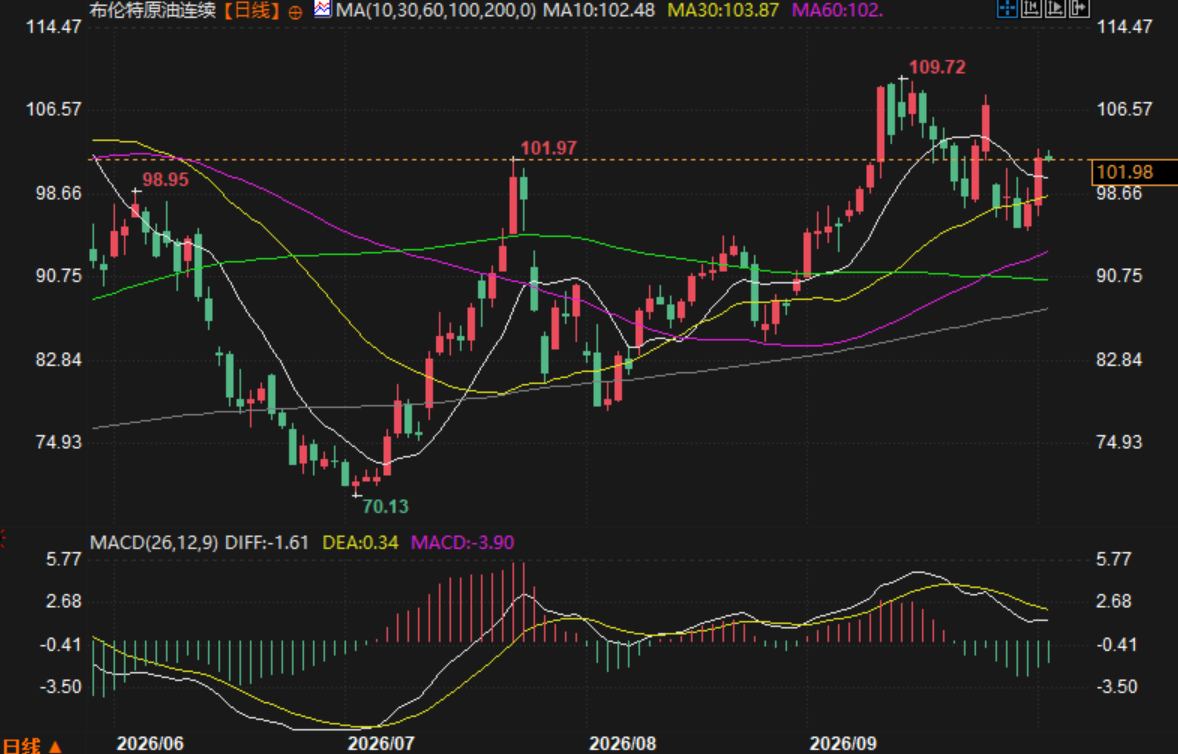 (Brent crude oil futures daily chart, source: EasyTrade) At 13:42 Beijing time, Brent crude oil futures were trading at $102.03 per barrel.
A major Asian country suspends fuel exports: Adding further pressure to refined oil supply.
Refiners in a major Asian nation have suspended exports of petroleum products until further notice. This news became the direct catalyst for a reversal in oil prices on Thursday. UBS analyst Giovanni Staunovo stated that the export ban by the Asian giant suggests concerns about domestic supply in the United States, but whether the measures will support higher crude oil imports following recent declines in crude oil and fuel inventories in the Asian nation remains to be seen. Hamad Hussain, senior climate and commodities economist at Capital Economics, noted that the impact of fuel export restrictions in the Asian giant will not be as significant as the losses in refined product exports from Russia and the Middle East, but it is another source of pressure amid severely constrained global fuel market supply.US troop buildup in the Middle East and Trump's statements: Geopolitical risk premiums are rising again.
Media reports indicate that the United States is deploying a third aircraft carrier and up to 10,000 additional troops to the Middle East as Trump weighs the possibility of resuming strikes against Iran after the midterm elections. Before departing for a campaign event at the White House, Trump told reporters he was weighing options regarding Iran, stating, "Now I have to make a decision. They either sign a very fair deal, or they don't exist anymore." These remarks, coupled with news of a major Asian power suspending fuel exports, contributed to Thursday's highly volatile trading session. The resurgence of geopolitical risks caused a rapid recovery in geopolitical risk premiums in the crude oil market.Refined oil shortage: Diesel inventories are tight, and the Russian ban exacerbates the pressure.
Despite continued crude oil supplies entering the market, diesel and other refined petroleum products remain in short supply following damage to refining infrastructure in the Gulf and Russia. Global diesel inventories were already tight after Russia, a major exporter, extended its export ban until October. Industry participants say the shortage is unlikely to end before next year. Russian President Vladimir Putin has stated that Russia will not supply diesel to the global energy market until sanctions against Moscow are lifted. To alleviate the pressure, the EU energy working group will meet on Friday to discuss the potential release of diesel reserves. Other sources indicate that the Trump administration has informed Germany and France to utilize their emergency diesel reserves or face a potential US diesel export ban.Diplomatic efforts falter, attacks continue in the Strait of Hormuz
Diplomatic efforts to end the conflict with Iran have been relatively subdued recently, with attacks continuing. Shipping intelligence agency Marisks reported on Wednesday that three Liberian-flagged oil tankers were hit by unidentified projectiles while transiting the Strait of Hormuz on Tuesday. Sources say that Iran is preparing a broader and stronger response should the US resume large-scale military strikes, while continuing diplomatic efforts that Iranian officials privately consider unlikely to succeed.Signs of supply recovery and upward revision of institutional forecasts
The ongoing disruptions to global oil and fuel markets have prompted analysts to raise their 2026 average Brent crude price forecast to $89.05 per barrel, despite noting a gradual improvement in Middle Eastern exports. Saudi Arabia resumed tanker loading from Yanbu port on Tuesday after restarting its east-west pipeline. Goldman Sachs estimates that Gulf oil exports, including “dark exports”—ships navigating with their transponders off—have recovered to 23.3 million barrels per day in the past week, in line with the 2025 average, after doubling in September.Summarize
The current surge in oil prices is driven by a confluence of two factors: the suspension of fuel exports by major Asian countries has exacerbated the global supply shortage of refined oil products, while the US troop buildup in the Middle East and Trump's tough stance have reignited geopolitical risk premiums. The root cause of the refined oil product shortage lies in the Russian export ban and damage to Gulf refining infrastructure, making it difficult to alleviate the tight diesel inventory situation in the short term. The EU's consideration of releasing diesel reserves and the US's demand for Germany and France to utilize emergency reserves reflect a high level of vigilance regarding supply pressures at the policy level. Weak diplomatic efforts and the ongoing attacks in the Strait of Hormuz mean that the geopolitical risk premium is unlikely to subside in the short term. Although Saudi Arabia has resumed loading at Yanbu and Goldman Sachs estimates that Gulf exports have recovered to the 2025 average level, indicating signs of improvement on the supply side, the structural tightness in the refined oil product market remains the dominant factor. In the short term, oil prices will likely find their direction between "supply recovery" and "refined oil product shortages." (Brent crude oil futures daily chart, source: EasyTrade) At 13:42 Beijing time, Brent crude oil futures were trading at $102.03 per barrel.- Risk Warning and Disclaimer
- The market involves risk, and trading may not be suitable for all investors. This article is for reference only and does not constitute personal investment advice, nor does it take into account certain users’ specific investment objectives, financial situation, or other needs. Any investment decisions made based on this information are at your own risk.