29,000 new cases! Non-farm payrolls report unexpectedly disappoints, gold surges $40 in an instant; has the Fed's October scenario been rewritten?
2026-10-02 20:48:17
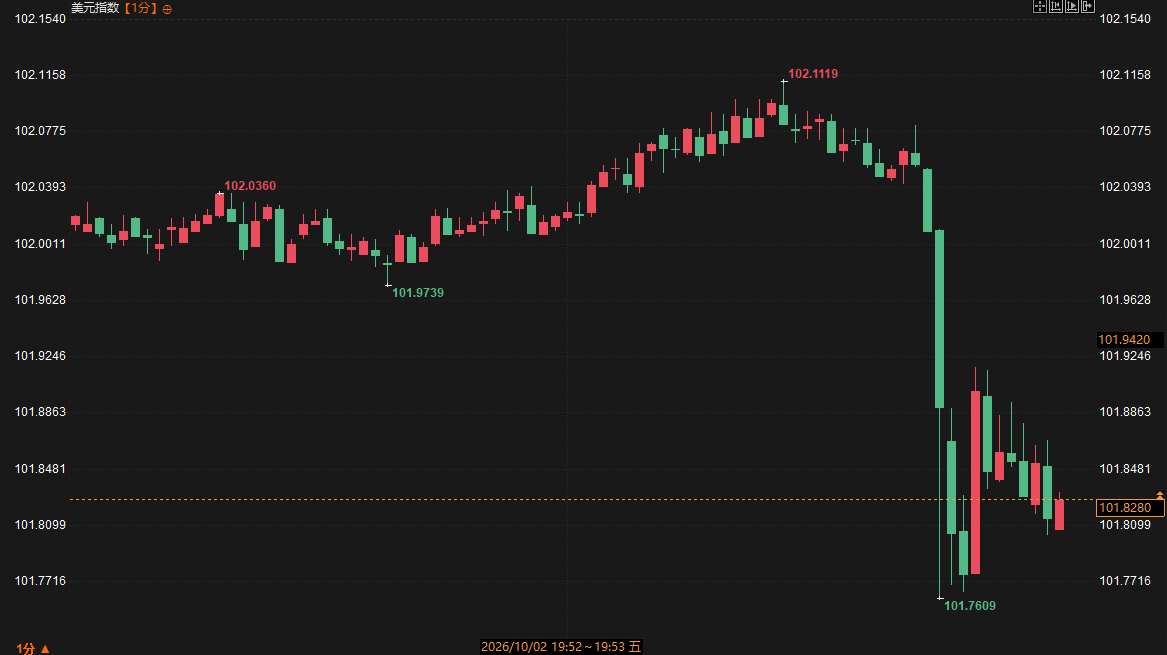
On Friday (October 2nd) at 8:30 PM Beijing time, the U.S. Bureau of Labor Statistics released its September non-farm payrolls report: only 29,000 new non-farm jobs were added , far below the market expectation of 90,000; the unemployment rate rose to 4.2% , higher than the expected 4.1%; average hourly earnings increased by only 0.1% month-on-month and 3.0% year-on-year, the lowest since May 2021. More alarming is the revision of historical data—July's job growth turned negative (revised down to -10,000), and August's was revised down from 162,000 to 133,000, a total downward revision of approximately 60,000 over the two months .  Following the data release, the market priced in an 85% probability that the Federal Reserve would hold rates steady in October , dealing a heavy blow to the narrative of a "re-accelerating labor market." The asset market reacted clearly and swiftly: US Treasuries strengthened across the board, with the 2-year yield falling about 9 basis points to 4.71% and the 10-year yield dropping to around 5.16%; the US dollar index fell by about 20 points to 101.85; the USD/JPY pair dipped to 156.94; and the GBP/USD pair surged to 1.3239. Driven by a combination of safe-haven demand and easing trades, spot gold rose rapidly by over $40 from around $4181 to above $4220 , silver touched the $62/ounce mark, and platinum and palladium strengthened in tandem; emerging market currency indices surged, and small-cap stocks led the gains in US stock futures, rising about 1.3%, while S&P futures rose 0.8% ; the VIX volatility index fell to a one-week low of 15.60.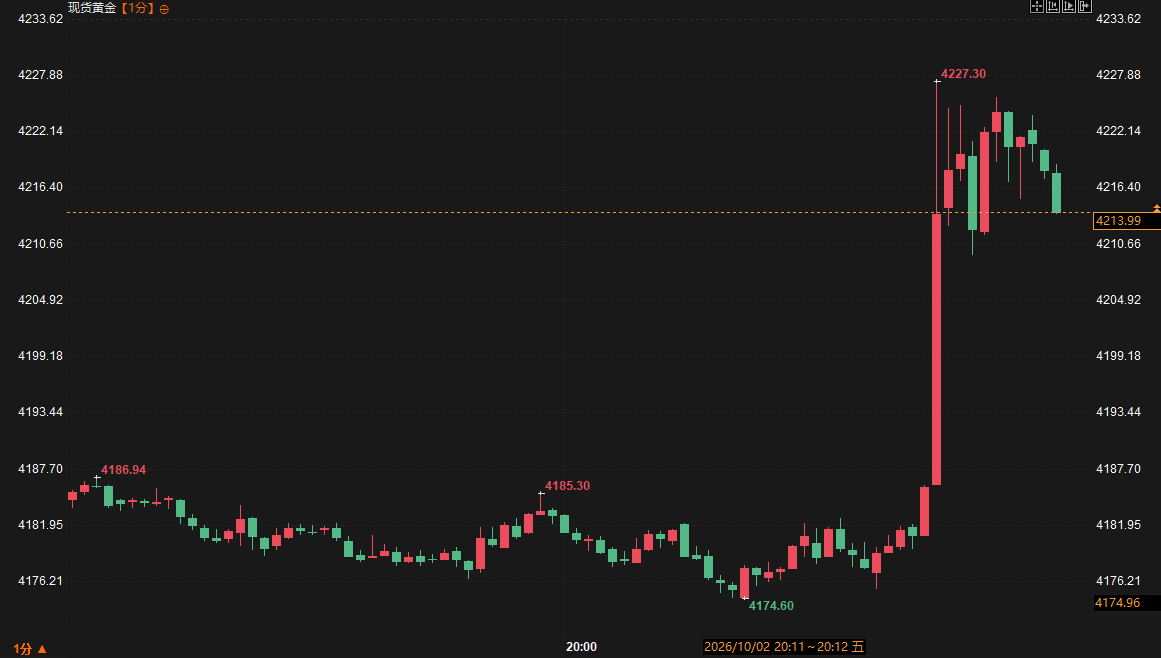
 Before the data release, the market was not entirely unprepared. Since September, US Treasury yields had been climbing steadily, with the 10-year yield briefly hitting a 24-year high and mortgage rates exceeding 7%. Earlier this week, the short-term interest rate market had almost fully priced in another rate hike by the Federal Reserve at its October 28th meeting. However, in the 48 hours leading up to the data release, this probability plummeted to 23%—the market was essentially "rushing ahead." Before the data release, some institutions and analysts were still focused on the resilience of employment and the possibility of a rate hike; after the release, the views of prominent institutions quickly shifted. Allianz's chief economic advisor, El-Erian, pointed out that the mere 29,000 job gains, the unemployment rate rising to 4.2%, and hourly wages only increasing by 0.1% month-on-month, coupled with downward revisions in the previous two months, further amplified the impact of recent comments from Fed officials, significantly cooling market expectations for a rate hike in October. Analyst Mike Zaccardi emphasized that the "re-acceleration narrative has been dealt a heavy blow," while also pointing to details such as small-cap stocks leading the gains, the popularity of US Treasuries, and hourly wages hitting multi-year lows. At the retail level, many traders believe there is still room for further downward correction, noting that "the market likes bad news, but voters don't," with the political sensitivity surrounding the upcoming midterm elections being repeatedly mentioned. The expectation bias is clear: most people originally expected a moderate slowdown, but the actual result was weaker, leading to a larger-than-usual repricing of the interest rate path.
Following the data release, the market priced in an 85% probability that the Federal Reserve would hold rates steady in October , dealing a heavy blow to the narrative of a "re-accelerating labor market." The asset market reacted clearly and swiftly: US Treasuries strengthened across the board, with the 2-year yield falling about 9 basis points to 4.71% and the 10-year yield dropping to around 5.16%; the US dollar index fell by about 20 points to 101.85; the USD/JPY pair dipped to 156.94; and the GBP/USD pair surged to 1.3239. Driven by a combination of safe-haven demand and easing trades, spot gold rose rapidly by over $40 from around $4181 to above $4220 , silver touched the $62/ounce mark, and platinum and palladium strengthened in tandem; emerging market currency indices surged, and small-cap stocks led the gains in US stock futures, rising about 1.3%, while S&P futures rose 0.8% ; the VIX volatility index fell to a one-week low of 15.60. Before the data release, the market was not entirely unprepared. Since September, US Treasury yields had been climbing steadily, with the 10-year yield briefly hitting a 24-year high and mortgage rates exceeding 7%. Earlier this week, the short-term interest rate market had almost fully priced in another rate hike by the Federal Reserve at its October 28th meeting. However, in the 48 hours leading up to the data release, this probability plummeted to 23%—the market was essentially "rushing ahead." Before the data release, some institutions and analysts were still focused on the resilience of employment and the possibility of a rate hike; after the release, the views of prominent institutions quickly shifted. Allianz's chief economic advisor, El-Erian, pointed out that the mere 29,000 job gains, the unemployment rate rising to 4.2%, and hourly wages only increasing by 0.1% month-on-month, coupled with downward revisions in the previous two months, further amplified the impact of recent comments from Fed officials, significantly cooling market expectations for a rate hike in October. Analyst Mike Zaccardi emphasized that the "re-acceleration narrative has been dealt a heavy blow," while also pointing to details such as small-cap stocks leading the gains, the popularity of US Treasuries, and hourly wages hitting multi-year lows. At the retail level, many traders believe there is still room for further downward correction, noting that "the market likes bad news, but voters don't," with the political sensitivity surrounding the upcoming midterm elections being repeatedly mentioned. The expectation bias is clear: most people originally expected a moderate slowdown, but the actual result was weaker, leading to a larger-than-usual repricing of the interest rate path.Deep Connectivity Analytics: How Data Reshapes Policy and Asset Pricing
Compared to historical trends, the unique aspect of this round lies in the fact that it is not a typical "recession-style easing trade," but rather a "tightening phase-out" trade against a backdrop of high inflation . Previously, the Federal Reserve raised interest rates for the first time in over three years, and Chairman Warsh emphasized that "the economy has strengthened." Now, the employment data provides a stepping stone to pause rate hikes. Some analysts point out that the labor force participation rate rising to 61.8% is partly due to the increase in the unemployment rate, representing a relatively positive improvement on the supply side. Furthermore, the "low hiring, low layoffs" business behavior, coupled with the 750,000 AI-related jobs created by data center construction, suggests that the weakening employment situation has not yet evolved into a full-blown deterioration.Trend Outlook: Extrapolation of Market Logic
In the short term, the return of easing expectations is beneficial to bonds and precious metals, and the weak dollar trend may continue. However, only the CPI remains a key data point before the October 28th interest rate meeting. If inflation data exceeds expectations again, fluctuations in the interest rate market will amplify the volatility of gold prices and US Treasury bonds. This will provide short-term support for gold and non-US currencies, while putting pressure on the dollar. Whether this bullish-bearish pattern can continue depends on how Federal Reserve officials interpret the data.Further Reading
Q: Why did the addition of 29,000 jobs trigger such a large market reaction? A: Not only was the current data far below expectations, but the downward revision of 60,000 jobs in the previous two months further shook the narrative of "accelerated employment," directly rewriting the pricing of an October rate hike. Q: Why isn't the unemployment rate rising to 4.2% necessarily a bad thing? A: The labor force participation rate rose to 61.8%, indicating that more people are returning to the job market, and the increase in the unemployment rate comes partly from supply-side improvements. Q: What is the logic behind the sharp rise in gold prices? A: Cooling expectations of a rate hike have lowered expectations for real interest rates, coupled with a weaker dollar, jointly pushing up precious metals priced in dollars. Q: What are the key points to observe going forward? A: Before the October 28th interest rate meeting, only the CPI data and the Fed officials' characterization of weak employment remain. Q: What impact will the midterm elections have on the market? A: This is the last non-farm payrolls report before the November 3rd election. Consumer confidence is low, and economic perceptions may influence the election landscape, thereby indirectly affecting policy expectations.- Risk Warning and Disclaimer
- The market involves risk, and trading may not be suitable for all investors. This article is for reference only and does not constitute personal investment advice, nor does it take into account certain users’ specific investment objectives, financial situation, or other needs. Any investment decisions made based on this information are at your own risk.