With the market betting on a European Central Bank rate hike, why does Standard Chartered say the probability is "limited"?
2026-10-02 21:42:18
On Friday (October 2nd) during the European session, the euro fluctuated slightly higher against the US dollar, currently trading around 1.1250, remaining in the low range since the end of May 2025. Despite the slight rebound in the exchange rate, the policy outlook of the European Central Bank still lacks clear guidance, and Standard Chartered Bank's latest assessment provides the market with a window for observation. Standard Chartered's global research team analyzed Eurozone monetary policy, believing that core inflation has only risen slightly since January, while rising yields pose a downside risk to both growth and inflation. These factors reduce the likelihood of an October rate hike, and the bank expects the ECB Governing Council to wait for the new macroeconomic forecasts released at the December policy meeting before adjusting policy rates. 
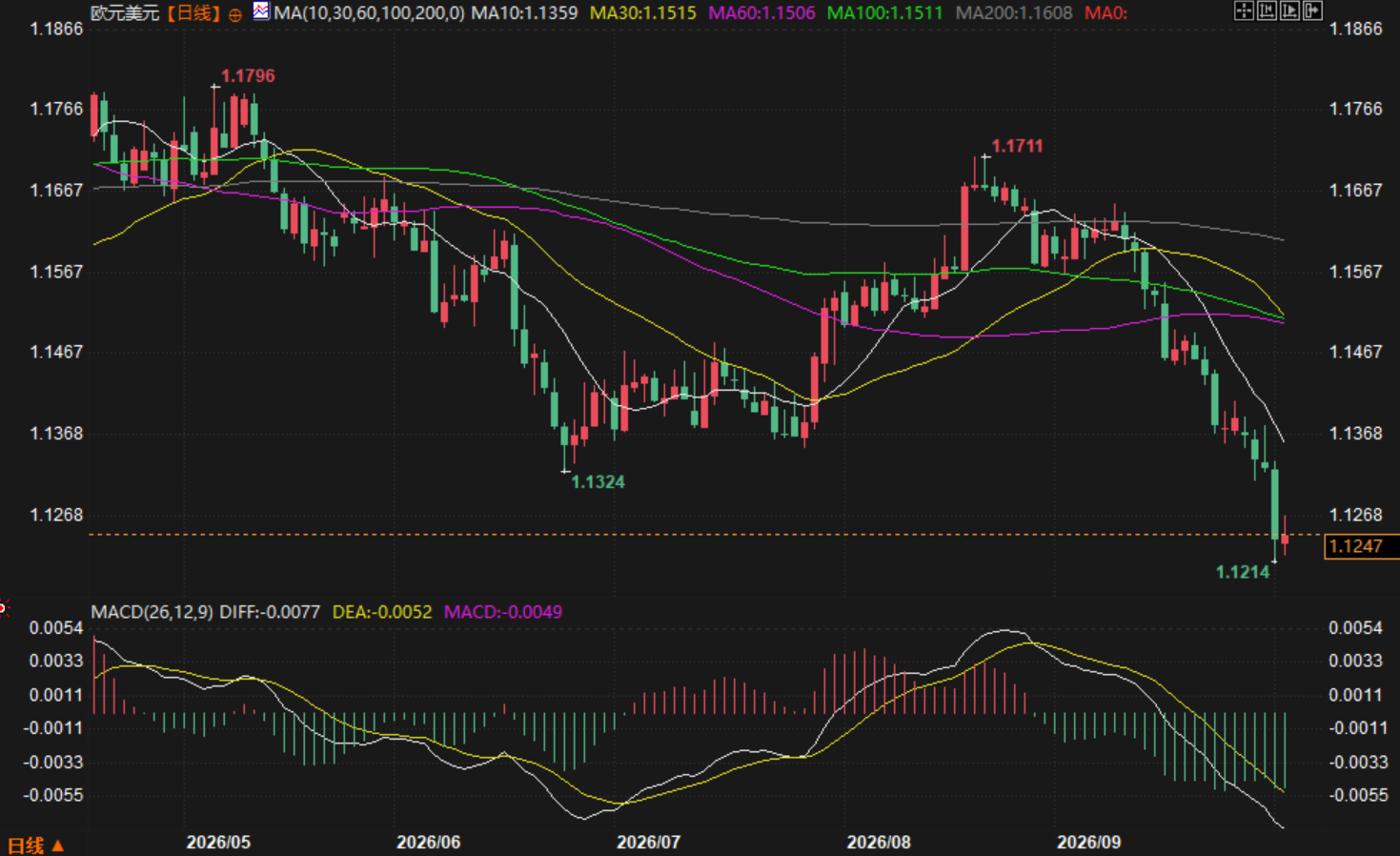 (Euro/USD daily chart, source: FX678) At 21:41 Beijing time, the euro was trading at 1.1250/51 against the US dollar.
Core inflation rose only slightly, not enough to make a rate hike urgent.
Standard Chartered Bank points out that core inflation has only risen moderately since the end of February, from 2.2% year-on-year in January to 2.5% year-on-year in September. This limited increase does not indicate that inflationary pressures are accumulating at an accelerated pace. For the European Central Bank (ECB), core inflation is a key indicator for assessing potential price pressures, and its moderate trend reduces the necessity for an immediate interest rate hike. Core inflation, which excludes volatile components such as energy and food, better reflects the persistent price dynamics within the economy. The current cumulative increase of only 0.3 percentage points indicates that although the energy shock has pushed up overall inflation, the second-round effect has not yet become apparent, and the transmission of wage and service prices remains relatively restrained. Standard Chartered believes that this moderate path provides the ECB with a window of opportunity to avoid prematurely taking further tightening action before the data confirms the risk of acceleration. Overinterpreting short-term fluctuations in overall inflation could lead to an overestimation of policy urgency. The stable performance of core inflation also helps reduce the risk of inflation expectations becoming unanchored, allowing policymakers greater flexibility. Overall, the limited rise in this indicator is an important basis for judging the reduced necessity for a near-term interest rate hike.Lagarde emphasizes downside risks to rising yields
Standard Chartered also noted that Lagarde recently emphasized the downside risks that rising yields pose to growth and inflation. This statement contrasts with previous market expectations that the ECB might further raise interest rates due to the energy shock. Lagarde's concern is that higher yields could dampen economic activity through financing costs, thus putting downward pressure on inflation—a counterbalancing effect against inflationary pressures solely driven by energy prices. Rising bond yields will increase borrowing costs for businesses and households, potentially slowing investment and consumption, thereby weakening demand-side support for prices. Lagarde's reminder shows that the ECB, in assessing policy, has taken into account the potential side effects of tightening financial conditions, rather than focusing solely on energy-driven upside risks. Standard Chartered interprets this balanced perspective as reducing the likelihood of an immediate shift to more aggressive rate hikes. Rising yields have already had a tightening effect to some extent, and the central bank does not need to rush into further action. This statement also provides a cooling signal to the market, helping to correct overly hawkish pricing expectations.The probability of an October rate hike is limited; the December meeting is a more likely window.
Taking all factors into account, Standard Chartered Bank judges the likelihood of an October rate hike to be limited. The bank believes the ECB Governing Council is more inclined to wait for new macroeconomic forecasts before adjusting policy rates, with the next round of forecasts expected to be released at the December policy meeting. This assessment implies that the market's pricing in a near-term ECB rate hike may be overly aggressive, and the December meeting is a more noteworthy policy window. The October meeting lacks comprehensive and updated forecasts, and committee members are more likely to observe the trend of core inflation, the persistence of the energy shock, and the actual impact of rising yields on growth. The December meeting will provide an updated assessment of inflation and growth paths, facilitating decisions based on more comprehensive information. Standard Chartered Bank's view advises investors that the policy path is highly uncertain in the short term, and excessive bets on consecutive rate hikes may face adjustment risks. Patiently awaiting updated data and forecasts is more helpful in grasping the true policy turning point.Summarize
Standard Chartered's view provides a clear framework for judging the ECB's policy path: core inflation rose only slightly from 2.2% in January to 2.5% in September, not posing an urgency for a rate hike; Lagarde emphasized the downside risks of rising yields to growth and inflation, further weakening the case for immediate action; the ECB is more likely to wait for new macroeconomic forecasts at its December meeting before making a decision. For the market, this means the probability of a rate hike in October is limited, and the euro's short-term movement may depend more on external factors—the Fed's path, US Treasury yields, and geopolitical risks—than on the ECB's own policy actions. (Euro/USD daily chart, source: FX678) At 21:41 Beijing time, the euro was trading at 1.1250/51 against the US dollar.
- Risk Warning and Disclaimer
- The market involves risk, and trading may not be suitable for all investors. This article is for reference only and does not constitute personal investment advice, nor does it take into account certain users’ specific investment objectives, financial situation, or other needs. Any investment decisions made based on this information are at your own risk.