













Why hasn't the US debt crisis crippled the dollar? The European debt crisis has become the biggest drag on gold prices.
2026-10-06 08:36:17
On Tuesday (October 6), during the Asian and European sessions, international gold prices have been under pressure recently, currently trading around 4139. The recent continuous rise in real interest rates and the sharp rise in the US dollar index caused by the European debt crisis are the main reasons for suppressing the rebound of gold prices. This article summarizes the main logic affecting the recent movement of gold prices. 
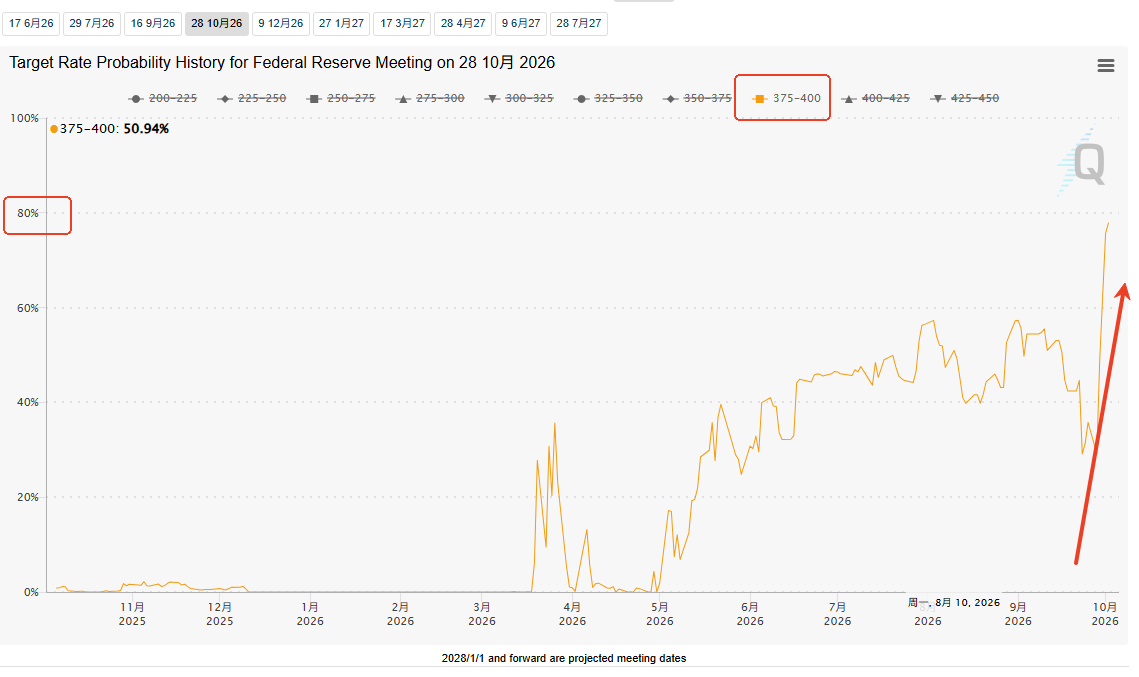 (FedWatch interest rate tool, source: CME Group)
 (10-year TIPS yield, source: Federal Reserve)
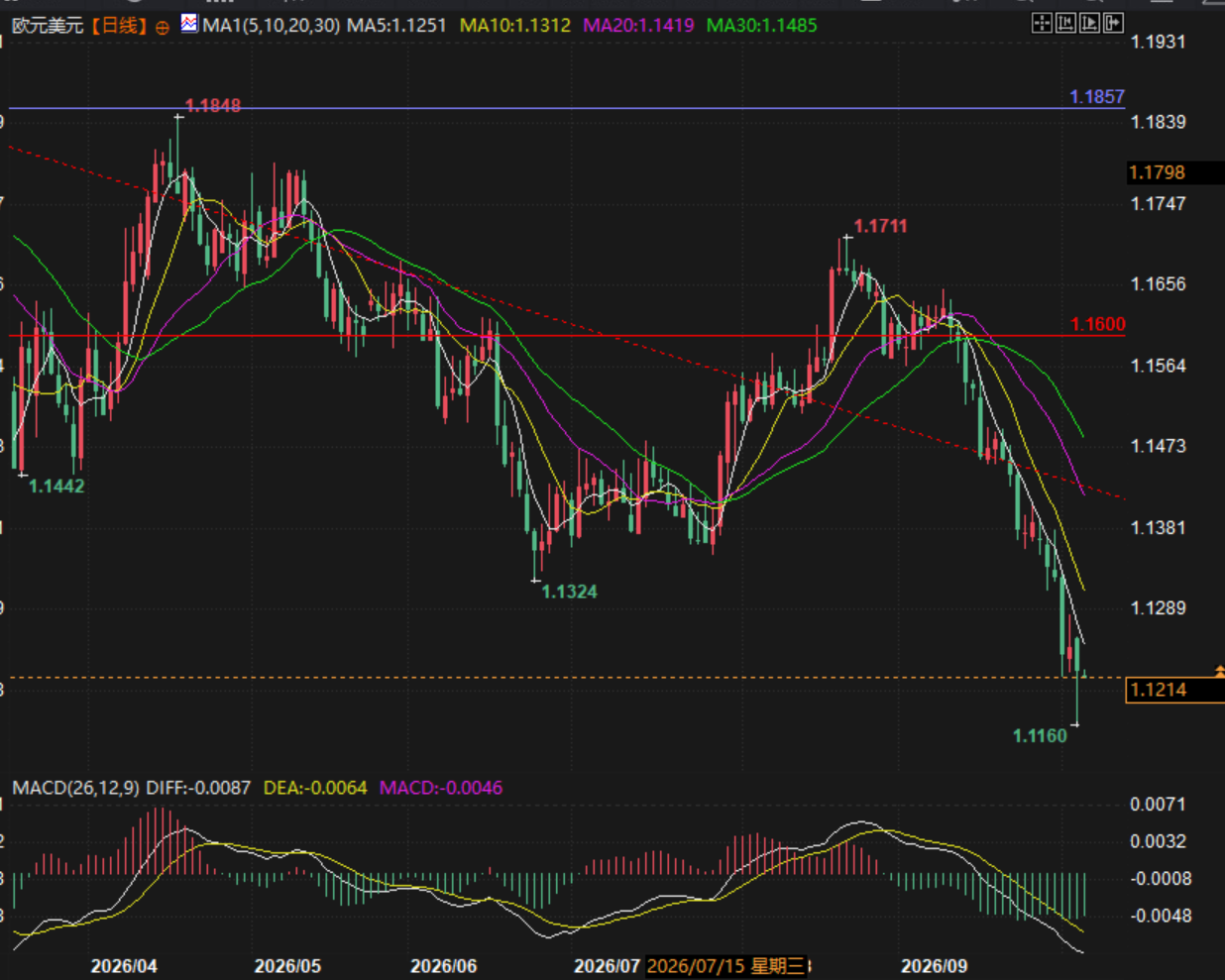 (Euro/USD daily chart, source: FX678)
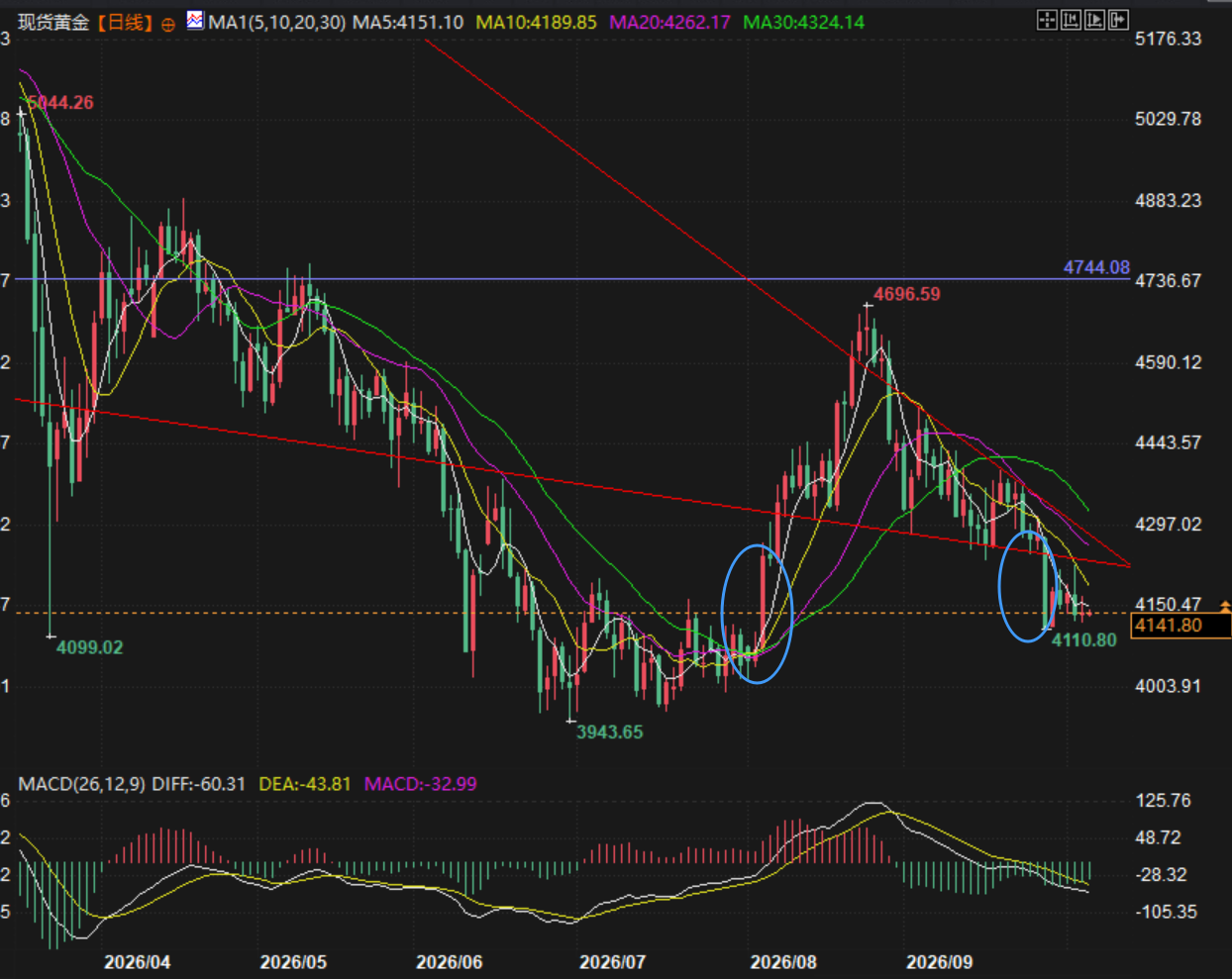 (Spot gold daily chart, source: FX678)
The recent pullback in global oil prices has cooled overall inflation expectations.
Meanwhile, the slowdown in US non-farm payroll wage growth and the easing of the overheated labor market have further weakened the basis for sustained inflation. The easing of inflationary pressures has changed market pricing in the Federal Reserve's monetary policy. According to CME FedWatch data, the probability of the Fed keeping interest rates unchanged in October is as high as 77.3%, while the probability of a 25 basis point rate hike is only 22.7%. Looking ahead to December, the probability of keeping interest rates unchanged is 13.4%, the probability of a 25 basis point rate hike is 67.8%, and the probability of a 50 basis point rate hike is 18.8%. Overall, the cooling of inflation and employment data has eased the Fed's tightening pressure in the short term, providing potential bullish support for gold from a monetary policy perspective. (FedWatch interest rate tool, source: CME Group)The positive effects were completely offset: US Treasury yields and real interest rates continued to soar.
While easing expectations of interest rate hikes are beneficial to gold, this benefit has been completely offset by the continuously soaring US Treasury yields and real interest rates, becoming the core negative factor currently suppressing gold prices. This round of US Treasury yield increases is not driven by market inflation panic; the core driver is the exceptional resilience of the US economy. Nohshad Shah, Head of Fixed Income Sales for Europe, the Middle East, and Africa at Citadel Securities, pointed out in a client report that the rise in the 10-year US Treasury yield in September was almost entirely due to rising real yields, while inflation expectations remained relatively stable. Behind the rise in real yields is the intensified capital competition resulting from US fiscal easing, loose financial conditions, and massive investment in the AI sector. The market is reassessing the sustainability of economic growth, and investors are demanding higher returns after adjusting for inflation, rather than simply seeking inflation protection. Meanwhile, BMO Asset Management warned that a break above 6% in the US 30-year Treasury yield is almost inevitable, and could materialize as early as October. Bond market volatility is creating a self-reinforcing cycle of rising yields. Since gold is a non-interest-bearing asset, rising real interest rates will continuously increase the opportunity cost of holding gold, suppressing the upside potential for gold prices. (10-year TIPS yield, source: Federal Reserve)Core pricing logic shift: The strength of the US dollar index dominates gold prices, hedging against the negative impact of US Treasury debt.
Gold is priced primarily in US dollars, and the market has long followed the core pricing rule of "a stronger dollar leads to weaker gold prices," which is also the most critical factor suppressing the recent gold price rebound. The current surge in US Treasury yields conceals the hidden danger of continued deterioration in US government debt under a high-interest-rate environment. According to conventional market logic, rising US debt risk should weaken the dollar's credibility, benefiting gold and providing strong safe-haven support for gold prices. However, this positive effect has been completely offset by risk hedging in the European market. Compared to the US debt crisis, the current European crisis erupted earlier and exposed risks more severely, becoming the core focus of global capital safe-haven flows. Political divisions in France, with protests erupting at 1,000 universities and obstructed fiscal budget implementation, coupled with escalating election uncertainty, triggered a sharp sell-off in capital markets. The spread between French and German 10-year government bond yields reached a new high since the 2012 European debt crisis, and market panic spread. Japanese investors, holding substantial amounts of French bonds, were the main sellers. Their overweight positions in French bonds in overseas holdings faced the risk of large-scale reductions, and the continued sell-off of European debt directly damaged the euro's exchange rate, causing it to fall to a 17-month low against the dollar and depreciate significantly. Comparing the risks of major global economies, the impact of the European crisis far outweighed the US debt crisis, forcing global safe-haven funds to flood into dollar assets and driving the dollar index higher. Ultimately, the negative impact of the US debt problem was completely masked, and the strong dollar suppressed gold prices, effectively removing the safe-haven benefit that gold should have received, becoming the core reason for the recent pressure on gold prices. (Euro/USD daily chart, source: FX678)Central bank gold purchases diverge: Bull-bear battle intensifies amid energy crisis.
Amidst a tug-of-war between macroeconomic bullish and bearish forces, global central bank gold purchases have shown a clear divergence, providing bottom support for gold prices but failing to drive unilateral price movements. On one hand, global energy tensions and high oil price volatility have led some countries with weak foreign exchange reserves to temporarily sell gold to raise US dollars for oil purchases, putting short-term selling pressure on gold prices. On the other hand, most sovereign nations continue to adhere to long-term strategic allocations, significantly increasing their gold holdings. The Russian Ministry of Finance announced a substantial increase in foreign exchange and gold purchases, with the scale of gold purchases from October 7th to November 6th rising fivefold compared to September. By absorbing additional oil and gas revenues to replenish the national welfare fund, official gold purchases are solidifying medium- to long-term bottom support for gold prices.Retail investors are cautious: ETFs are entering the market slowly, and technical indicators are under significant pressure.
Gold ETFs, representing retail investors and short-term speculative funds, are currently experiencing extremely cautious trading sentiment. The overall technical pattern for gold is bearish, market buying interest is weak, and ETF inflows are very slow, lacking the incremental short-term funds to drive a price rebound. With retail investor participation absent and relying solely on central bank support, gold prices are unlikely to break out of their upward trend and will likely remain under pressure and range-bound.Market Outlook Summary and Key Observations
The current gold market is caught in a complex web of macroeconomic variables. Positive factors (cooling inflation, declining interest rate hike expectations, and central bank gold purchases) and negative factors (soaring real interest rates, a stronger dollar, and weak retail investor liquidity) are offsetting each other, resulting in a lack of clear direction. The future market will largely depend on three key variables: first, US inflation, labor market data, and Q3 earnings from tech companies, which will determine the strength of the US economy and the inflection point of rising real interest rates; second, the Gulf energy situation and US-Iran geopolitical conflicts, directly impacting oil prices and global inflation expectations, indirectly influencing the Fed's policy path; and third, the inflection point in European bond market sentiment, specifically when the French bond sell-off will stabilize, determining the euro's decline and the strength of the dollar index. Currently, driven by European debt risks, the dollar index's influence on gold prices has significantly increased. Under a strong dollar cycle, gold's upside potential will remain limited, and the overall market will continue to be subject to the dual pressure of real interest rates and the dollar. Technically, spot gold remains caught in a tug-of-war between previous bullish and bearish candles, with moving averages in a bearish alignment. The current consolidation awaits a correction in the moving averages. (Spot gold daily chart, source: FX678)
- Risk Warning and Disclaimer
- The market involves risk, and trading may not be suitable for all investors. This article is for reference only and does not constitute personal investment advice, nor does it take into account certain users’ specific investment objectives, financial situation, or other needs. Any investment decisions made based on this information are at your own risk.

