













Debt fuels currency devaluation trading, challenging the traditional relationship between gold and US Treasury yields.
2026-10-06 09:02:17
At the London Bullion Market Association's annual global precious metals conference, several market experts pointed out that rising government debt, persistent inflation, and concerns about the long-term purchasing power of fiat currencies are fueling currency devaluation trading, challenging the traditional link between gold and bond yields. The roundtable discussion, themed "Long-Term Perspective, Short-Term Trading: Understanding the Logic of Currency Devaluation," was moderated by Nicky Shiels, Head of Metals Strategy and Research at MKSPAMP. Analysts and fund managers stated that gold's resilience amid rising global bond yields reflects growing investor concerns about the fiscal situations of various countries.
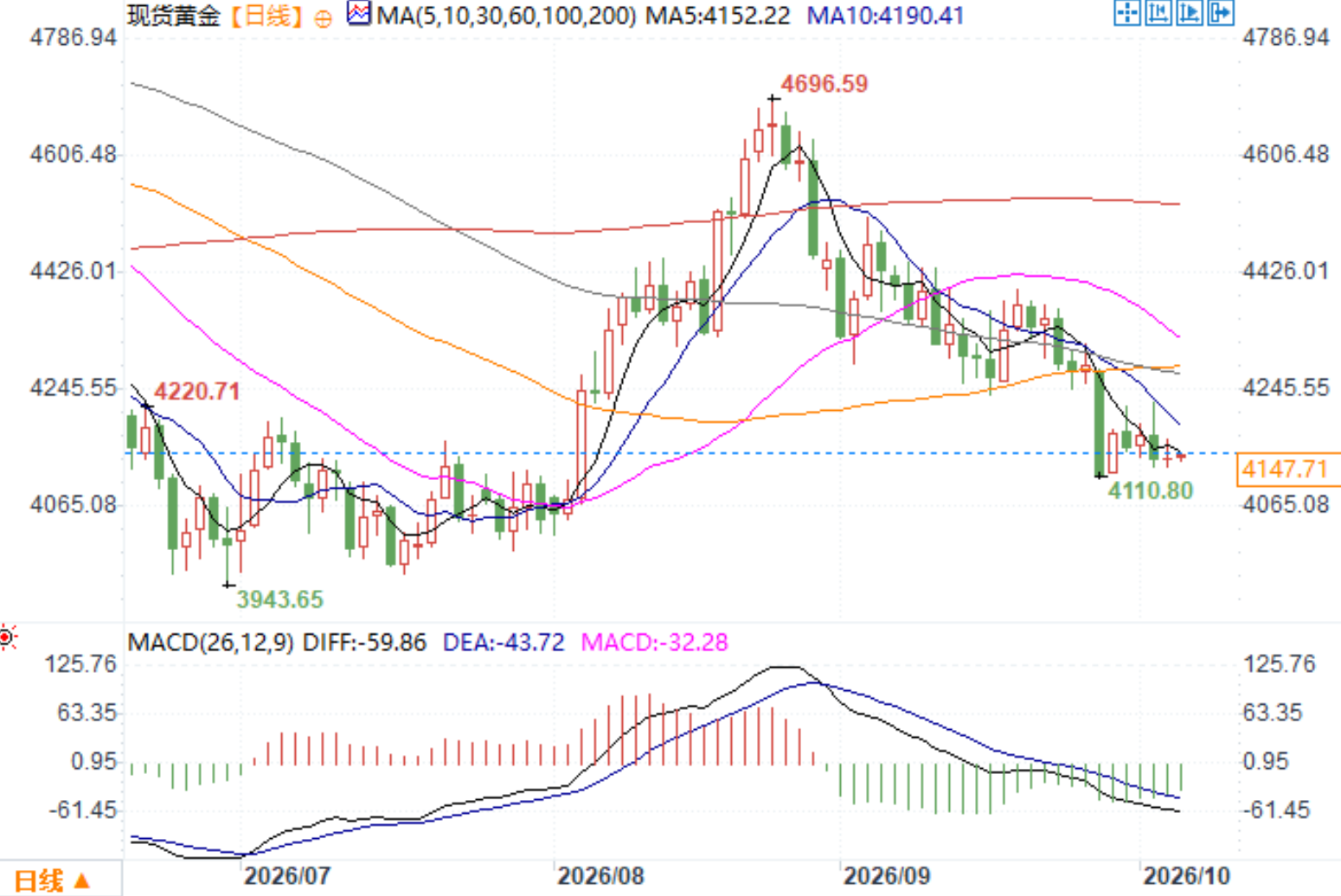 Spot gold daily chart source: FX678. At 8:59 AM Beijing time on October 6th, spot gold was trading at $4147.71 per ounce.
Global debt pressure is enormous, and fiscal constraints remain largely absent.
Vikram Dhawan, head of commodities and fund manager at the Japan-India Joint Fund, stated that the root of the currency devaluation narrative lies in the unsustainable global debt burden. He said, "Global debt is growing by trillions of dollars annually, and governments have limited options, resorting to some form of financial repression—tolerating higher inflation while trying to keep borrowing costs low. I see fiscal debt continuing to rise, but no signs of fiscal discipline being implemented." Shayne McGuire, portfolio manager at the Texas Teachers' Retirement System, noted that currency devaluation is not a new concept. Ancient governments devalued currencies by reducing the precious metal content of coins, but today investors worry that ever-expanding debt will eventually erode the value of the currency itself. He said, "As debt risk rises, people are increasingly focused on the shrinking purchasing power of currency." Historically, a sharp rise in global yields would have severely impacted gold prices; however, the negative correlation between the two has weakened significantly. Even with bond yields exceeding 5%, gold prices have held firm above the $4,000 support level. Vikram Dawan stated that in the short term, gold and yields remain negatively correlated, but in the one to three-year period following the pandemic, the correlation weakens significantly, and they may even move in the same direction for periods of time. He said, "To some extent, gold is sending a signal that global debt may be reaching a turning point, and the supply of paper money may exceed the market's absorption capacity."With changes in capital structure, institutional funds are expected to continue to increase their allocation to gold.
Dawan believes that rising yields reflect a greater increase in term premiums rather than simply an expectation of a strengthening economy or monetary tightening. The traditional buyer structure of sovereign bonds is shifting; central banks and pension funds, previously insensitive to price fluctuations, are being replaced by private investors. Private funds will demand higher compensation to absorb duration and fiscal risks, which may continue to sever the traditional link between gold and the bond market. McGuire stated that the bond market's predicament will drive further inclusion of gold in institutional portfolios. For a long time, large US pension funds have rarely allocated gold to their strategic asset allocations because their positions were too small to significantly impact overall portfolio returns. He said, "As problems in the bond market continue to emerge, this situation will eventually change. Although gold does not offer interest, it appreciates relative to many bonds. Large institutions have not yet included gold in their core discussions, which is a major reason why I am bullish on gold in the long term."Asian demand provides a floor, and young investors favor hard assets.
Wei Yan, macro portfolio manager at DymonAsia, stated that when domestic real estate and stock markets perform weakly, investors in major Asian countries have limited options for wealth preservation. Therefore, the high real yields in Western markets have a limited suppressive effect on domestic gold demand. He said, "They continue to buy when the market corrects. Gold prices tend to perform better during Asian trading hours, reflecting the sustained buying by investors in major Asian countries, while Western investors are less willing to chase higher prices in a high-yield environment." Dawan added that the changing preferences of the younger generation of investors are also beneficial to gold. Sustained inflation has increased the paper wealth of many people, but their actual purchasing power has decreased, making young people more willing to allocate to hard assets to protect their purchasing power. He said, "Gold perfectly meets all their needs for allocating to hard assets." Experts at the forum are bullish on gold in the long term, but cautioned that currency devaluation will not lead to a one-sided, sustained upward trend. Dawan said that rising gold prices are suppressing demand for traditional physical jewelry, and gold prices may remain volatile in the short term. McGuire pointed out that the fiscal deficit has continued to expand during the two parties' administrations in the United States, and there are no signs that policy will substantially improve the fiscal path. He said, "No matter which party is in power, the debt and deficit issues that the market is concerned about have never been taken seriously."Conclusion
In summary, high global debt is reshaping the pricing logic of gold, and the traditional negative correlation between gold and bond yields is gradually becoming ineffective. Asian physical demand and potential for increased institutional allocation support the long-term gold price trend. However, weaker short-term jewelry demand suggests that gold prices are likely to remain volatile and unlikely to experience a sustained upward trend. Spot gold daily chart source: FX678. At 8:59 AM Beijing time on October 6th, spot gold was trading at $4147.71 per ounce.
- Risk Warning and Disclaimer
- The market involves risk, and trading may not be suitable for all investors. This article is for reference only and does not constitute personal investment advice, nor does it take into account certain users’ specific investment objectives, financial situation, or other needs. Any investment decisions made based on this information are at your own risk.

