Brent reaches 101, Hormuz stirs up again: How far can the golden channel of oil go?
2026-10-07 20:44:22
On Wednesday (October 7), the stalemate in Iranian nuclear negotiations, coupled with rhetoric about risks in the Strait of Hormuz, attacks on oil tankers in the Black Sea, and a tropical storm approaching oil and gas producing areas in the Gulf of Mexico, pushed Brent crude oil above $101 due to supply concerns. US Treasury yields rose to multi-year highs, a stronger dollar pressured gold prices back to around $4100, and a sell-off in French bonds weakened the euro, making cost pressures a new main theme in the global bond market. 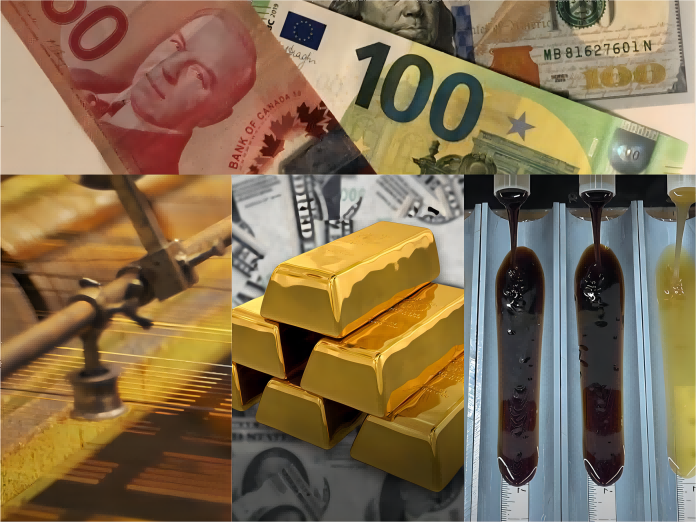
Introduction
Today's market can be summarized in one sentence: oil is rising, gold is waiting. Three supply risks are simultaneously weighing on crude oil – the Middle East, the Black Sea, and the Gulf of Mexico – any one of which is enough to make traders sit tight. Meanwhile, the US Treasury auction is approaching, yields are hitting multi-decade highs, and a strong dollar is weighing heavily on precious metals. The IMF chief's rare call for countries to "tighten their belts" is reshaping the pricing logic of major asset classes. This weekly report will break down the news into fundamental language, helping you understand where sentiment comes from and where risks are heading.Core Analysis
News Analysis: Triple Supply Risks Resonate Iran has clearly stated that the US nuclear program does not meet its requirements, and that the right to enrich uranium is a red line. A Revolutionary Guard advisor even claimed that the Strait of Hormuz "will soon be blocked." The significance of such statements for oil prices lies not in whether they materialize, but in the pricing logic of the risk premium—as long as the stalemate continues, Brent crude at around $101 is unlikely to be disproven. In the Black Sea region, Ukraine attacked Russian oil facilities, and a tanker fully loaded with crude oil caught fire near Sochi. Russian oil production has declined by approximately 700,000 barrels per day over the past year. The combined logistical bottlenecks and the attack mean the structurally tight supply situation remains unchanged. Weather Variables: 48 Hours in the Gulf of Mexico Tropical Storm Isaias is expected to strengthen into a hurricane. The Gulf of Mexico accounts for about 15% of US crude oil production, and its refining capacity accounts for about half of the national total. Shell has evacuated non-essential personnel. The path over the next two days is crucial, and refined product crack spreads may widen first. This is a typical seasonal disturbance, but it happens to fall at a time when supply sentiment is most sensitive. Bond Market Focus: High Yields Reshaping Pricing Today's auction of $39 billion in 10-year US Treasury bonds is under close scrutiny. Strategists in surveys of major overseas institutions have significantly raised their yield forecasts, with the 30-year yield reaching a near 24-year high. The IMF Managing Director stated in Singapore that the global debt-to-GDP ratio is approaching 100%, and central banks should maintain a "cautiously hawkish" stance. In a high-interest-rate environment, gold, a non-interest-bearing asset, is under short-term pressure, with spot prices falling back to around $4110. Foreign Exchange and the Euro: France as a New Source of Disruption Political and fiscal concerns in France have pushed OAT yields near multi-year highs, causing the euro to fall 0.73% to around 1.1178. Eurozone officials stated there is no contagion and the fundamentals are solid, but market sentiment is sensitive. The weakening euro, in turn, strengthens the dollar, indirectly suppressing precious metals. This is a typical scenario where the short-term correlation between "rising oil and falling gold" is amplified by a strong dollar.Trend Outlook
In the short term, the upward bias for oil prices is clear. Unless the risks from the Hormuz incident, the Black Sea attack, and the Gulf of Mexico storm subside in unison, the downside potential is limited, and volatility will be the main characteristic. Gold is currently suppressed by a strong dollar and high yields, and is expected to remain range-bound, but geopolitical uncertainties and central bank gold purchases provide support on the downside. If high oil prices continue to push up inflation expectations, the medium-term logic may shift to bullish for precious metals. In the long term, the outcome of the Iran negotiations will determine the sustainability of the Middle East risk premium. If the French budget impasse drags on until the 2027 election, the Eurozone risk premium may spill over. Potential pitfalls to watch out for: a substantial disruption from the Hormuz incident is a high-impact, medium-probability event; if the situation in the Gulf of Mexico worsens beyond expectations, refinery closures will amplify volatility in refined oil products.[Further Reading]
Why are oil prices so sensitive to risk rhetoric today? Three risks are emerging simultaneously on the supply side, and any one of these supply paths could be disrupted. The market tends to price in first and then verify later. Why is gold holding up despite record high yields? Geopolitical safe-haven demand and central bank gold purchases have provided structural buying, offsetting some opportunity cost pressures. How long is the pricing window for the Gulf of Mexico storm? Mainly the next 48 hours for path confirmation, a short-term variable. Will the French bond sell-off spread to the entire Eurozone? Official statements say there's no spread yet, but if the budget impasse continues, the emotional risk shouldn't be underestimated. What does the IMF's statement mean for the market? It suggests continued global fiscal tightening and hawkish monetary policy, and the high-interest-rate environment may last longer than expected.- Risk Warning and Disclaimer
- The market involves risk, and trading may not be suitable for all investors. This article is for reference only and does not constitute personal investment advice, nor does it take into account certain users’ specific investment objectives, financial situation, or other needs. Any investment decisions made based on this information are at your own risk.