The US and Japanese Treasury Departments say the yen is "undervalued," and the tug-of-war around 158 is not yet over.
2026-10-08 08:28:18
On Thursday (October 8) during the Asian session, the USD/JPY pair fluctuated slightly lower, currently trading below 158. Japanese wage growth in August was faster than expected, but the yen depreciated instead of appreciating after the data release, with the USD/JPY pair falling from above 158.50 to around 158.00, returning to its pre-data release level. 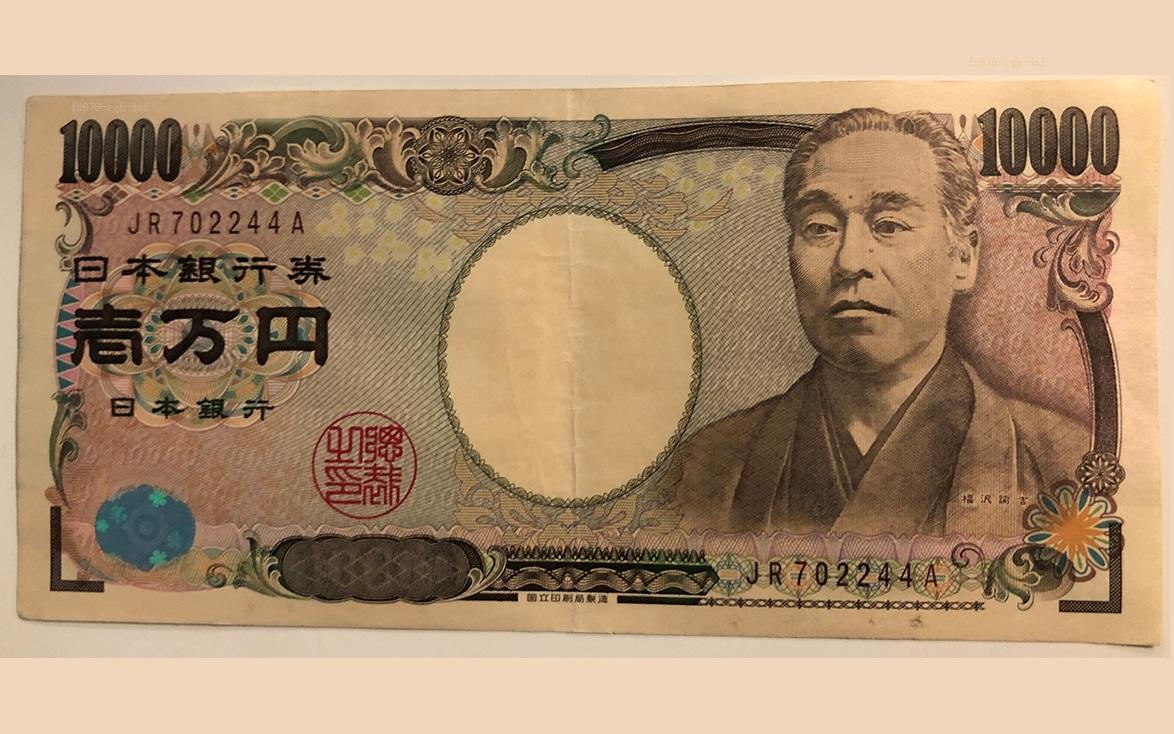
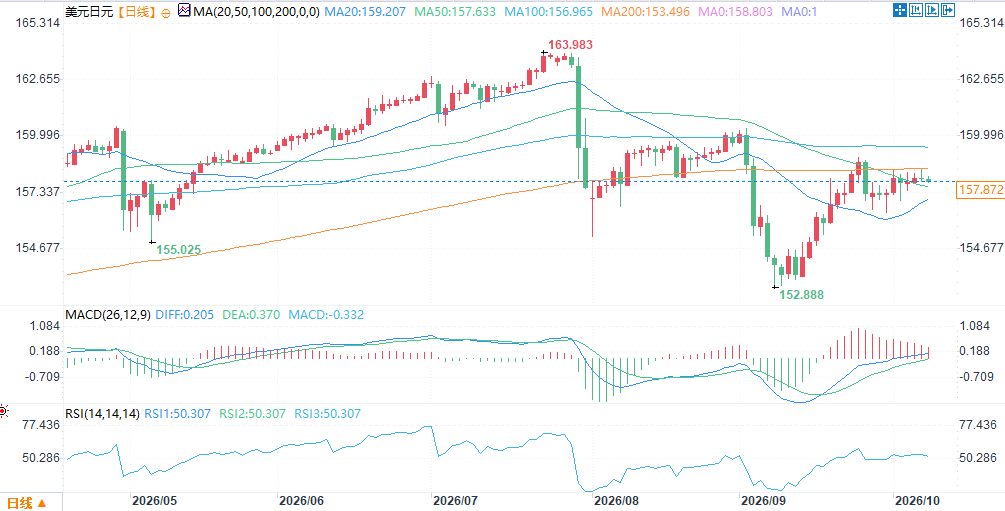 (USD/JPY daily chart, source: EasyForex) At 8:25 Beijing time, USD/JPY was trading at 157.87/88.
Salary data: Superior on the surface, but weak in details
Nominal wages rose 3.8% year-on-year, higher than the expected 3.7%, but lower than July's level. Real wage growth slowed to 1.5%, marking the second consecutive month of deceleration. The key lies in the revision: the July figure was revised down from 4.7% to 4.3%, a downward revision of 0.4 percentage points, four times the magnitude of the initial 0.1 percentage point overshoot. This revision significantly weakens the apparent overshooting effect, indicating that the previous strong reading was overestimated, and the actual trend of wage momentum is weaker than the initial estimate suggested.Yen reaction: Surge followed by pullback, with the US dollar dominating.
The USD/JPY pair briefly surged above 158.50 after the data release, its highest level since September 25, before retreating to around 158.00, completing a full round trip. This price action clearly signals that the wage data failed to provide sustained support for the yen. Slowing real wages, a significant downward revision in July's figures, and the fact that the Bank of Japan's next interest rate hike did not materialize due to the data, continue to put pressure on the yen based on interest rate differentials. For most of October, the USD/JPY pair will primarily follow the driving factors on the dollar side.Fiscal Policy: Tax Cut Pledges and the Argument that the Yen is Undervalued
Japanese Prime Minister Sanae Takaichi told parliament on Tuesday that she would cut the food consumption tax without issuing new debt. The yield on 10-year Japanese government bonds remained near 3.11% on Wednesday, close to a 30-year high. Yields rising due to budget concerns rather than interest rate expectations tend to weaken rather than boost currencies. Finance Minister Satsuki Katayama and U.S. Treasury Secretary Bessenter expressed concern about the yen's undervaluation in late September. The minutes of the Federal Reserve meeting released Wednesday recorded the New York Fed's currency intervention operation on behalf of the Treasury, namely the joint yen purchase with Japan on July 31, when the dollar was slightly below 164.00 yen. "Undervaluation" is a term used by both governments for currencies they have already spent money on once.Interest Rate Spread and Probability of Interest Rate Hikes: A 25 Basis Point Rate Hike by the Bank of Japan is Just a Drop in the Bucket
Following its September 18th rate hike, the Bank of Japan's interest rate stands at 1.25%, while the Federal Reserve's is at 3.75%-4.00%. The futures market projects a 71% probability of another rate hike by the Bank of Japan before December. The probability of a rate hike at the Fed's October 28th meeting and the Bank of Japan's October 30th meeting is the same, both close to 17%. A 25 basis point rate hike by the Bank of Japan would only narrow the interest rate differential by one-tenth. Friday's University of Michigan survey will release US household one-year inflation expectations, which were 4.6% last month. A higher reading would increase bets on a Fed rate hike, subsequently pushing up the dollar against the yen.Summarize
Japan's August wage data presented a combination of "superficially better-than-expected, but weaker-than-expected details": nominal wages rose 3.8%, exceeding expectations, but the sharp downward revision of July's figures and the second consecutive month of slowing real wages weakened the data's substantive significance. The yen's surge followed by a decline indicates that interest rate hike expectations failed to materialize, with the dollar dominating the exchange rate. On the fiscal front, tax cut commitments and high government bond yields create complex signals. Statements from both the central and foreign ministries regarding the yen's undervaluation and their joint intervention in July suggest increased policy focus on the exchange rate. The interest rate differential remains significant, meaning a single Bank of Japan rate hike can only narrow it by one-tenth. In the short term, the USD/JPY exchange rate will continue to fluctuate in tandem with the dollar; Friday's Michigan inflation forecast will be the next point of observation. (USD/JPY daily chart, source: EasyForex) At 8:25 Beijing time, USD/JPY was trading at 157.87/88.
- Risk Warning and Disclaimer
- The market involves risk, and trading may not be suitable for all investors. This article is for reference only and does not constitute personal investment advice, nor does it take into account certain users’ specific investment objectives, financial situation, or other needs. Any investment decisions made based on this information are at your own risk.