Short-term pressure does not change the long-term bullish outlook; the LBMA conference stated that gold and silver will reach above $5000 and $90 respectively within a year.
2026-10-08 11:04:20
The ongoing energy crisis, persistent inflation, and a sharp rise in global bond yields present significant headwinds for gold and silver in the short term. However, at the 2026 London Bullion Market Association (LBMA) Global Precious Metals Conference, industry leaders maintained their confidence in the long-term upward trend of precious metals. The annual price survey released by attendees provided surprising forecasts, and the conference delved into the underlying logic supporting gold prices in the long term, including central bank gold purchases, sovereign debt risks, and the restructuring of the geopolitical landscape. Although high interest rates and US Treasury yields continue to suppress precious metal prices, changes in the global monetary system and demand from emerging industries are constantly broadening the fundamental positive factors for gold, while silver is expected to see even greater price increases.
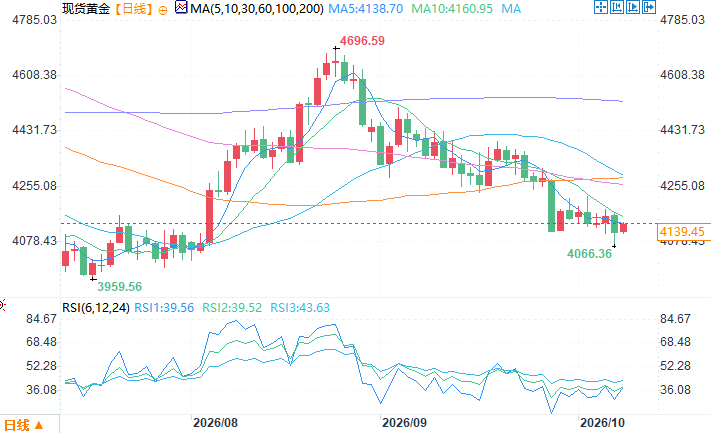 Spot gold daily chart source: FX678. At 11:02 AM Beijing time on October 8th, spot gold was trading at $4134.20 per ounce.
Price Forecasts from the Conference: Long-Term Target Prices for Gold and Silver Released, Last Year's Forecasts Showed Significant Deviations
The annual price survey results from this year's LBMA conference show that delegates expect the price of gold to reach $5,013.30 per ounce one year from now, representing an upside of approximately 20% compared to the current spot price. It's worth noting that the LBMA's forecast for 2025 deviated significantly from actual market conditions; delegates at that time predicted a price of $4,980.30 per ounce. Looking ahead to 2026, the US-Iran tensions are pushing up international oil prices, further exacerbating inflationary pressures and prompting central banks worldwide to maintain a tight monetary policy stance. Rising interest rate expectations are pushing long-term bond yields to near 20-year highs, putting continued pressure on gold prices throughout the year. Despite short-term market volatility, industry institutions remain firmly optimistic about the long-term upside potential of precious metals.Traditional negative logic is changing: a contradictory game is emerging between high bond yields and sovereign debt.
Throughout the two-day conference, a recurring core argument was that factors previously perceived as bearish for gold have become increasingly complex. Conventional market theory posits that rising US Treasury yields increase the opportunity cost of holding gold, a non-interest-bearing asset, thus suppressing prices. However, attendees noted that expanding sovereign debt and deteriorating fiscal conditions have also driven up term premiums, leading to market skepticism regarding the long-term safe-haven appeal of government bonds. Vikram Dhawan, Head of Commodities and Fund Manager at India's Niwan Fund, stated during a panel discussion: "To some extent, gold is signaling to the market that global debt may have reached a turning point, and the supply of paper credit assets may exceed market demand ."Central bank gold purchases have become a core pillar, and monetary diversification is reshaping the value of gold.
Central bank gold purchases were another core topic at the conference. Reserve managers worldwide are no longer solely viewing gold as a hedge against inflation and geopolitical risks. UBS Asset Management's latest reserve management survey was highlighted at the conference, showing that 65% of surveyed central banks cited asset diversification as the primary reason for allocating gold, and gold is also a core asset that central banks plan to continue increasing their holdings in the next 12 months. Several central bank officials pointed out that gold possesses unique attributes, not being a liability of any party. Geopolitical fragmentation, various sanctions, and concerns about sovereign credit risk have continuously increased the attractiveness of this asset, which carries no counterparty default risk. At the same time, persistent fiscal deficits and expanding government debt have spurred "currency devaluation trading," with investors purchasing precious metals to protect purchasing power and hedge against the long-term devaluation risk of fiat currencies.Silver outlook is more optimistic, with industrial demand providing long-term support.
Representatives at the conference were more bullish on silver than gold, predicting that the price of silver would rise to $94.70 per ounce in the next 12 months, an increase of over 54% from the current price. The 2025 LBMA conference predicted a price of $59.10 per ounce for silver, a figure that has already been surpassed. Although silver has seen a significant pullback from its year-to-date high, industry participants believe that structural demand remains robust. While photovoltaic manufacturers are continuing to reduce silver usage amid rising costs, silver's role in the photovoltaic sector is difficult to completely replace in the short term. The ongoing development of artificial intelligence infrastructure, electric vehicles, and the electrification of society will provide long-term industrial demand for gold and silver. Physical investment demand is also resilient; dealers noted that earlier this year, tight market inventory coupled with strong buying made it difficult to meet market demand for physical silver.Conclusion
Based on the views expressed at this year's LBMA Global Precious Metals Conference, short-term volatility in gold and silver prices will persist in an environment of high interest rates and high bond yields. However, continued central bank gold purchases, global sovereign debt concerns, geopolitical uncertainties, and the increased industrial demand driven by photovoltaics, AI, and new energy vehicles will support long-term price increases for precious metals. The logic behind short-term macroeconomic headwinds is shifting, and the pricing framework for precious metals has changed. Investors need to consider both short-term interest rate fluctuations and long-term structural benefits, continuously monitoring changes in key variables such as debt, energy, and central bank gold purchases. Spot gold daily chart source: FX678. At 11:02 AM Beijing time on October 8th, spot gold was trading at $4134.20 per ounce.
- Risk Warning and Disclaimer
- The market involves risk, and trading may not be suitable for all investors. This article is for reference only and does not constitute personal investment advice, nor does it take into account certain users’ specific investment objectives, financial situation, or other needs. Any investment decisions made based on this information are at your own risk.