Despite a series of negative factors, gold prices have held firm, suggesting that darkness may be over and dawn may be on the horizon.
2026-10-08 18:00:16
On Thursday (October 8th) during the Asian and European sessions, international gold prices remained volatile at low levels. Although oil prices rebounded and interest rates rose, gold prices showed relatively strong resilience today, consistent with yesterday's article's prediction that gold prices might actually be oversold in the short term. On the macro front, expectations for a short-term Fed rate hike have cooled, but the risk of tightening at the end of the year remains. Coupled with geopolitical conflicts pushing up energy inflation resilience, US Treasury real yields continue to constrain gold price rebounds. On the funding front, long-term gold purchases by central banks worldwide have firmly supported the bottom of gold prices, while the lack of marginal funds in ETFs has resulted in a lack of upward momentum. Under the interplay of these multiple forces, gold prices are expected to continue their range-bound trading pattern in the short term. 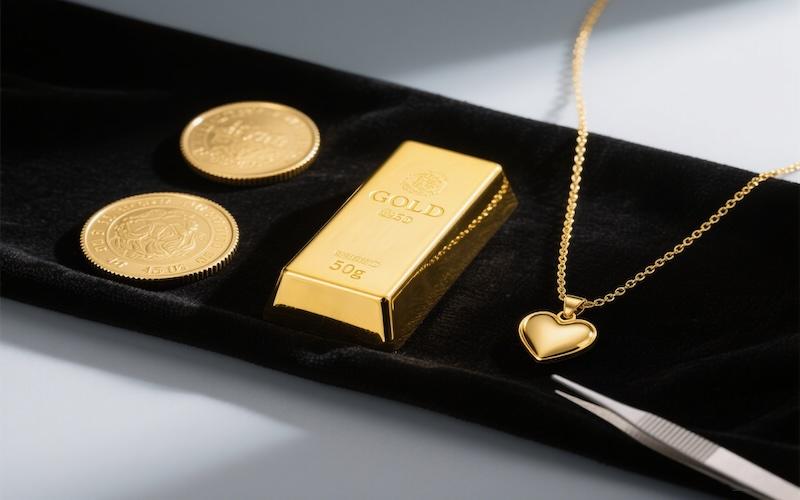
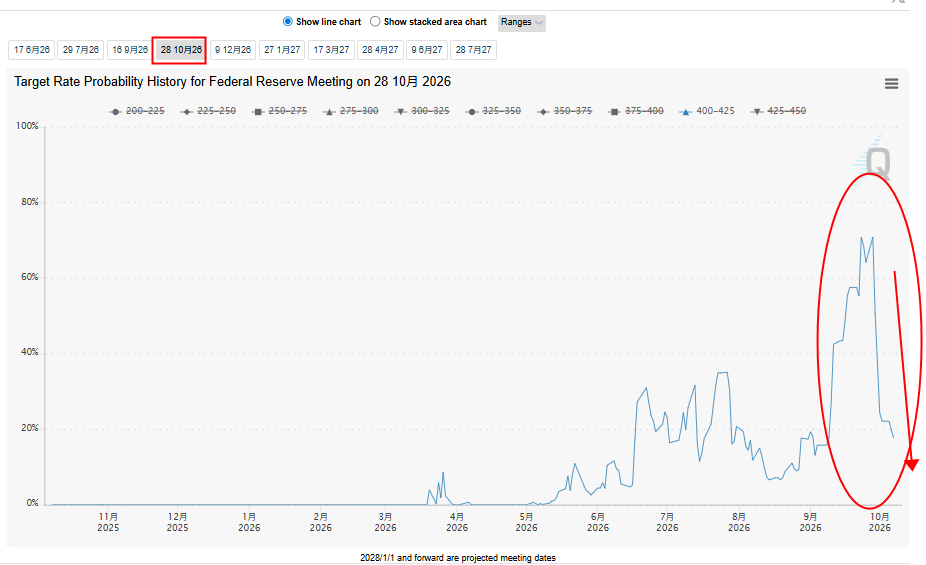
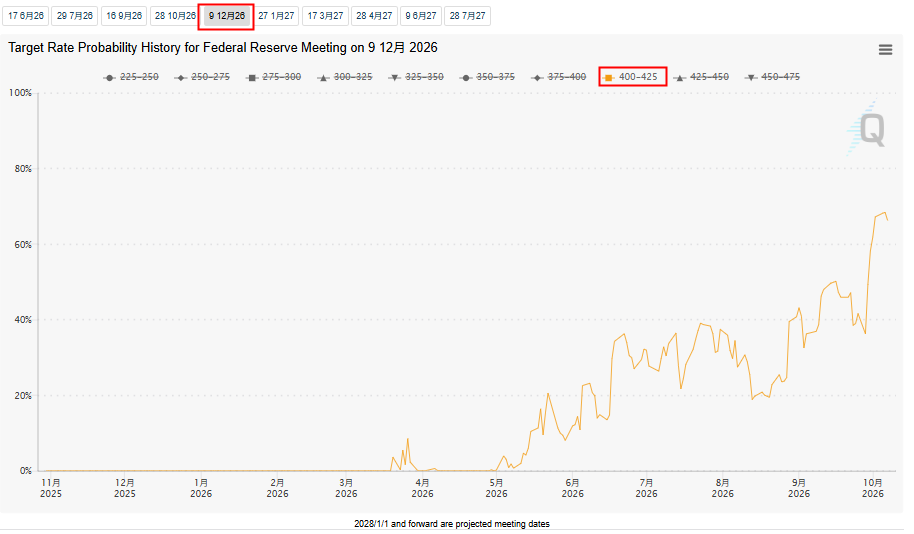 (FedWatch interest rate tools show a significant drop in the probability of an October rate hike, but the probability of a December rate hike has not dropped accordingly. Source: CME Group)
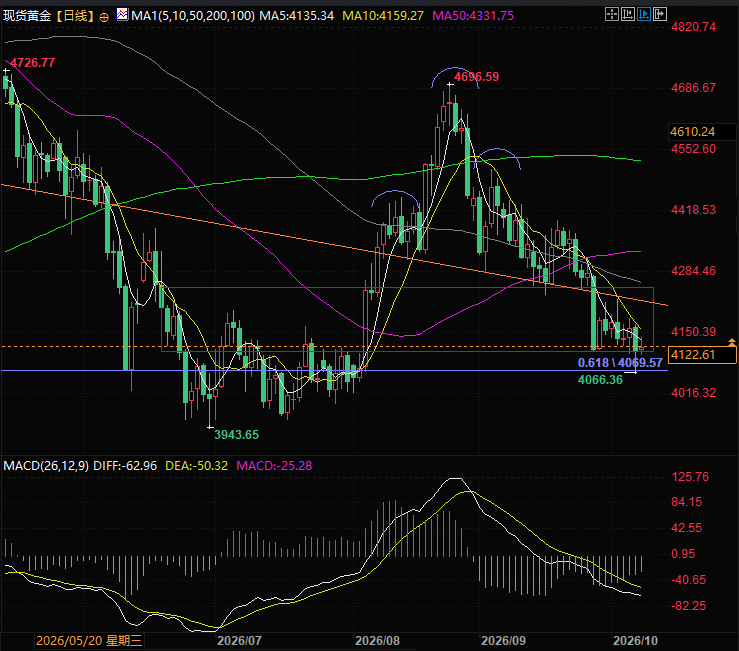 (Spot gold daily chart, source: EasyTrade) At 17:51 Beijing time, spot gold is currently trading at $4122 per ounce.
Federal Reserve: Probability of holding rates steady in October increases, but uncertainty remains regarding a December rate hike.
Recent statements from several Federal Reserve officials have reduced the urgency of an October rate hike, with the market's probability of keeping rates unchanged in October rising to 80%. However, this does not mean the rate hike cycle is over. The minutes of the September Fed meeting revealed a significant divergence of opinion among officials regarding the rationale for a rate hike: "Some participants" believed a rate hike was necessary to curb the impact of energy and other price shocks; more hawkish officials believed a rate hike was needed to prevent emerging demand-driven inflation; two participants stated they supported a rate hike because it aligned with their assessment of a rising neutral interest rate; and "several participants" even believed that the current policy rate was not restrictive, or only slightly restrictive. The minutes stated, "Most participants believed that it might be appropriate to raise rates again before the end of the year." This divergence suggests that the October meeting may see heated discussions, while the probability of a December rate hike has not fallen significantly, remaining around 66%. For gold, this means that the downside potential for short-term interest rates is limited, and the opportunity cost of holding gold is unlikely to decrease significantly in the short term. (FedWatch interest rate tools show a significant drop in the probability of an October rate hike, but the probability of a December rate hike has not dropped accordingly. Source: CME Group)Oil Prices and Refined Oil Products: High Energy Prices Continue to Push Up Real Interest Rates
Oil prices remain high, and the transmission effect of refined oil prices and the resulting inflation concerns persist. The drone attack and subsequent fire in Russia's Salavat industrial zone, damaging the Salavat Petrochemical Company—one of Russia's largest refining and petrochemical complexes with an annual refining capacity of 10 million tons—further exacerbated supply-side uncertainty. The stickiness of energy prices, coupled with Federal Reserve officials' wariness of "energy and other price shocks," has collectively pushed up real yields on US Treasury bonds. This is one of the reasons for the recent weakening of the traditional relationship between gold and real interest rates: despite high real interest rates, gold has not experienced a corresponding decline, but rather has shown significant resilience in 2025-early 2026. In his speech at the Sorrento conference, BIS explicitly stated that the traditional relationship between gold and real yields will significantly weaken in 2025 and early 2026.Central bank gold purchases: stable strategic purchasing power
Taking the Bank of Italy as an example, the traditional motivation for central banks to hold gold lies in the fact that gold is a safe-haven asset, a good diversification tool, and "anyone's liability"—without credit or default risk. Italy, as the world's fourth-largest holder of official gold reserves, has accumulated 2,450 tons of gold over the course of a single policy decision, rather than a result of a gradual accumulation since the late 19th century. More noteworthy is the structural change: since 2022, central banks' share of gold demand has increased significantly, primarily driven by purchases from emerging economies. Geopolitical uncertainty—especially the freezing of Russian foreign exchange reserves—has rekindled concerns about the vulnerability of overseas foreign exchange reserves. This central bank gold purchase in the context of "de-dollarization" constitutes a stable, price-insensitive strategic purchasing power, providing solid support for gold prices.ETFs: Key Marginal Buyers
The increasing popularity of ETFs has expanded market participation among retail and short-term investors, resulting in very large inflows since 2025. As one of the most important marginal buyers in the gold market, the behavior of ETFs has a significant impact on short-term gold price fluctuations: when gold shows signs of a rebound, ETF funds are likely to quickly enter the market, creating a positive feedback loop and pushing up gold prices; when gold prices are in a downtrend, ETF outflows become a sustained downward pressure on gold prices. This "buy high, sell low" characteristic makes ETFs a key force amplifying short-term gold price volatility. The BIS (British Securities and Exchange Commission) also pointed out that gold price volatility has increased significantly in recent years, warranting close attention.Summary and Technical Analysis:
Current Landscape: Internal divisions within the Federal Reserve are intensifying, with the probability of holding rates steady in October rising to 80%, but the probability of a December rate hike remaining as high as 66%, limiting the downside potential for short-term interest rates. High oil prices are pushing up real interest rates, but the traditional negative correlation between gold and real interest rates has significantly weakened. Central bank gold purchases provide strategic bottom support, while ETFs act as amplifiers of short-term volatility. Short-Term: If the Fed holds rates steady in October but releases hawkish signals, coupled with continued high energy prices, gold may continue to fluctuate in an environment of high real interest rates, with ETF flows determining the short-term direction. Whether or not a rate hike occurs in December is a key juncture. If a rate hike occurs, rising short-term interest rates may put downward pressure on gold prices; however, if weak economic data forces the Fed to change course, gold may rebound, at which point ETF funds will quickly follow suit. Central bank gold purchases, geopolitical uncertainty, and the "debasement trade"—reflecting concerns about high public debt and fiscal expansion in major economies—will continue to provide long-term support for gold, with these forces becoming particularly pronounced in 2025 and early 2026. The traditional real interest rate framework remains in effect, but central bank gold purchases, geopolitical factors, and debt concerns are reshaping the demand structure for gold. In this environment, the downside for gold prices is relatively limited, while upside requires continued participation from ETF funds and confirmation of a shift in Federal Reserve policy. Technically: After the upward trend peaked and broke below the trendline, spot gold fell along the trading range, then formed a head and shoulders pattern before breaking below the neckline, continuing its downward movement within the range. Readers who have been following our articles are well aware of the overall trend for gold. Currently, it may be rebounding from the trading range. However, considering the measured decline of the head and shoulders pattern, around 3950 is also a previous low, and gold prices are very likely to test this low. (Spot gold daily chart, source: EasyTrade) At 17:51 Beijing time, spot gold is currently trading at $4122 per ounce.
- Risk Warning and Disclaimer
- The market involves risk, and trading may not be suitable for all investors. This article is for reference only and does not constitute personal investment advice, nor does it take into account certain users’ specific investment objectives, financial situation, or other needs. Any investment decisions made based on this information are at your own risk.