Japanese consumer spending contracted for the ninth consecutive month, raising the risk of intervention; USD/JPY remained range-bound.
2026-10-09 14:26:19
During Friday's Asian trading session, the USD/JPY pair failed to maintain its earlier slight rebound, fluctuating around 158.00 and remaining within the trading range established over the past week. The market currently lacks a clear unilateral driver: the dollar is under pressure due to falling US Treasury yields, while the yen is influenced by Japanese economic data, central bank policy expectations, and the risk of potential currency market intervention. This interplay between bullish and bearish forces is making traders hesitant to establish aggressive directional positions. 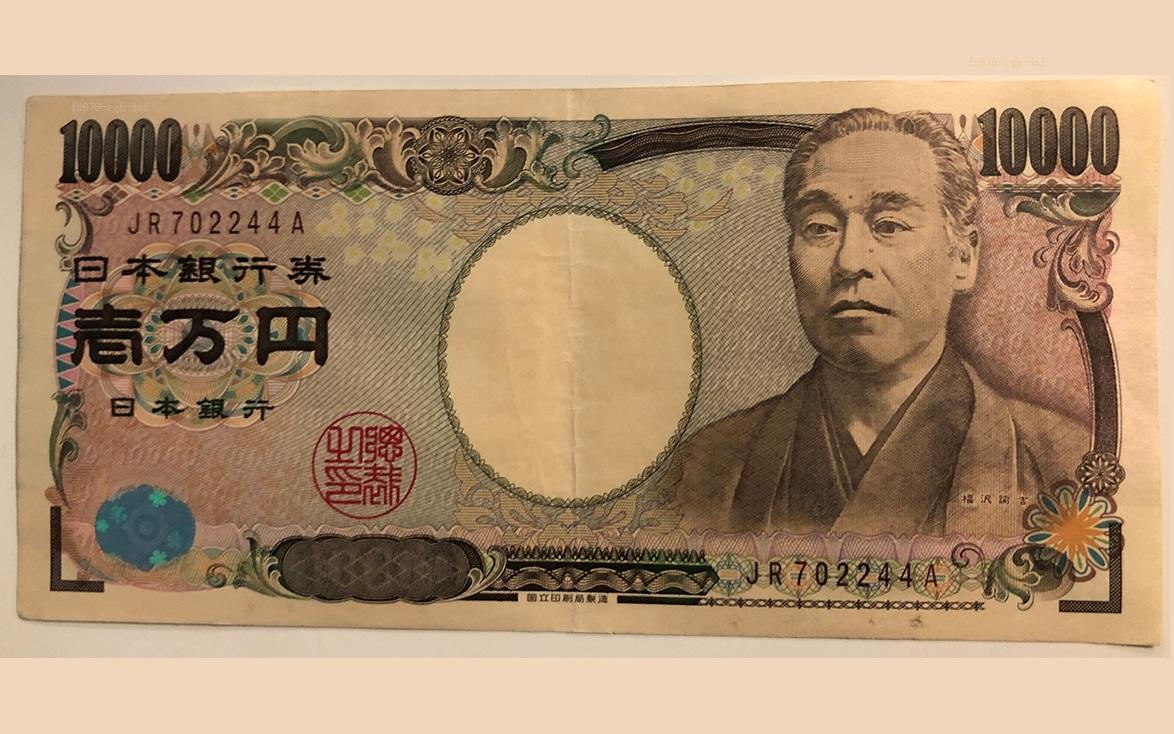 Newly released Japanese household spending data shows that household consumption expenditures declined for the ninth consecutive month year-on-year in August. However, the actual decline was less than market expectations, and coupled with the fact that real wages in Japan have increased for the eighth consecutive month, this suggests that household purchasing power may have improved somewhat. Although continued weak consumption reflects the unstable recovery of domestic demand in Japan, wage growth helps improve the consumption base and provides a basis for the Bank of Japan to continue normalizing monetary policy. The Bank of Japan's policy path is an important factor influencing the medium-term trend of the yen. Rabobank's foreign exchange strategy team pointed out that the Bank of Japan's previous policy guidance was not as hawkish as the market expected, but the gradual interest rate hikes are still weakening the yen's attractiveness as a low-cost funding currency. As Japanese interest rates gradually rise, the profit margin for investors to borrow yen and buy high-yield assets for carry trades may narrow, which helps alleviate some of the structural pressures facing the yen in the long term. However, if the Bank of Japan continues to raise interest rates, it does not necessarily mean that the yen will continue to appreciate. The USD/JPY exchange rate remains highly dependent on changes in the USD/JPY interest rate differential. If US interest rates remain high and the Bank of Japan's tightening pace is relatively slow, carry trades may still provide support for the USD/JPY exchange rate. Conversely, if US yields decline while the Bank of Japan signals a clearer tightening stance, the narrowing of the USD/JPY interest rate differential could push the exchange rate lower. The potential risk of foreign exchange intervention by Japanese authorities also limits the upside potential of USD/JPY. With the exchange rate remaining high, traders are wary of possible official measures to support the yen. Such risks could not only affect market sentiment but also lead investors to reduce their long dollar positions near key levels. Even if fundamentals temporarily support the dollar, concerns about intervention could still increase the risk of sudden exchange rate fluctuations. Regarding the dollar, the decline in US Treasury yields is one source of short-term pressure. US President Trump stated that the US would not resume military strikes against Iran before the November 3rd midterm elections, easing market concerns about further shocks to energy supplies. Pressure on oil prices also reduced some market concerns about continued energy-driven inflation. Furthermore, robust demand at the US 30-year Treasury auction pushed US Treasury yields down from previous highs, causing the dollar index to retreat from near an 18-month high, limiting the rebound of USD/JPY. However, expectations of Federal Reserve policy still provide potential support for the dollar. The market still expects a greater than 80% probability of a Fed rate hike in December, indicating that investors have not significantly abandoned their judgment of further policy tightening this year. Meanwhile, uncertainty surrounding US-Iran relations has not been completely eliminated. Mohammad Eslami, head of the Atomic Energy Organization of Iran, stated that Iran will not stop uranium enrichment activities, nor will it relinquish its existing uranium stockpile. These statements suggest that geopolitical risk premiums may recur, and if the situation escalates again, the safe-haven demand for the US dollar may rebound. Going forward, the market will focus on the preliminary consumer confidence index and inflation expectations data from the University of Michigan, while also paying attention to speeches by Fed officials and the latest developments in the geopolitical situation. If US economic data is stronger than expected, or officials further reinforce their hawkish stance, US Treasury yields may regain support; if data is weak and yields continue to fall, the USD/JPY exchange rate may face greater downward pressure. In the short term, the interplay of Japanese policy expectations, US interest rate trends, and intervention risks will remain key to determining whether the exchange rate can break out of its trading range. From the 4-hour chart, USD/JPY maintains a short-term bullish structure. The pair is currently consolidating around 158.00, but remains above the 100-period simple moving average, indicating that the previous uptrend has not been definitively broken. The recent sideways movement is more akin to consolidation within an uptrend than a confirmed trend reversal. However, a weaker dollar and the potential risk of intervention by Japanese authorities may continue to limit buying interest. The first support level to watch is around 157.59, which coincides with the 100-period simple moving average on the 4-hour chart and is a crucial dynamic support. If the pair can hold this area, there is still a chance to retest the 158.00 level and further challenge the upper limit of the range around 158.50. A decisive break above 158.50 and a stable hold above it would confirm that the bulls have regained control; conversely, a break below 157.59 should raise concerns about further declines, weakening the existing bullish structure.
 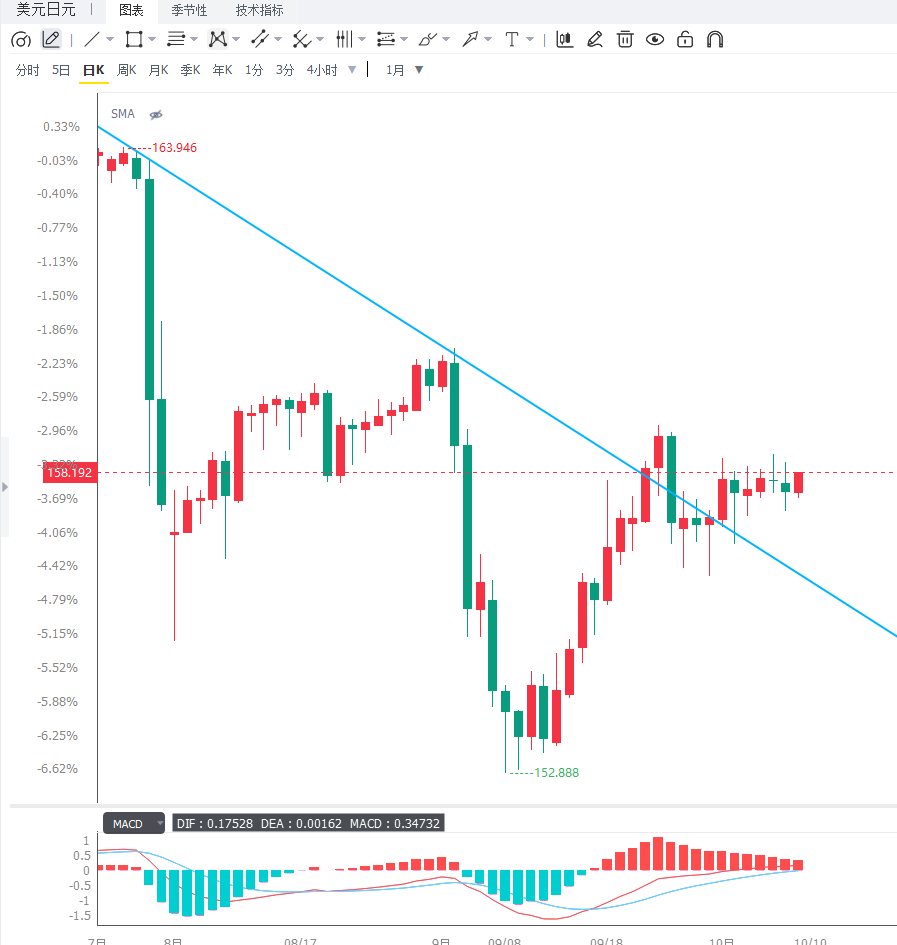 Editor's Summary: The USD/JPY pair is currently influenced by the USD/JPY interest rate differential, expectations of the Bank of Japan's policy, safe-haven demand for the dollar, and the risk of intervention in the foreign exchange market. Japanese wage growth supports further tightening policies, but continued declines in household spending reflect ongoing challenges to domestic demand. In the US, falling Treasury yields are weighing on the dollar, while market expectations of a December rate hike by the Federal Reserve continue to support it. The short-term technical structure is slightly bullish, but resistance around 158.50 and support around 157.59 will determine the next direction. Close attention should be paid to US economic data, speeches by Federal Reserve officials, and policy signals from the Japanese authorities, with caution advised against rapid fluctuations near key price levels.
Newly released Japanese household spending data shows that household consumption expenditures declined for the ninth consecutive month year-on-year in August. However, the actual decline was less than market expectations, and coupled with the fact that real wages in Japan have increased for the eighth consecutive month, this suggests that household purchasing power may have improved somewhat. Although continued weak consumption reflects the unstable recovery of domestic demand in Japan, wage growth helps improve the consumption base and provides a basis for the Bank of Japan to continue normalizing monetary policy. The Bank of Japan's policy path is an important factor influencing the medium-term trend of the yen. Rabobank's foreign exchange strategy team pointed out that the Bank of Japan's previous policy guidance was not as hawkish as the market expected, but the gradual interest rate hikes are still weakening the yen's attractiveness as a low-cost funding currency. As Japanese interest rates gradually rise, the profit margin for investors to borrow yen and buy high-yield assets for carry trades may narrow, which helps alleviate some of the structural pressures facing the yen in the long term. However, if the Bank of Japan continues to raise interest rates, it does not necessarily mean that the yen will continue to appreciate. The USD/JPY exchange rate remains highly dependent on changes in the USD/JPY interest rate differential. If US interest rates remain high and the Bank of Japan's tightening pace is relatively slow, carry trades may still provide support for the USD/JPY exchange rate. Conversely, if US yields decline while the Bank of Japan signals a clearer tightening stance, the narrowing of the USD/JPY interest rate differential could push the exchange rate lower. The potential risk of foreign exchange intervention by Japanese authorities also limits the upside potential of USD/JPY. With the exchange rate remaining high, traders are wary of possible official measures to support the yen. Such risks could not only affect market sentiment but also lead investors to reduce their long dollar positions near key levels. Even if fundamentals temporarily support the dollar, concerns about intervention could still increase the risk of sudden exchange rate fluctuations. Regarding the dollar, the decline in US Treasury yields is one source of short-term pressure. US President Trump stated that the US would not resume military strikes against Iran before the November 3rd midterm elections, easing market concerns about further shocks to energy supplies. Pressure on oil prices also reduced some market concerns about continued energy-driven inflation. Furthermore, robust demand at the US 30-year Treasury auction pushed US Treasury yields down from previous highs, causing the dollar index to retreat from near an 18-month high, limiting the rebound of USD/JPY. However, expectations of Federal Reserve policy still provide potential support for the dollar. The market still expects a greater than 80% probability of a Fed rate hike in December, indicating that investors have not significantly abandoned their judgment of further policy tightening this year. Meanwhile, uncertainty surrounding US-Iran relations has not been completely eliminated. Mohammad Eslami, head of the Atomic Energy Organization of Iran, stated that Iran will not stop uranium enrichment activities, nor will it relinquish its existing uranium stockpile. These statements suggest that geopolitical risk premiums may recur, and if the situation escalates again, the safe-haven demand for the US dollar may rebound. Going forward, the market will focus on the preliminary consumer confidence index and inflation expectations data from the University of Michigan, while also paying attention to speeches by Fed officials and the latest developments in the geopolitical situation. If US economic data is stronger than expected, or officials further reinforce their hawkish stance, US Treasury yields may regain support; if data is weak and yields continue to fall, the USD/JPY exchange rate may face greater downward pressure. In the short term, the interplay of Japanese policy expectations, US interest rate trends, and intervention risks will remain key to determining whether the exchange rate can break out of its trading range. From the 4-hour chart, USD/JPY maintains a short-term bullish structure. The pair is currently consolidating around 158.00, but remains above the 100-period simple moving average, indicating that the previous uptrend has not been definitively broken. The recent sideways movement is more akin to consolidation within an uptrend than a confirmed trend reversal. However, a weaker dollar and the potential risk of intervention by Japanese authorities may continue to limit buying interest. The first support level to watch is around 157.59, which coincides with the 100-period simple moving average on the 4-hour chart and is a crucial dynamic support. If the pair can hold this area, there is still a chance to retest the 158.00 level and further challenge the upper limit of the range around 158.50. A decisive break above 158.50 and a stable hold above it would confirm that the bulls have regained control; conversely, a break below 157.59 should raise concerns about further declines, weakening the existing bullish structure. Editor's Summary: The USD/JPY pair is currently influenced by the USD/JPY interest rate differential, expectations of the Bank of Japan's policy, safe-haven demand for the dollar, and the risk of intervention in the foreign exchange market. Japanese wage growth supports further tightening policies, but continued declines in household spending reflect ongoing challenges to domestic demand. In the US, falling Treasury yields are weighing on the dollar, while market expectations of a December rate hike by the Federal Reserve continue to support it. The short-term technical structure is slightly bullish, but resistance around 158.50 and support around 157.59 will determine the next direction. Close attention should be paid to US economic data, speeches by Federal Reserve officials, and policy signals from the Japanese authorities, with caution advised against rapid fluctuations near key price levels.
- Risk Warning and Disclaimer
- The market involves risk, and trading may not be suitable for all investors. This article is for reference only and does not constitute personal investment advice, nor does it take into account certain users’ specific investment objectives, financial situation, or other needs. Any investment decisions made based on this information are at your own risk.