Gulf exports have recovered, but physical prices remain firm, bringing the core contradictions in the crude oil market to the forefront.
2026-10-12 10:12:19
Brent crude futures edged lower in Asian trading on Monday (October 12), currently trading around $103 per barrel. Despite the slight decline in oil prices, the divergence between supply recovery and price resilience remains the most noteworthy clue in the market. Goldman Sachs' latest estimates show that Persian Gulf oil exports, including "covert exports," have recovered to 22-23 million barrels per day in the past two weeks, roughly in line with the 2025 average. However, at the same time, physical Brent crude prices remain high, reflecting a persistent and substantial conflict risk premium. The divergence between recovering exports and stubbornly refusing to lower prices has become the core contradiction in the current international oil market. 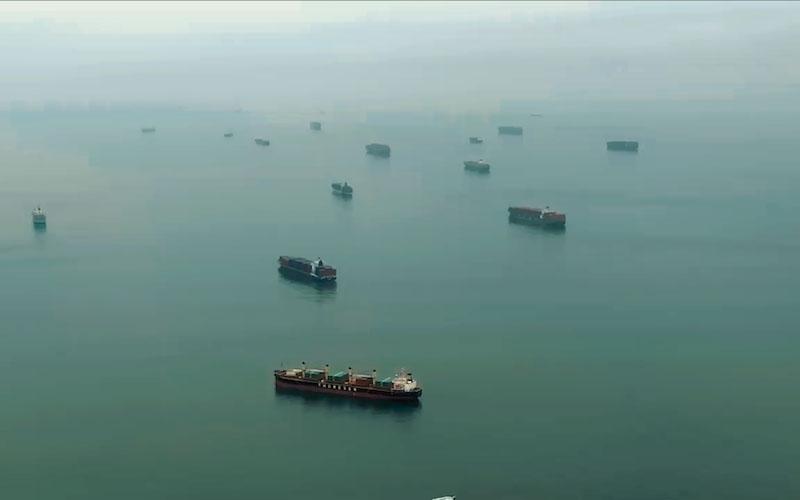
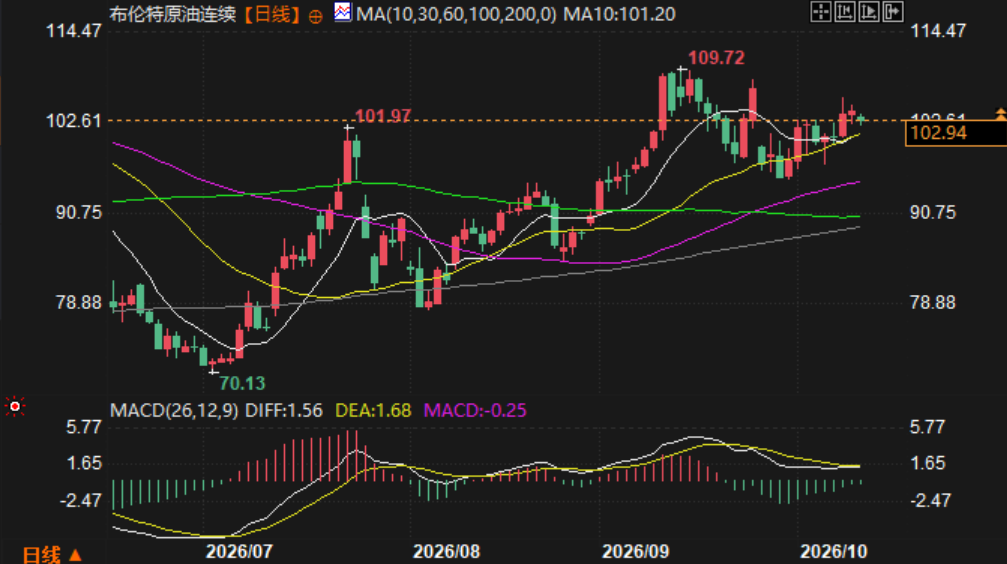 (Brent crude oil futures daily chart, source: EasyTrade) At 10:10 Beijing time, Brent crude oil futures were trading at $103.03 per barrel.
Gulf exports have recovered to 22-23 million barrels per day.
Goldman Sachs estimates that Gulf exports (including covert exports) have recovered to 22-23 million barrels per day in the past two weeks, roughly in line with the 2025 average. However, physical Brent crude oil prices remain very high. Covert exports refer to cargoes carried by tankers with their satellite transponders off, making them difficult to track. Goldman Sachs estimates these flows at around 5 million barrels per day in September, a key reason why its figures are higher than other institutions. JPMorgan Chase uses a more conservative approach, estimating recent Gulf exports at about 89% of 2025 levels, with the difference mainly due to the inclusion of covert vessels. This divergence in data illustrates that the extent of the Gulf export recovery depends on the statistical methodology, but the direction is clear—export volumes have rebounded significantly. However, persistently high physical prices indicate that market concerns about supply disruptions have not dissipated with the recovery in exports.Crude oil led the recovery, but refined oil products lagged far behind.
The recovery is led by crude oil, not refined products. At the end of September, Goldman Sachs stated that crude oil exports had risen above the 2025 average, with Saudi Arabian shipments more than doubling that month to nearly 12 million barrels per day, and the UAE also exporting above normal levels. Satellite data showed that Iran had no seaborne crude oil exports. Refined product exports are severely lagging: diesel, gasoline, and jet fuel exports remain at about half of normal levels, which Goldman Sachs attributed to increased refinery shutdowns in the region and greater risks faced by smaller refined product tankers carrying more flammable cargoes. This divergence means that while crude oil supply is recovering, the shortage of refined products continues. For the oil market, this means that benchmark crude oil prices may fall, but profit margins for diesel and jet fuel will remain high.Divergence between physical prices and flow data; spot Brent crude oil near $120
Physical prices and flow data tell different stories. Spot Brent crude—the price of a North Sea cargo for shipment on a specific date—has recently approached $120 a barrel, significantly higher than futures. Goldman Sachs links this gap to concerns that escalation could harm long-term production, as well as to record-low global inventories outside of OECD commercial inventories, prompting buyers to quickly rebuild supply. Goldman Sachs estimates that the risk premium in the Brent crude spread averaged $22 a barrel in September, the second-highest monthly level on record, above the highs during the Russia-Ukraine conflict in 2022. The size of this risk premium suggests that despite the recovery in exports, the market remains aggressive in pricing in supply disruptions. The gap between spot Brent and futures reflects the premium buyers are paying for a spot barrel and their concerns about long-term supply security.Goldman Sachs' benchmark scenario: Brent crude oil to fall to $85 by year-end and $80 by 2027.
Goldman Sachs maintained its baseline scenario that Brent crude oil will fall to $85 by the end of the year and to $80 in 2027, while warning that prices could rise sharply if the situation escalates again. The core logic behind this forecast is that as exports recover and inventories rebuild, the risk premium will gradually diminish, and benchmark prices will revert to fundamentals. However, this forecast faces the risk that the risk premium could widen again if the conflict escalates once more.Weekend Houthi attacks: a direct test of Saudi-led recovery.
The Houthi claims over the weekend regarding attacks on Saudi Aramco facilities have placed this risk directly above the recovery in Saudi barrels. Saudi shipments have more than doubled during the recovery, and if any attacks are confirmed and cause actual disruptions, the physical premium could widen again. This event serves as a reminder to the market that the sustainability of the supply recovery remains constrained by the security situation, and that geopolitical risk premiums are unlikely to fully dissipate in the short term.Summarize
Goldman Sachs estimates that Gulf oil exports have recovered to 22-23 million barrels per day, roughly in line with the 2025 average, but physical Brent crude remains near $120 per barrel, significantly higher than futures. This divergence reflects a risk premium rather than a supply shortage—Goldman Sachs estimates the risk premium in the September Brent crude spread averaged $22 per barrel, the second highest on record. The recovery is led by crude oil, with Saudi shipments more than doubling, but refined product exports remain at about half normal levels, constrained by refinery shutdowns and refined product tanker risks. Goldman Sachs maintains its baseline scenario of Brent crude falling to $85 by the end of the year and $80 in 2027, but warns that a renewed escalation could push prices higher. The Houthi attacks on Saudi Aramco facilities over the weekend directly test the Saudi barrels that are leading the recovery. For the oil market, the most critical contradiction is the divergence between the recovered export volume and the persistently high physical prices. Futures prices may fall over time, but physical premiums and refined oil profit margins will remain high until geopolitical risk premiums truly subside. (Brent crude oil futures daily chart, source: EasyTrade) At 10:10 Beijing time, Brent crude oil futures were trading at $103.03 per barrel.
- Risk Warning and Disclaimer
- The market involves risk, and trading may not be suitable for all investors. This article is for reference only and does not constitute personal investment advice, nor does it take into account certain users’ specific investment objectives, financial situation, or other needs. Any investment decisions made based on this information are at your own risk.