Multiple attacks over the weekend have turned the Saudi capital into a battlefield, prompting Trump to consider military intervention in Yemen! Is the situation in the Middle East about to escalate again?
2026-10-12 10:50:17
Over the past weekend, Yemen's Houthi rebels launched multiple missile and drone attacks on King Khalid International Airport in Riyadh, the Saudi Arabian capital, within 48 hours, resulting in at least 12 deaths and 309 injuries. The dead included citizens of Saudi Arabia, the United States, Bangladesh, Egypt, Jordan, Syria, Palestine, Sudan, and India. This is the deadliest incident in the Gulf Arab states since the US-Israel war against Iran began in February. The Saudi-led coalition has declared the attack a "war crime," and US President Trump subsequently stated that the US might join Saudi Arabia in its military operations against the Houthis, raising the risk of a new escalation in the Middle East. 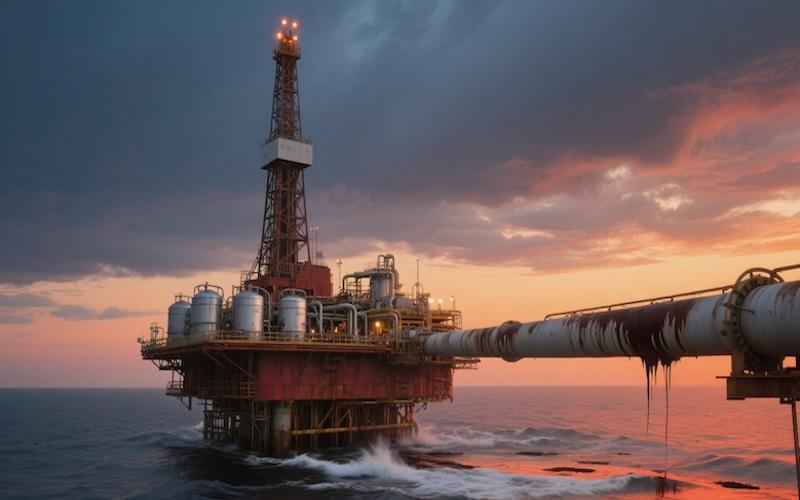
I. Escalation of Attacks: Multiple Strikes Within 48 Hours Force Civil Aviation Hub to Close
The intensity and frequency of this attack far exceeded those of previous weeks. According to the Saudi General Authority of Civil Aviation, the missile attack on Saturday (October 10) directly hit Terminals 3 and 4 of the airport, killing 12 people and injuring 309. The following day (October 11), an "unidentified projectile" struck Terminal 4 again, triggering a fire. Air defense forces subsequently intercepted a cruise missile near the airport. One Pakistani citizen was killed and 11 others were injured in the October 11 attacks. Riyadh Airport remained closed after the attacks, with over 600 flights canceled. Schools in Riyadh temporarily switched to online classes. Houthi military spokesman Yahya Sarreya, through the group's Al-Masirah TV, stated that the group had conducted four military operations in Saudi Arabia in the past 24 hours using ballistic missiles, cruise missiles, and drones, targeting King Khalid International Airport, King Dammam Fahd International Airport, and two Saudi Aramco facilities. The Houthi rebels also warned all airlines and passengers, claiming that all Saudi airports, except for those in Mecca and Medina, have become "combat zones." It's worth noting that this is not the first time the Houthis have targeted Saudi civil aviation facilities recently. In multiple attacks between October 6th and 8th, Riyadh and Abha airports were attacked, resulting in the deaths of three people, including a Saudi Airlines pilot. Judging from the frequency and accuracy of these attacks, the Houthis' long-range strike capabilities are significantly improving.II. Trump states: US "may" intervene; Saudi Arabia seeks emergency defense support.
In response to the heavy casualties at the Saudi airport, Trump told reporters at the White House on the 10th that the United States might join Saudi Arabia in its strikes against the Houthis and would "make a decision as soon as possible." Two Saudi government officials revealed that Riyadh was seeking "urgent defense support" from the United States regarding the attack and requested US intervention "as soon as possible" to help the Saudi-led coalition fight the Houthis in Yemen. However, US intervention is far from a simple political statement. The Trump administration had previously rejected Saudi Crown Prince Mohammed's request to strike the Houthis in September, citing its focus on military operations with Iran. Then, on September 17, Trump instructed the Department of Defense to prepare airstrikes against the Houthis, demonstrating a fluctuating policy. This wavering reflects a deep contradiction in Washington between military intervention and strategic restraint. From a military cost perspective, if the United States participates in airstrikes against the Houthis, it will mark the first time the US military has taken direct military action against the group since the end of Operation Wild Cavalry in May 2025. According to data from the American Enterprise Institute, Operation Rough Cavalry, lasting only 30 days, cost over $1 billion and struck more than 1,000 targets, but the Houthi rebels were not effectively weakened. A single Houthi suicide drone costs only about $2,000, while intercepting a Standard Missile-2 costs the U.S. military $2.1 million. This extreme cost asymmetry poses a serious economic challenge to the continued economic viability of U.S. military operations.III. Energy Shock: Blocked Strait of Bab el-Mandeb, Oil Prices Fluctuate at High Levels
The Houthi attacks on Saudi civilian aviation and energy facilities are compounding the effects of the Red Sea shipping blockade, creating a double squeeze on the global energy supply chain. The Houthis previously announced a maritime embargo against Saudi Arabia, intercepting and forcing 29 Saudi oil tankers to return to port in the Red Sea and Arabian Sea. Traffic in the Bab el-Mandeb Strait dropped by nearly 50% compared to before the attacks. International oil prices have already fully reflected the geopolitical risk premium. In the first quarter of 2026, Brent crude oil prices climbed steadily from $61 per barrel at the beginning of the year. After the outbreak of the conflict between the US, Israel, and Iran, navigation in the Strait of Hormuz was disrupted, and Brent crude oil prices surged to $119 per barrel at one point. Currently, the main Brent crude oil futures contract remains above the $100 mark. Some institutions predict that the average price of Brent and WTI crude oil in 2026 will be between $85 and $90 per barrel, and the upstream oil and gas exploration sector is expected to maintain high prosperity. Supply-side pressures are also not to be ignored. Mid-May: Gulf oil production was 14.4 million barrels per day lower than pre-war levels. The International Energy Agency confirmed that Gulf production was 14.4 million barrels per day lower than pre-war levels, and OPEC+ overall production fell to its lowest level in 35 years. June: Rystad Energy data showed that the six Gulf oil-producing countries had shut down wells with a daily output of 11.8 million barrels, about three-quarters of which came from Saudi Arabia, Iraq, and Kuwait. Against this backdrop, the Houthi attacks on Saudi Aramco facilities further exacerbated market concerns about supply disruptions, and energy price volatility may continue to be higher than pre-conflict levels.IV. Arms Sales Game: The $24.3 Billion F-35 Deal Tests the US-Saudi Alliance
Amidst a rapidly deteriorating security situation, a major arms sale between the United States and Saudi Arabia has attracted significant attention. On September 17, the U.S. State Department approved a potential sale of 48 F-35 fighter jets and related equipment to Saudi Arabia, totaling $24.3 billion. This includes 49 engines, communication equipment, spare parts, and training support equipment. The deal is currently under congressional review. If the sale goes through, it will mark a "major shift" in U.S. policy. Currently, only Israel possesses F-35 fighter jets in the Middle East. Saudi Arabia's acquisition of this advanced stealth fighter will profoundly impact the regional military balance and test Washington's commitment to maintaining Israel's "qualitative military advantage." For Saudi Arabia, facing escalating attacks from the Houthi rebels, this deal is seen as a crucial step in enhancing its defense capabilities.V. Domestic Pressure: With the midterm elections approaching, high oil prices become a "political bomb" for the Republican Party.
Whether the United States will deeply intervene in the Yemen conflict is not only a military and diplomatic issue, but also a domestic political one. With less than a month until the November midterm elections, U.S. gasoline prices surged from about $3 per gallon at the beginning of the year to nearly $5 in the spring. Although they fell somewhat in the summer, they have recently climbed again to about $4.37 per gallon. Goldman Sachs' latest election monitoring report shows that the probability of Democrats sweeping both the House and Senate is as high as 65%, while the probability of Republicans retaining their majority in the House is less than 10%. There is a high degree of correlation between gasoline price trends and the Democratic lead. Polls show that the vast majority of Americans blame the Trump administration for the soaring gasoline prices. Under this political pressure, the Trump administration is considering suspending the federal gasoline tax to alleviate voter discontent, but this measure requires congressional approval. If the United States becomes deeply involved in the Yemen conflict, increased military spending and further disruptions to energy supplies could exacerbate the oil price problem, adding more uncertainty to the Republican Party's election prospects.VI. International Response: Britain provided defensive support but refused offensive action.
As Saudi Arabia seeks international support, the UK has been the first to respond. British Prime Minister Burnham stated that, in response to Saudi Arabia's request for military assistance, the Royal Air Force will provide "defensive" support, including aerial refueling. British Defense Secretary Straying stated in an interview that the UK will not engage in offensive action "at present," emphasizing that "there is no military solution to this conflict." According to media reports, France, Turkey, and Pakistan have also made clear statements or taken action regarding Saudi Arabia's request for assistance.Editor's Summary
The Houthi attacks on Riyadh's airport have pushed Saudi Arabia to a dangerous crossroads. From a military perspective, if the US joins a Saudi-led military operation, it faces the high costs of asymmetric warfare and the risk of diverting strategic resources—with the ongoing conflict in Iran and escalating security tensions in East Asia, the cost of opening a "second front" could far exceed expectations. From an energy perspective, the combined effects of disrupted shipping in the Bab el-Mandeb Strait and the blockade of the Strait of Hormuz are reshaping the global energy supply chain, making it difficult for oil prices to fall significantly in the short term. From a political perspective, gasoline prices before the midterm elections have become a key variable in determining the outcome, and the potential linkage between military intervention and rising oil prices could be the Trump administration's biggest political risk. In the coming weeks, Trump's final decision will not only affect the course of the war in Yemen but will also have profound repercussions in the global energy market and US domestic politics.Frequently Asked Questions
Question 1: Why do the Houthi rebels frequently attack Saudi airports and energy facilities? Since seizing Yemen's capital Sana'a in 2014, the Houthis have been engaged in continuous warfare with the Saudi-led coalition. Following the US-Israel war against Iran in February 2026, the Houthis, as a key Iranian proxy in the Arabian Peninsula, have intensified their attacks on targets within Saudi Arabia. The immediate trigger for this series of attacks was the recent large-scale airstrikes by Saudi warplanes on Sana'a and several other provinces in Yemen, which the Houthis define as "reciprocal retaliation." Strategically, the Houthis are attempting to force Riyadh to reduce its military intervention in the Yemeni civil war by attacking Saudi civilian aviation and energy infrastructure, while simultaneously increasing their bargaining power in regional power struggles. Question 2: How likely is it that the US will join Saudi military action? Trump's statement was "possibly," but "a decision will be made as soon as possible," leaving ample room for interpretation. Historically, the Trump administration's policy on Yemen has been markedly inconsistent: rejecting Saudi Arabia's request in early September, instructing the Department of Defense to prepare airstrikes in mid-September, and subsequently stating that it had no intention of taking military action. There are three main constraints: First, the military costs are high, and the cost-effectiveness of US military operations in Yemen is extremely low; second, with the midterm elections approaching, military intervention could further push up oil prices and impact the Republican Party's election prospects; and third, US military resources in the Iran region are already highly strained. Therefore, the US is more likely to adopt limited air strikes and intelligence support rather than full-scale ground intervention. Question 3: What does this conflict mean for global oil prices? Oil prices have already fully reflected the geopolitical risk premium. Brent crude oil surged from $61/barrel at the beginning of the year to $119/barrel, and is currently maintaining a high level of around $100/barrel. If the US directly intervenes in the Yemeni conflict, market panic over supply disruptions in the Middle East could push oil prices further upward. However, it should be noted that Gulf countries have already cut production by more than 10 million barrels per day, and although OPEC+ is resuming production increases, the blockade of the Strait of Hormuz limits the actual effect of these increases. It is expected that Brent oil prices will fluctuate between $85 and $90/barrel, and if the conflict escalates significantly, a breakthrough of $100/barrel cannot be ruled out. Question 4: What is the connection between the $24.3 billion F-35 arms sale and this attack? This arms sale has a direct strategic link to the Yemeni conflict. Saudi Arabia has long sought to purchase F-35s to enhance its air superiority, and the Houthi missile and drone attacks have exacerbated security anxieties in Riyadh. After the US State Department approved the arms sale in September, the deal was seen as a major security commitment to Saudi Arabia. However, the arms sale still requires congressional approval, and Israel is concerned that the influx of F-35s into Saudi Arabia would disrupt the regional military balance. If the Yemeni conflict escalates further, Congress may impose additional conditions on the arms sale or delay approval on the grounds of "ensuring Israel's military superiority." Question 5: Can the international community push the Yemeni conflict toward a political solution? It will be difficult in the short term. The UK has clearly stated that "there is no military solution to this conflict," but is still providing defensive support to Saudi Arabia. France, Turkey, and Pakistan have also made statements, and their positions are not consistent. The Houthi rebels issued a warning after the attack that "worse things are yet to come," indicating that they are not prepared to compromise. After suffering heavy casualties, Saudi Arabia faces domestic political pressure that makes it difficult for it to seek compromise in the short term. No effective mediation mechanism has been initiated at the UN level. Overall, the conflict in Yemen will likely continue to be dominated by military confrontation in the short term, and the prospects for a political solution remain unclear. At 10:44 Beijing time, Brent crude oil was trading at $103.05 per barrel.- Risk Warning and Disclaimer
- The market involves risk, and trading may not be suitable for all investors. This article is for reference only and does not constitute personal investment advice, nor does it take into account certain users’ specific investment objectives, financial situation, or other needs. Any investment decisions made based on this information are at your own risk.