The true pricing logic of gold in the Russia-Ukraine situation: energy prices rather than safe-haven demand
2026-10-12 11:34:20
Spot gold rose slightly in Asian trading on Monday (October 12), trading above $4,200 per ounce. Some market analysts attributed this move to the ceasefire announced by Trump regarding the Russia-Ukraine energy conflict, but this logic is weak: just hours after the ceasefire announcement, Kyiv claimed that Russia had attacked Ukrainian power plants, and Moscow has yet to confirm the ceasefire. For gold, the key transmission chain in this conflict lies in oil, not safe-haven demand. Escalating tensions push up energy prices, raise inflation expectations, strengthen the necessity for further interest rate hikes by the Federal Reserve, and consequently push up US Treasury yields and the dollar, putting downward pressure on gold. Logically, a credible energy ceasefire should be a positive factor. However, the ceasefire was disputed within hours and lacked Moscow's endorsement; the rebound based on this narrative is clearly fragile. If the ceasefire breaks down, attacks on Russian oil refining facilities by Ukraine may resume, tightening diesel supplies and intensifying inflationary pressures, which would be detrimental to gold. 
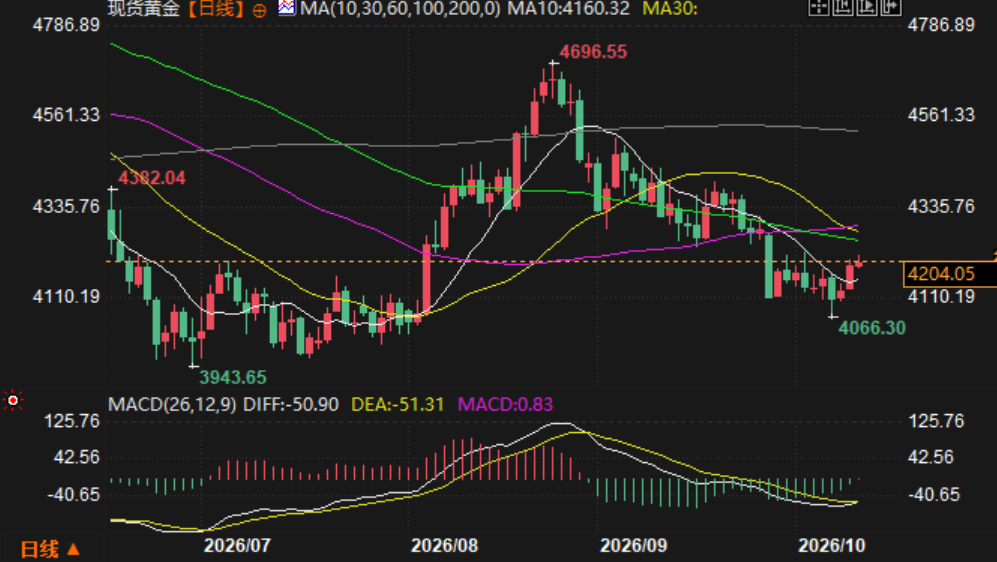 (Spot gold daily chart, source: EasyTrade) At 11:33 Beijing time, spot gold was trading at $4206.32 per ounce.
The ceasefire announcement was controversial within hours, and Moscow has not confirmed it.
Trump announced on Sunday that Russia and Ukraine had agreed to an immediate cessation of attacks on energy infrastructure. However, that evening, Ukrainian officials reported that Russia had attacked the CHP-5 thermal power plant in Kharkiv, with a local official telling the media that the plant had been hit at least twice and caught fire. Zelensky stated that a power plant in Kyiv had also been attacked, and that Russia had launched more than 200 attacks on Ukrainian power generation and transmission facilities in the past week. The Kremlin declined to comment at the time of publication, and Ukrainian officials said they learned of the agreement from Trump's social media posts. Zelensky stated that Ukraine supports the ceasefire and will cease attacks on Russian energy facilities if Russia stops. Similar arrangements have previously broken down: a 30-day pause brokered by Trump in the spring of 2025 failed to last, and a week-long pause on February 1st of this year ended with attacks resuming. This historical precedent suggests that markets should be cautious about the sustainability of this ceasefire.Transmission channel: Energy prices rather than safe-haven demand
The link between the ceasefire and gold is transmitted through energy prices rather than safe-haven demand. Throughout the Iranian conflict, escalations have often suppressed gold by pushing up oil prices, raising inflation expectations, and reinforcing the case for further Fed rate hikes, thereby boosting yields and the dollar. Following this logic, a sustained energy ceasefire would benefit gold by easing fuel prices. However, the problem is that this ceasefire was disputed within hours, and the impact of the Russia-Ukraine energy halt on oil prices is far less than that of Gulf supply. This transmission logic explains gold's recent price pattern. Gold rose more than 1% last Thursday as Trump stated the US would not attack Iran before the midterm elections, oil prices fell, and the dollar weakened. Similarly, weekend attacks on Saudi Arabia, including the Houthi-claimed strikes on Aramco facilities, could pose a risk to gold if they push up oil prices. Gold is still about 25% lower than its January record of nearly $5,600, and has fallen about 2% over the past month.Ceasefire Vulnerability: Historical Precedents and Current Controversies
The fragility of ceasefires is historically precedent-based. The 30-day pause brokered by Trump in the spring of 2025 failed to hold, and the week-long pause on February 1st this year ended with renewed attacks. The current ceasefire was disputed within hours of its announcement, and its lack of confirmation from Moscow further undermines its credibility. For gold, the foundation for a rebound based on this narrative is weak—if the ceasefire breaks down, attacks on Russian oil refineries by Ukraine could be repeated, tightening diesel supplies and reinforcing inflationary pressures unfavorable to gold.Stronger Drivers: US CPI and Gulf Attacks
A bigger test lies later this week. Wednesday's US consumer price data will shape market expectations for an October Fed rate hike, and Fed Chairman Warsh will speak early Friday. Strong inflation data will have a far greater impact on gold than a ceasefire that becomes controversial within hours of its announcement. Furthermore, weekend attacks on Saudi Arabia, including Houthi claims of attacks on Aramco facilities, could push up oil prices and pose a risk to gold. These factors, far more significant than a ceasefire, are the stronger drivers of gold's short-term direction.Summarize
Gold rose slightly in Asian trading on Monday, partly due to Trump's announcement of a ceasefire in the Russia-Ukraine energy sector. However, this narrative is fragile—hours after the ceasefire was announced, Kyiv claimed Russia attacked a Ukrainian power plant, and Moscow has not confirmed the ceasefire. For gold, the key transmission channel of this conflict is oil, not safe-haven demand: escalating tensions push up oil prices and interest rate hike expectations, suppressing gold. A credible ceasefire would be beneficial for gold, but this ceasefire was disputed within hours, and the impact of the Russia-Ukraine energy halt on oil prices is far less than that on Gulf supply. Historical precedent also suggests that such ceasefires are often unsustainable. Stronger drivers are Wednesday's US CPI and Friday's Warsh speech, as well as the weekend attacks on Saudi Arabia. Strong inflation data will have a far greater impact on gold than a fragile ceasefire. Gold is still about 25% below its January record, and its short-term direction depends on the CPI, Warsh's speech, and the evolution of the Gulf situation. (Spot gold daily chart, source: EasyTrade) At 11:33 Beijing time, spot gold was trading at $4206.32 per ounce.- Risk Warning and Disclaimer
- The market involves risk, and trading may not be suitable for all investors. This article is for reference only and does not constitute personal investment advice, nor does it take into account certain users’ specific investment objectives, financial situation, or other needs. Any investment decisions made based on this information are at your own risk.