Why is the US dollar so strong?
2026-10-13 00:24:18
This may sound a bit crazy, but I think shorting the dollar is still a viable option.  I previously wrote that the dollar would fall in 2026. Superficially, the war with Iran seems to have disrupted this prediction—but as I will argue in this article, the current factors driving the dollar's strength are temporary. I firmly believe the dollar will weaken, and we are seeing signs of it from time to time. Consider the Treasury's unexpected buyback announcement in August. At that time, both the dollar and precious metals showed unusual movements. We are living in an era of "dollar devaluation." The war with Iran is merely masking this, and no war—not even this one—lasts forever.
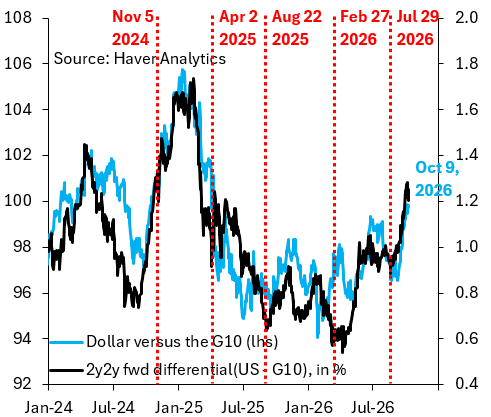
 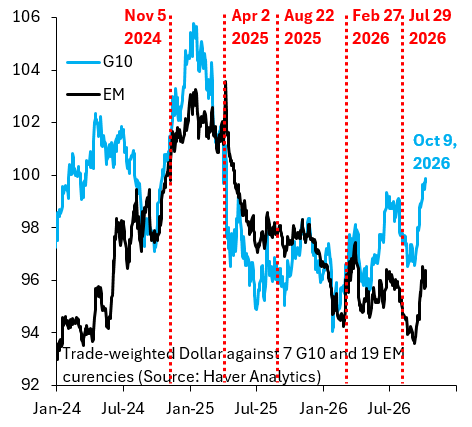 I don't want to sound like I'm downplaying the magnitude of the dollar's rise. The blue line in the chart above shows that the dollar's exchange rate against G10 currencies is at its strongest level since the disastrous reciprocal tariffs implemented on April 2, 2025. This is a remarkable reversal for a currency that was viewed negatively, even condemned, just a year ago. After all, the consensus then was that the US was losing its reserve currency status and the dollar was suffering irreversible damage. I didn't agree with this narrative back then and wrote articles arguing that the US hadn't lost its reserve currency status and that there was "no other choice." But that doesn't mean the dollar won't fall due to cyclical reasons—and that's what I'm going to discuss. In my view, there are currently three forces supporting the dollar, and they are all temporary. They will fade with the end of the war with Iran, meaning the current dollar strength is just a "probation." The three main sources of the current dollar strength are: The Eurozone debt crisis: There's no doubt that Europe's debt dynamics are a disaster, but it has been largely exacerbated by rising oil and other energy prices. Think about what will happen once the war with Iran ends. The bond market will rise across the board, including France. This could even buy France enough time to weather next year's elections without further escalation of its debt crisis. This will prompt global markets to buy back the euros they previously sold. The dollar will subsequently fall. Hawkish Fed: The war makes it difficult for the Fed to adopt a dovish stance. I myself am an inflation dove and believe Walsh was right to be so composed on the topic at his July 29th press conference. However, given the uncertainty surrounding oil prices, the market didn't buy it and reacted strongly, forcing Walsh to change course at the Jackson Hole conference. Once the war ends, these distorted movements will no longer be necessary. The market will quickly reduce its expectations for Fed rate hikes, and all the speculation surrounding Walsh's true intentions will cease. As the blue line in the chart above shows, the recent dollar rally is almost entirely explained by the interest rate differential (black line) between the US and its G10 peers. Once the war ends and calls for rate hikes cease, this differential will fall.
  High oil prices: The rise in oil prices since the start of the war is a symptom of something much larger—a sharp increase in geopolitical risk. This has created safe-haven demand for the dollar, a demand that will subside as the war ends. In my view, this safe-haven demand is the biggest driver of the dollar's strength since the start of the war, and it will also be the biggest drag on the dollar after the war ends. This war currently feels like another quagmire for the US. I wish we had never started this, but I am optimistic that a naval blockade and US sanctions will help end this conflict faster than consensus expects. Ultimately, this is why I remain bearish on the dollar. No war lasts forever. This one won't either.
I previously wrote that the dollar would fall in 2026. Superficially, the war with Iran seems to have disrupted this prediction—but as I will argue in this article, the current factors driving the dollar's strength are temporary. I firmly believe the dollar will weaken, and we are seeing signs of it from time to time. Consider the Treasury's unexpected buyback announcement in August. At that time, both the dollar and precious metals showed unusual movements. We are living in an era of "dollar devaluation." The war with Iran is merely masking this, and no war—not even this one—lasts forever. I don't want to sound like I'm downplaying the magnitude of the dollar's rise. The blue line in the chart above shows that the dollar's exchange rate against G10 currencies is at its strongest level since the disastrous reciprocal tariffs implemented on April 2, 2025. This is a remarkable reversal for a currency that was viewed negatively, even condemned, just a year ago. After all, the consensus then was that the US was losing its reserve currency status and the dollar was suffering irreversible damage. I didn't agree with this narrative back then and wrote articles arguing that the US hadn't lost its reserve currency status and that there was "no other choice." But that doesn't mean the dollar won't fall due to cyclical reasons—and that's what I'm going to discuss. In my view, there are currently three forces supporting the dollar, and they are all temporary. They will fade with the end of the war with Iran, meaning the current dollar strength is just a "probation." The three main sources of the current dollar strength are: The Eurozone debt crisis: There's no doubt that Europe's debt dynamics are a disaster, but it has been largely exacerbated by rising oil and other energy prices. Think about what will happen once the war with Iran ends. The bond market will rise across the board, including France. This could even buy France enough time to weather next year's elections without further escalation of its debt crisis. This will prompt global markets to buy back the euros they previously sold. The dollar will subsequently fall. Hawkish Fed: The war makes it difficult for the Fed to adopt a dovish stance. I myself am an inflation dove and believe Walsh was right to be so composed on the topic at his July 29th press conference. However, given the uncertainty surrounding oil prices, the market didn't buy it and reacted strongly, forcing Walsh to change course at the Jackson Hole conference. Once the war ends, these distorted movements will no longer be necessary. The market will quickly reduce its expectations for Fed rate hikes, and all the speculation surrounding Walsh's true intentions will cease. As the blue line in the chart above shows, the recent dollar rally is almost entirely explained by the interest rate differential (black line) between the US and its G10 peers. Once the war ends and calls for rate hikes cease, this differential will fall. High oil prices: The rise in oil prices since the start of the war is a symptom of something much larger—a sharp increase in geopolitical risk. This has created safe-haven demand for the dollar, a demand that will subside as the war ends. In my view, this safe-haven demand is the biggest driver of the dollar's strength since the start of the war, and it will also be the biggest drag on the dollar after the war ends. This war currently feels like another quagmire for the US. I wish we had never started this, but I am optimistic that a naval blockade and US sanctions will help end this conflict faster than consensus expects. Ultimately, this is why I remain bearish on the dollar. No war lasts forever. This one won't either.
- Risk Warning and Disclaimer
- The market involves risk, and trading may not be suitable for all investors. This article is for reference only and does not constitute personal investment advice, nor does it take into account certain users’ specific investment objectives, financial situation, or other needs. Any investment decisions made based on this information are at your own risk.