What is the pricing logic behind oil prices in the face of frequent conflicts in the Middle East?
2026-10-13 15:56:19
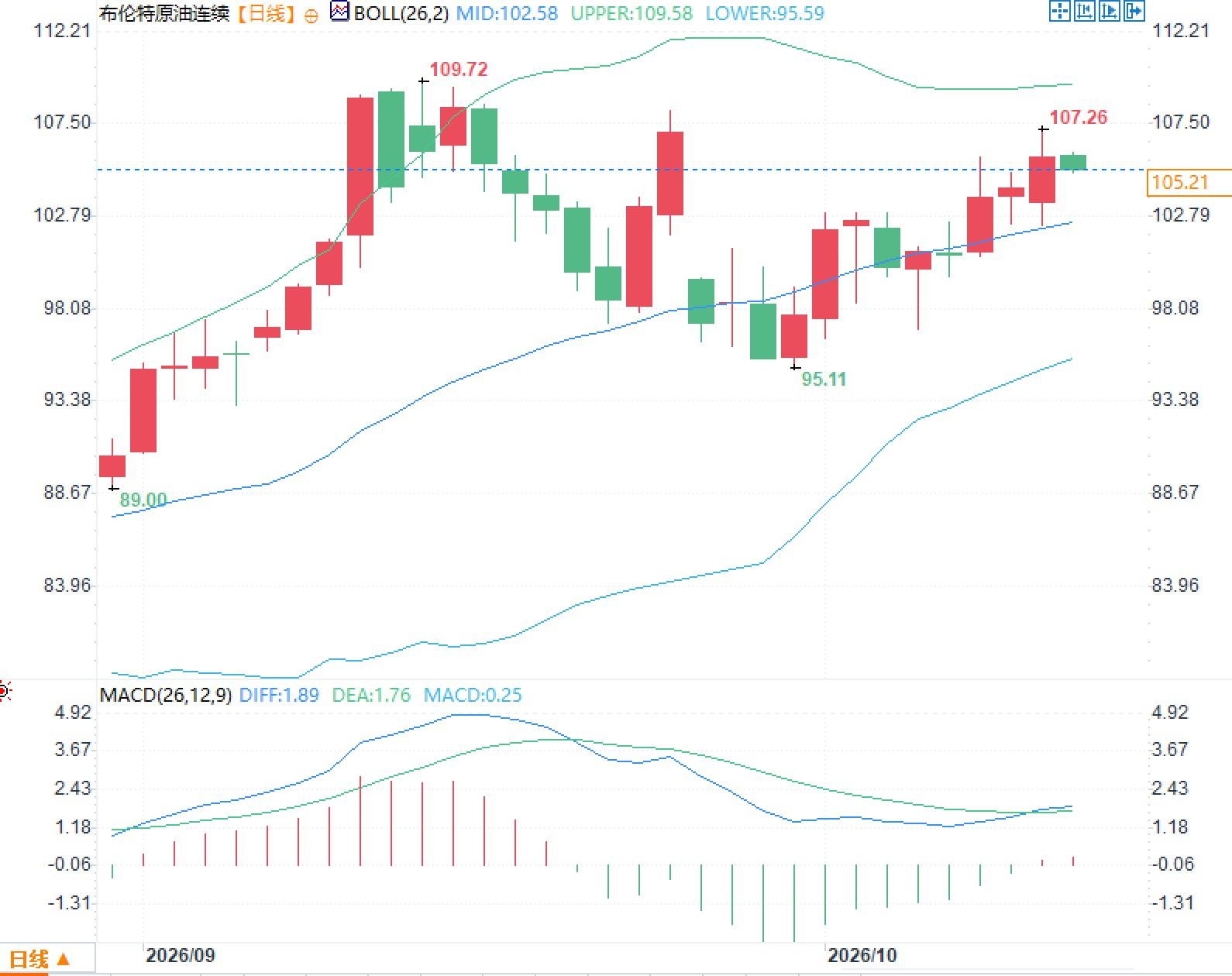
On Tuesday, October 13th, Brent crude oil fluctuated around $105 per barrel, after closing near $106 per barrel in the previous trading day, marking its highest closing level since late September. Market doubts remain regarding the sustainability of the Russia-Ukraine energy ceasefire agreement, while attacks on energy facilities in the Middle East continue to escalate, raising concerns about the stability of Persian Gulf oil transport routes. The tight global supply of middle distillates remains unchanged, and European natural gas prices have strengthened in tandem, reflecting the transmission of cross-regional energy substitution and inventory replenishment pressures. 
Actual Implementation and Market Assessment of the Russia-Ukraine Energy Ceasefire Agreement
Following the announcement of the agreement between Russia and Ukraine to cease attacks on each other's energy infrastructure, the market initially saw a brief pullback but quickly rebounded. Brent crude did not continue to weaken in post-announcement trading, indicating market skepticism regarding the agreement's binding force. Market reports indicated that Ukrainian energy facilities continued to suffer damage after the agreement's announcement, with Ukraine confirming damage to several energy targets and expressing support for the ceasefire but emphasizing uncertainty regarding its implementation. Russia, on the other hand, provided a certain increase to the global market through diesel export arrangements, reportedly amounting to hundreds of thousands of metric tons, but this volume is limited relative to the overall global shortage of middle distillates. Middle distillate crack spreads strengthened again after an initial brief period of pressure, reflecting that the increased supply failed to substantially alleviate the tight balance between feedstock and finished products at refineries. The market logic is that if the ceasefire remains merely verbal and lacks a verifiable enforcement mechanism, its impact on actual supply flows will be significantly lower than expected, and crude oil pricing will remain more anchored to geopolitical risk premiums than to short-term news-driven factors.Middle East supply route risks and Saudi Arabia's export capacity adjustments
Persian Gulf crude oil exports face continued disruptions, with frequent attacks by Houthi rebels on Saudi facilities, including airports and energy-related targets. At a related energy conference, the Saudi Energy Minister stated that the Kingdom is advancing its plan to increase pipeline export capacity from the current approximately 7 million barrels per day (bpd) to 10 million bpd. Approximately 1.2 million bpd can be achieved by temporarily converting existing natural gas pipelines for crude oil transport, expected to be operational within 7-8 weeks; further expansion will take longer, potentially up to 3 years. Increased loading capacity in the Red Sea also requires additional port investment. This arrangement aims to improve export flexibility by bypassing the Persian Gulf Strait, which is relevant given the current conflict. However, the short-term capacity increase is relatively limited, and the converted pipelines will need to be cleaned and restored for natural gas use before summer to meet domestic demand. Market concern is that even with increased pipeline utilization, loading and shipping bottlenecks may still limit the actual rate of volume increase, and the risk of supply disruptions in the Persian Gulf region has not been completely eliminated by the expansion plan.Cross-influence of North American hurricane activity and the European natural gas market
Hurricane activity in the Gulf of Mexico continues to disrupt US offshore oil and gas production. According to data from relevant regulatory agencies, at its peak, production shutdowns reached nearly 1.5 million barrels per day, approximately 30% of the region's total production, before some recovery occurred. While the evacuation of offshore platforms and production shutdowns are standard safety procedures, the pace of recovery depends on the results of facility inspections, and damaged facilities may extend shutdown periods. This factor, coupled with Middle East risks, has led to a more cautious outlook for Atlantic basin supply. Meanwhile, the European gas market is showing strength, with the Dutch TTF near-month contract settling at over €84/MWh, reaching its highest level since December 2022. EU gas storage capacity is close to 75%, lower than the approximately 83% level at the same time last year and also lower than the five-year average of 89%. Some member states are replenishing their stocks as required, and purchasing activity by countries like Germany is further supporting prices. If Persian Gulf LNG supplies are constrained for most of the winter, competition between Asian and European buyers may intensify, leading to greater price volatility. The correlation between the prices of middle distillate oil and natural gas lies in the fact that the latter's role as an alternative fuel is more prominent in a high oil price environment, and the inventory gap amplifies the sensitivity of marginal pricing.Frequently Asked Questions
Question 1: Why didn't crude oil prices continue to fall after the Russia-Ukraine energy ceasefire agreement was announced? Answer: Market concerns about the implementation of the agreement persisted. Public information shows that energy facilities were still affected after the announcement. Diesel export growth was limited relative to the global shortage of middle distillate fuels, and geopolitical risk premiums regained dominance. Question 2: What is the actual impact of Saudi Arabia's pipeline expansion plan on short-term supply? Answer: Approximately 1.2 million barrels per day can be achieved within 7-8 weeks through temporary conversion of natural gas pipelines, but further expansion to 10 million barrels per day will take longer. Red Sea loading capacity also requires investment, limiting the short-term mitigation of risks along the Persian Gulf route. Question 3: What is the connection between the strengthening of European natural gas prices and the crude oil market? Answer: EU inventories are lower than the same period last year and the five-year average. Increased concerns about Persian Gulf LNG supply have intensified competition between Asia and Europe. Natural gas, as an alternative fuel, has strengthened its cross-product linkage in a high oil price environment.- Risk Warning and Disclaimer
- The market involves risk, and trading may not be suitable for all investors. This article is for reference only and does not constitute personal investment advice, nor does it take into account certain users’ specific investment objectives, financial situation, or other needs. Any investment decisions made based on this information are at your own risk.