World Gold Council provisional data for September hit a near two-year high; can the official gold purchase pace continue?
2026-10-15 15:00:18
In mid-October, spot gold prices fell after the release of the US September Consumer Price Index, with market quotes briefly approaching $4,075 per ounce, a significant deviation from the record high of over $5,500 in January. Concurrently, provisional statistics compiled by the World Gold Council based on data from central banks and the International Monetary Fund showed that global central bank gold purchases reached approximately 63 tons in September, the highest monthly level in nearly two years. This combination constitutes the current fundamental and news background of the precious metals market: rising short-term interest rate expectations are putting downward pressure on prices, while continued purchases by official departments provide clues to structural demand. Fund managers and mining executives shared specific assessments of medium- to long-term supply and demand and the monetary environment in related discussions. 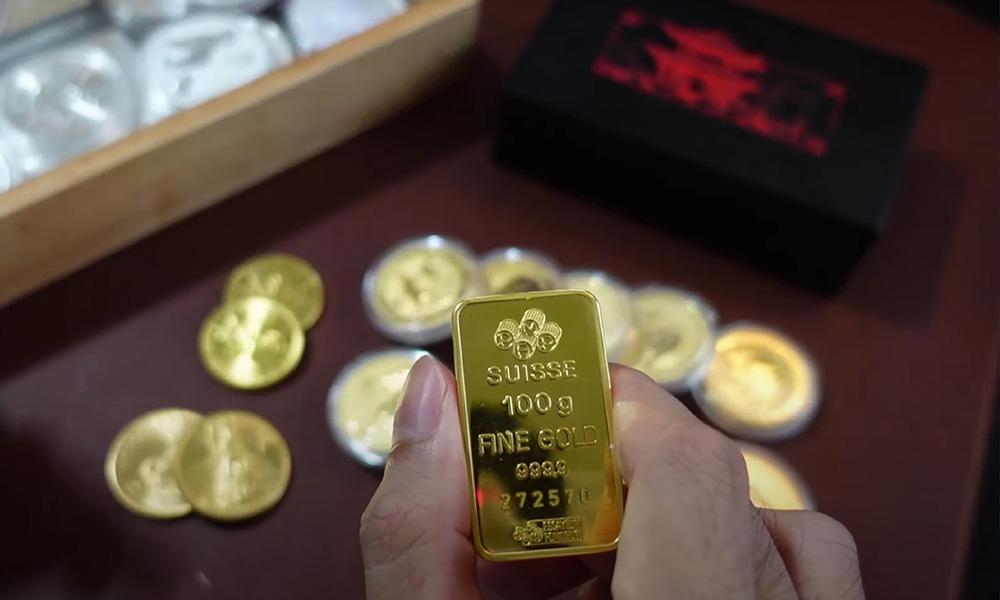
Short-term macroeconomic data and price performance
Data from the U.S. Bureau of Labor Statistics showed that the overall CPI rose 0.6% month-on-month in September, reaching 3.7% year-on-year, while the core CPI rose 2.6% year-on-year, both exceeding some market expectations. Energy prices, particularly gasoline, contributed significantly, pushing up both U.S. Treasury yields and the U.S. dollar index. The Federal Reserve's target range for the federal funds rate remains at 3.75% to 4.00%, with an effective interest rate of approximately 3.88%. In this environment, the opportunity cost of gold as a non-interest-bearing asset increases, making its price more sensitive to changes in real interest rate expectations. The settlement price of related COMEX contracts fell to around $4085 that day, a single-day drop of about 2%, one of the larger fluctuations recently.Structural Characteristics and Reserve Logic of Central Bank Gold Purchases
Provisional data from the World Gold Council shows that central banks made net purchases of approximately 63 tons of gold in September, the highest monthly figure since November 2024. This follows net purchases of approximately 39 tons reported in August, bringing the total reported purchases for the year up to August to approximately 170 tons. This pace indicates that official gold purchases are not simply driven by price fluctuations, but rather reflect a greater focus on reserve diversification. Some emerging market central banks continue to view gold as an alternative to traditional reserve assets. Suki Cooper, Global Head of Commodities Research at Standard Chartered, noted that overall central bank demand remains strong, although some countries have sold gold to raise funds following Middle East conflicts. When emerging market institutions seek reserve alternatives to the US dollar, gold often takes precedence over the euro or yen. This behavior reduces price dependence on a single currency cycle, creating a more stable bottom demand. Historical data shows that central bank gold purchase cycles typically span multiple quarters, and short-term price pullbacks do not necessarily change their strategic allocation direction.In-depth analysis of fund managers' and industry perspectives
At a precious metals symposium, Charlotte Young, a fund manager at Troy Asset Management, stated that gold can serve as a hedge against deteriorating government fiscal conditions and anticipates reaching new record highs within 12 to 18 months. She pointed out that the expansion of US government debt and expectations of further money printing by central banks during recessions give gold a relative advantage because it cannot be created in the same way. Paul Kahn of Ann Investments believes prices will reach new highs within two years, mentioning that with the dollar becoming a tool, other entities may turn to gold as an alternative. Peter Malone, Chairman and CEO of mining company United Gold, stated that investors should examine whether they are on the verge of financial events, and that family offices are diversifying from government bonds to gold. Ian Cockerell, CEO of Endeavour Mining, emphasized that the macroeconomic environment, declining confidence in fiat currencies, and central bank considerations for protecting their currencies provide strong price support, and believes that the $4,000 level may be a key reference area for the next phase.Investment demand structure and sources of uncertainty
Besides central banks, gold ETFs attracted approximately $10 billion in inflows in September, bringing the total inflows for the third quarter to a record $31 billion, with holdings rising to a record high of 4,256 tons, despite a monthly decline in assets under management due to price pullbacks. This suggests that some investors view price adjustments as opportunities to maintain strategic allocations rather than as a signal to reduce holdings. Increased holdings by family offices are also related to rising macroeconomic uncertainty, reflecting a rebalancing from bonds to physical assets. However, financing needs in some countries triggered by Middle East conflicts led to temporary selling, indicating that geopolitical factors play both a supporting and disruptive role. The path of real interest rates, the continuity of subsequent central bank gold purchases, and the stability of ETF holdings will be key variables in observing the resilience of demand. Prices have fallen by about 23% from their January highs but remain in a historically high range, and volatility is likely to remain at a high level.Frequently Asked Questions
Question 1: How does the central bank's September gold purchase of 63 tons affect our understanding of gold demand? Answer: This provisional figure represents the highest monthly level in nearly two years, indicating that official departments are maintaining their pace of purchases even after prices have fallen. This aligns with the trend of approximately 170 tons accumulated throughout the year, suggesting that the logic of reserve diversification is sustainable, rather than simply driven by price. Question 2: What is the relationship between the fiscal and monetary creation factors emphasized by fund managers and current price pressures? Answer: Young and Strauss-Kahn, among others, position gold as a tool to hedge against debt expansion and potential money printing. This contrasts with the rising opportunity cost due to rising real interest rates. These two factors correspond to medium- to long-term structural demand and short-term holding costs, respectively, and need to be observed separately. Question 3: What does the record high ETF holdings coupled with a price decline indicate? Answer: The inflow of $10 billion in September pushed holdings to 4,256 tons, indicating that some funds viewed the adjustment as a window for allocation, echoing the central bank's actions on the demand side. However, prices are still dominated by interest rate expectations, showing differences in the time horizon among different participants.- Risk Warning and Disclaimer
- The market involves risk, and trading may not be suitable for all investors. This article is for reference only and does not constitute personal investment advice, nor does it take into account certain users’ specific investment objectives, financial situation, or other needs. Any investment decisions made based on this information are at your own risk.