A chart shows the Baltic Dry Index falling to a more than three-month low, with weaker large-ship freight rates dragging down the overall market.
2026-10-15 22:46:19
Latest data shows that the Baltic Dry Index (BDI) closed at 2545 points on October 15, 2026, a new low since June 30, 2026, down 4.57% month-on-month, marking the 9th consecutive day of decline (including zero growth). Looking at the short-term charts, the BDI has seen positive growth twice, negative growth nine times, and zero growth in the last 11 trading days. Specifically, the Panamax Freight Index (BPI) closed at 2356 points, down 2.20% from the previous value; the Capesize Freight Index (BCI) closed at 3322 points, down 8.48%; and the Supramax Freight Index (BSI) closed at 1856 points, up 0.60%. For detailed charts of the Baltic Dry Index and its three main sub-indices, including the latest 720-day and 10-year trends, please refer to the charts provided by FX678. 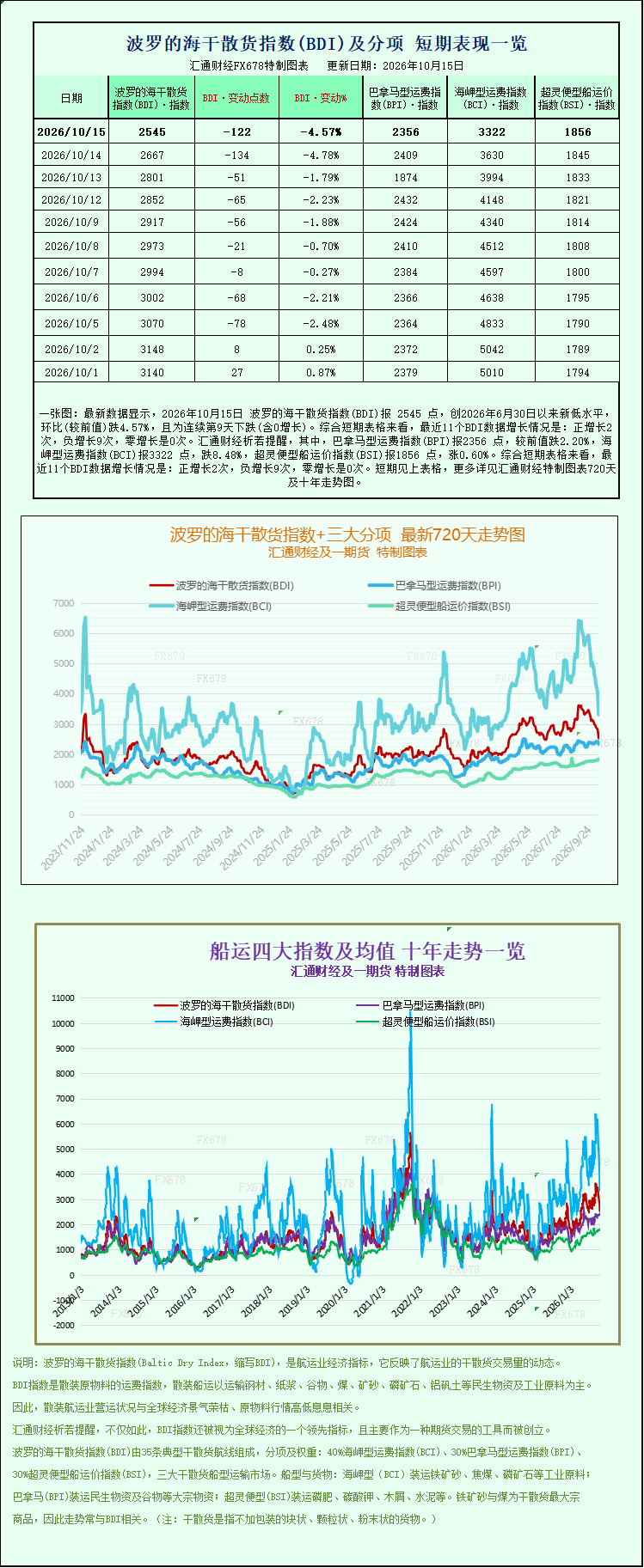 On Thursday (October 15), the Baltic Dry Index, the main shipping index tracking dry bulk vessel freight rates, fell to its lowest level since June 30, mainly due to lower freight rates for large vessels. The Baltic Dry Index (BDI) dropped 122 points, or 4.57%, to close at 2,545 points, marking the ninth consecutive trading day of decline, reflecting a significant cooling in dry bulk shipping demand after the peak season. Analysis by Vessel Type From a vessel type perspective, the current decline was primarily driven by the largest tonnage vessels, the Capesize. The Capesize freight rate index plummeted 308 points, or 8.48%, to 3,322 points, the lowest level since early April. These giant vessels, typically carrying around 150,000 tons of iron ore and coal, saw their average daily revenue decrease by $2,792 to $26,625, becoming the core factor dragging down the overall index. In the medium-sized vessel market, the Panamax freight index fell 53 points, or 2.20%, to 2,356 points. These vessels carry an average of 60,000 to 70,000 tons of coal or grain per day, and their average daily revenue declined by $480 to $21,200, indicating that freight rates for bulk commodities such as coal and grain are under pressure. Notably, smaller vessel types showed relative resilience. The Very Large Vessel Index bucked the trend, rising slightly by 11 points, or 0.60%, to 1,856 points. This divergence in the performance of different vessel types suggests that the current downward pressure on freight rates is more concentrated on large vessels handling long-distance iron ore transport, rather than a general contraction in shipping demand. Driving Force: Weak Iron Ore Demand is the Core Variable The key driver of this round of freight rate declines is the continued weakness in the iron ore market. On Thursday, iron ore prices fell for the third consecutive trading day, reaching their lowest level in over two years. Market concerns persist regarding weak demand from China, the world's largest consumer, while the outlook for iron ore supply growth, a key steelmaking raw material, remains uncertain. This dual pressure from both supply and demand is weighing on ore prices. From a fundamental perspective, current iron ore supply is generally ample, with global shipments from major mining regions such as Australia and Brazil remaining high, and the fourth quarter being the traditional peak supply season. Demand is even weaker: steel mill profit margins are low, maintenance shutdowns and production cuts are increasing, and daily pig iron production has fallen to around 2.33 million to 2.34 million tons, roughly the same as before the holiday, suppressing direct demand for iron ore. The concentrated release of previously accumulated high inventory and temporary weak demand pressure has further exacerbated the weak price trend. Iron ore freight rates are a crucial support for Capesize vessel freight rates, and the continued decline in ore prices naturally transmits to the spot charter market. Outlook: Looking ahead to the fourth quarter, the operating logic of the dry bulk shipping market will continue to revolve around the demand dynamics of iron ore and coal. On the one hand, whether steel mills expand production cuts and maintenance under low profit margins will directly determine the pace of pig iron production and iron ore shipments. On the other hand, as the peak supply season deepens, if downstream procurement fails to recover in time, the BDI and Capesize freight rates may still have room to decline. However, considering that freight rates have already clearly corrected during the previous peak season and that the supply of chartered capacity on some routes may improve marginally, the market may also bottom out and stabilize. Overall, the index may maintain a weak and volatile pattern in the short term, and close attention should be paid to marginal changes in China's steel production and the shipment pace from major mining areas.
On Thursday (October 15), the Baltic Dry Index, the main shipping index tracking dry bulk vessel freight rates, fell to its lowest level since June 30, mainly due to lower freight rates for large vessels. The Baltic Dry Index (BDI) dropped 122 points, or 4.57%, to close at 2,545 points, marking the ninth consecutive trading day of decline, reflecting a significant cooling in dry bulk shipping demand after the peak season. Analysis by Vessel Type From a vessel type perspective, the current decline was primarily driven by the largest tonnage vessels, the Capesize. The Capesize freight rate index plummeted 308 points, or 8.48%, to 3,322 points, the lowest level since early April. These giant vessels, typically carrying around 150,000 tons of iron ore and coal, saw their average daily revenue decrease by $2,792 to $26,625, becoming the core factor dragging down the overall index. In the medium-sized vessel market, the Panamax freight index fell 53 points, or 2.20%, to 2,356 points. These vessels carry an average of 60,000 to 70,000 tons of coal or grain per day, and their average daily revenue declined by $480 to $21,200, indicating that freight rates for bulk commodities such as coal and grain are under pressure. Notably, smaller vessel types showed relative resilience. The Very Large Vessel Index bucked the trend, rising slightly by 11 points, or 0.60%, to 1,856 points. This divergence in the performance of different vessel types suggests that the current downward pressure on freight rates is more concentrated on large vessels handling long-distance iron ore transport, rather than a general contraction in shipping demand. Driving Force: Weak Iron Ore Demand is the Core Variable The key driver of this round of freight rate declines is the continued weakness in the iron ore market. On Thursday, iron ore prices fell for the third consecutive trading day, reaching their lowest level in over two years. Market concerns persist regarding weak demand from China, the world's largest consumer, while the outlook for iron ore supply growth, a key steelmaking raw material, remains uncertain. This dual pressure from both supply and demand is weighing on ore prices. From a fundamental perspective, current iron ore supply is generally ample, with global shipments from major mining regions such as Australia and Brazil remaining high, and the fourth quarter being the traditional peak supply season. Demand is even weaker: steel mill profit margins are low, maintenance shutdowns and production cuts are increasing, and daily pig iron production has fallen to around 2.33 million to 2.34 million tons, roughly the same as before the holiday, suppressing direct demand for iron ore. The concentrated release of previously accumulated high inventory and temporary weak demand pressure has further exacerbated the weak price trend. Iron ore freight rates are a crucial support for Capesize vessel freight rates, and the continued decline in ore prices naturally transmits to the spot charter market. Outlook: Looking ahead to the fourth quarter, the operating logic of the dry bulk shipping market will continue to revolve around the demand dynamics of iron ore and coal. On the one hand, whether steel mills expand production cuts and maintenance under low profit margins will directly determine the pace of pig iron production and iron ore shipments. On the other hand, as the peak supply season deepens, if downstream procurement fails to recover in time, the BDI and Capesize freight rates may still have room to decline. However, considering that freight rates have already clearly corrected during the previous peak season and that the supply of chartered capacity on some routes may improve marginally, the market may also bottom out and stabilize. Overall, the index may maintain a weak and volatile pattern in the short term, and close attention should be paid to marginal changes in China's steel production and the shipment pace from major mining areas.
- Risk Warning and Disclaimer
- The market involves risk, and trading may not be suitable for all investors. This article is for reference only and does not constitute personal investment advice, nor does it take into account certain users’ specific investment objectives, financial situation, or other needs. Any investment decisions made based on this information are at your own risk.