Silver prices have fallen back to around $56. How will changes in Indian imports affect the market?
2026-10-22 18:10:22
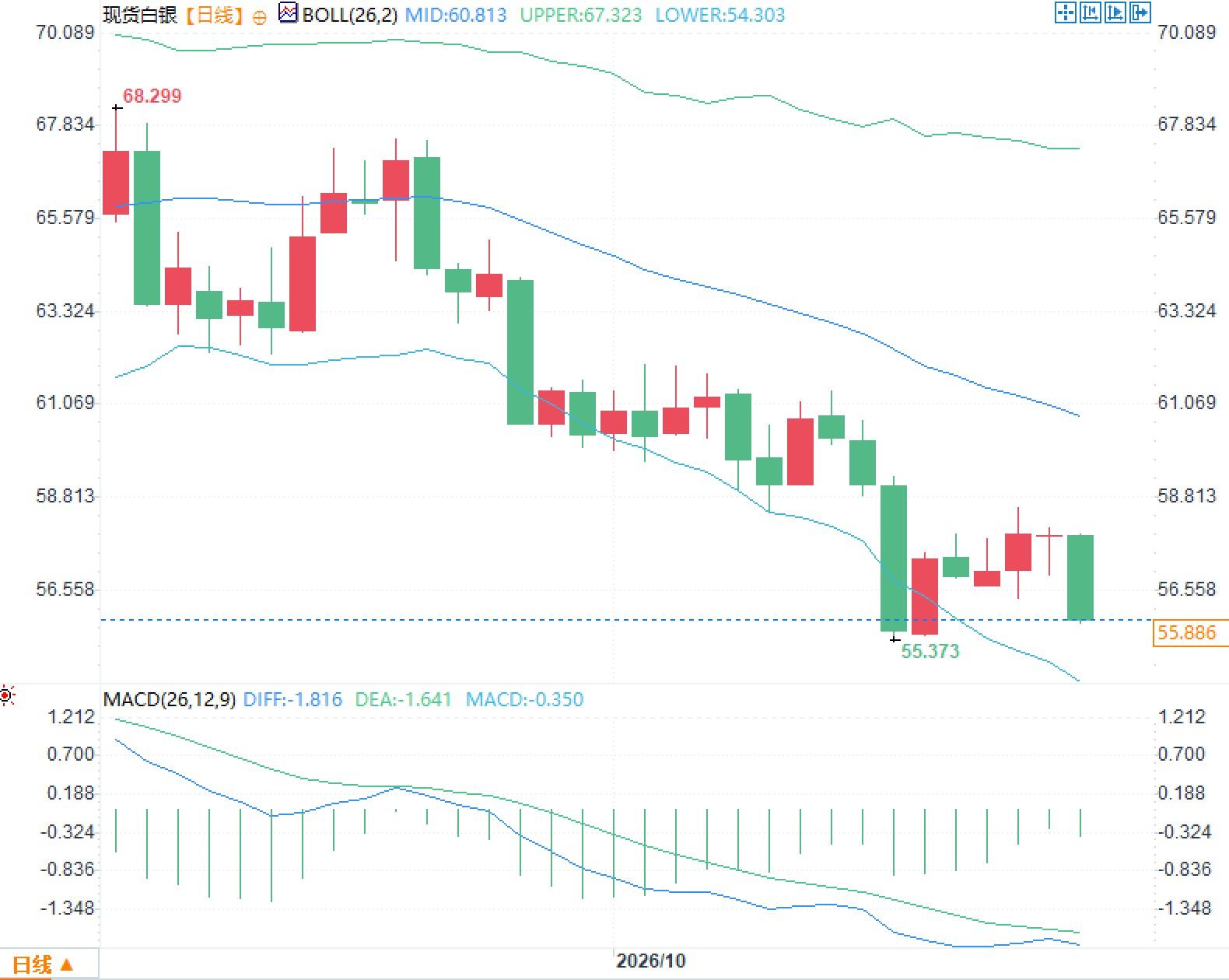
On Thursday, October 22nd, spot silver prices were fluctuating around $56 per ounce, with a daily decline exceeding 3%. The daily chart shows the price below the Bollinger Band's middle band, nearing the lower band, and the MACD indicator is in negative territory. Meanwhile, the Indian government recently issued silver import quotas of up to 6,000 tons to traders and banks, valid for six months. As one of the world's major silver import markets, India's licensing policy adjustment is directly related to the pace of physical demand release before the holidays. 
Impact of relaxed import licenses on supply and demand
India relies almost entirely on imports to meet its domestic silver demand. Starting in May, the government implemented new licensing requirements, demanding buyers apply for licenses and provide certificates of origin, while also significantly increasing import taxes on gold and silver. These measures led to a sharp decline in imports. June imports fell to a three-year low of only 37 tons. September imports rebounded to approximately 328 tons, but the overall level remained far below previous peaks. The newly issued quotas are sufficient to cover potential demand peaks during the holiday season, and the market expects the supply shortage to ease. Analysis from precious metals consulting firms indicates that the market is no longer in a tight balance after the quotas are issued, and premiums are expected to decline significantly.Observations on Holiday Demand and Premium Changes
Indian demand for precious metals typically rises during the festive season, which begins in October and peaks at Diwali. This year, Diwali falls on November 8th. Following the issuance of permits, the domestic silver premium in India has fallen from around $2/oz last week to around 50 cents/oz. Traders observe that the decline in the premium reflects a gradual easing of supply channels. However, retailers and wholesalers are being cautious in restocking, and there are fewer instances of silver being given away as gifts than in previous years. Many consumers who purchased silver at high prices last year are still experiencing paper losses, and price expectations are no longer generally optimistic, which is dampening bargain hunting. Overall festive consumption is expected to be significantly weaker than last year.Historical Import Scale and Market Structure Review
India imported over 7,000 tons of silver last year, with these large-scale purchases causing a temporary supply shortage in the global market. Prices rose to near record highs of over $121 per ounce in January before falling back due to factors such as energy price fluctuations. Currently, spot silver prices are around $56 per ounce, a significant pullback from the peak. Despite recent easing of restrictions, India's total imports for the year are still expected to be lower than last year. Structural changes in industrial and investment demand have weakened the reliance on holiday purchases to drive the overall market. While the global silver market continues to face a supply deficit for several years, changes in the import pace of the Indian market alone offer direct insights into short-term physical silver flows.Technical Indicators and Price Structure Observation
On the daily chart, the Bollinger Bands have a middle band at $60.813, an upper band at $67.323, and a lower band at $54.303. The current price is trading below the middle band and close to the lower band. The MACD indicator shows a DIFF value of -1.816, a DEA value of -1.641, and a MACD histogram value of -0.350. During the pullback from the previous high, the price touched around $68.299, and recently reached a low of $55.373. The indicators are in negative territory, reflecting relatively weak price momentum. The market structure shows the price fluctuating near the lower Bollinger Band; the extent of this fluctuation needs further observation based on subsequent changes in physical supply and demand.Frequently Asked Questions
Question 1: What does India's issuance of a 6,000-ton import quota mean for the global spot silver market? Answer: The quota covers a six-month period and is large enough to handle peak holiday demand, helping to alleviate supply tightness caused by previous licensing restrictions and pushing down domestic premiums. This changes India's short-term physical purchasing rhythm as a major importer, but does not directly change the global long-term supply gap. Question 2: Why is overall consumption likely to be weaker than last year despite expected holiday demand recovery? Answer: Retail and wholesale restocking intentions are low. Consumers who bought at high prices last year incurred losses, leading to insufficient willingness to buy at the bottom, and price expectations are no longer generally optimistic. The relaxation of licensing mainly addresses supply channel issues, while demand is constrained by price levels and holding costs.- Risk Warning and Disclaimer
- The market involves risk, and trading may not be suitable for all investors. This article is for reference only and does not constitute personal investment advice, nor does it take into account certain users’ specific investment objectives, financial situation, or other needs. Any investment decisions made based on this information are at your own risk.