Crude oil analysis: Dubai near-month spread narrowed from $15 to $1. Has the supply pattern truly shifted?
2026-10-22 19:20:21
On Thursday, October 22, Brent crude futures were trading around $112 per barrel, up about 2% on the day, hitting a five-month high. Meanwhile, spot market prices have fallen, declining by about $15 per barrel over the past two weeks, currently approaching $120 per barrel. The widening spread between futures and spot prices reflects a significant divergence between market pricing in the risk of supply disruptions in the Middle East and actual changes in logistics and freight rates. 
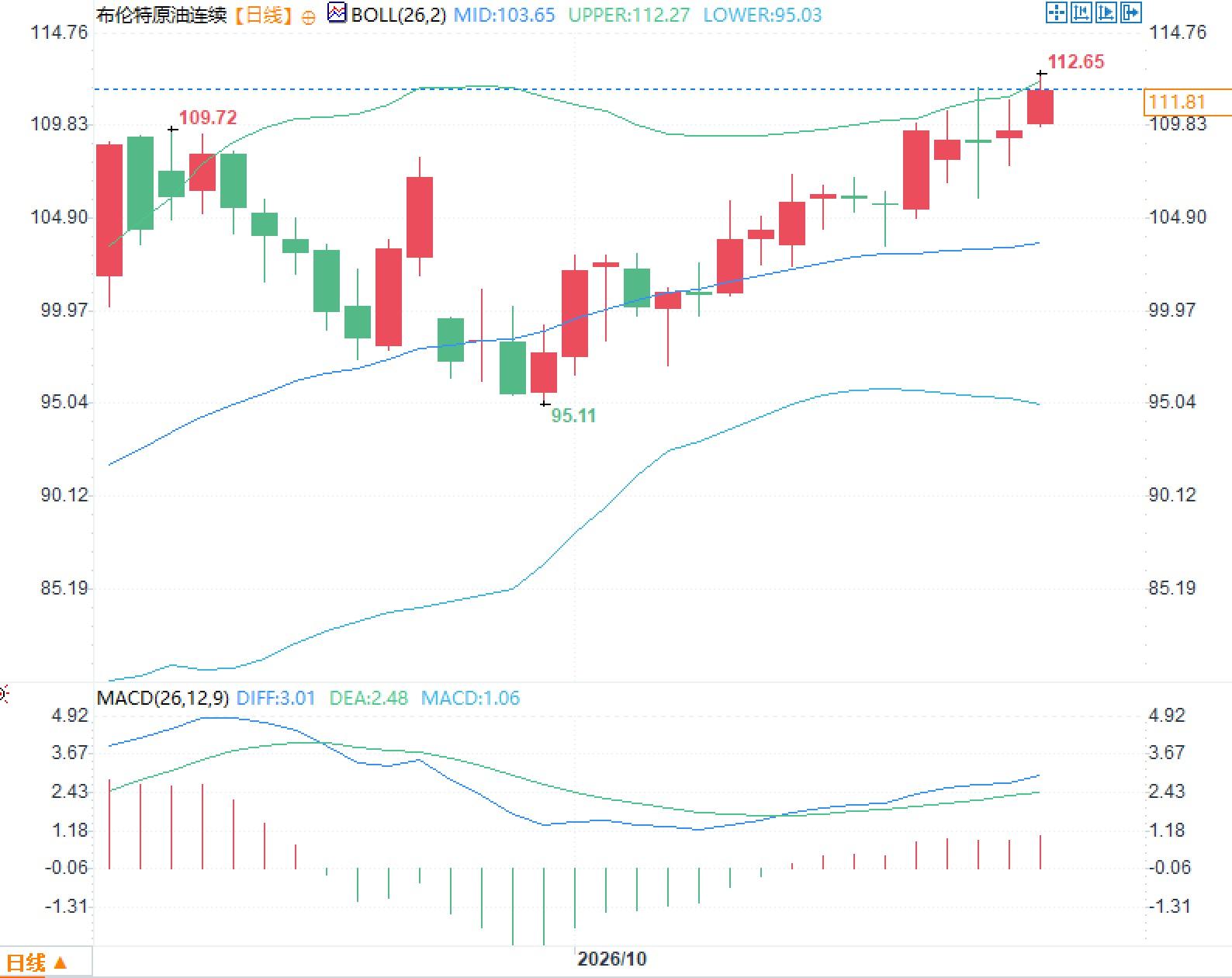
The pricing mechanisms for futures and spot markets are diverging.
Brent crude futures see massive daily trading volumes, with prices primarily driven by geopolitical expectations. Over the past two weeks, futures prices have risen by approximately $10 per barrel, mainly due to market assessments of the evolving situation in the Middle East and the re-incorporation of the risk premium following the brief disruption to Saudi Arabia's western export pipeline. The spot Brent valuation, which measures the value of the actual cargo that can be loaded, has recently retreated from extremely high levels. The two reflect different time windows: futures focus more on forward supply uncertainty, while spot prices are more influenced by immediate loading and landed costs. The spread has narrowed but remains significantly higher than usual, indicating some easing of tightness in the spot market, but the overall supply security premium has not yet fully subsided.Actual changes in Middle Eastern exports and freight costs
Cargo traffic through the Strait of Hormuz has recently returned to pre-conflict levels, with some tracking data indicating a recovery in flow. Freight rates have fallen from their year-to-date highs, reducing long-distance transport costs and allowing more cargo to flow to the European market. Increased purchases of US crude oil for November loading by Asian refineries have indirectly increased available supply in Europe. The premium of various Middle Eastern crude oil varieties relative to the Dubai benchmark has fallen sharply from around $35 per barrel, and the near-month spread on Dubai's related forward curves has narrowed from a deep premium of around $15 per barrel to below $1 per barrel. These changes suggest that the tightness in immediate supply is easing, but a sustained recovery still depends on the stability of transport routes.Market assessment of supply dynamics
Marex analyst Ryan Fitzmaurice points out that there are still many news-related risks, with low inventory levels and significant rebuilding challenges; meanwhile, strong traffic in the Strait of Hormuz and the El Niño phenomenon may suppress winter heating demand. Onyx Capital Group analyst Ed Hayden-Briffett states that Middle Eastern producers have already sold large quantities of autumn-shipping cargoes through tenders, and Brent crude futures are more susceptible to news-driven factors, naturally putting upward pressure on prices. ING analysts Warren Patterson and others believe that events related to Saudi oil fields and evacuation orders indicate limited improvement in Middle Eastern tensions, and the risk premium embedded in prices is unlikely to dissipate quickly unless there are clear signs of easing and confirmation that regional supply remains undisturbed.Options market trading structure reflects divergence
Brent crude oil options trading has been active recently, with a large number of put options changing hands and record trading volume, mainly corresponding to a scenario where futures prices fall below $100/barrel. At the same time, there is also demand for call options, indicating that some market participants still expect a further escalation of the situation in the Middle East. The options market is seeing both hedging against downside and positioning for upside, which corroborates the divergence between futures and spot price spreads. Low inventory levels and fluctuations in transportation routes constitute the main constraints on current pricing, and the sustainability of improvements in spot supply will affect the speed of subsequent price spread convergence.Frequently Asked Questions
Question 1: Why do futures prices and spot valuations move in opposite directions? Answer: Futures mainly price forward supply disruption risks and news expectations, while spot prices reflect the value of immediate shipments and freight changes. The recovery of traffic in the Strait of Hormuz and the decline in freight rates have lowered spot costs, while geopolitical uncertainty continues to support futures premiums. Question 2: Does the decline in Middle Eastern crude oil premiums mean that supply tightness has eased? Answer: The significant drop in premiums from their highs indicates that immediate tightness has eased, but inventories remain low, and there is still a possibility of recurring events in transportation routes and the region; the risk premium has not completely subsided. Question 3: What does the large number of put options trades mean? Answer: Active put option trading reflects that some participants are hedging or positioning themselves against price declines, while bullish demand also exists, indicating that the market has differing opinions on the future development of the situation, rather than a single-direction consensus.- Risk Warning and Disclaimer
- The market involves risk, and trading may not be suitable for all investors. This article is for reference only and does not constitute personal investment advice, nor does it take into account certain users’ specific investment objectives, financial situation, or other needs. Any investment decisions made based on this information are at your own risk.