The truth behind the gold price crash: Why its safe-haven appeal failed on Thursday.
2026-10-23 22:02:29
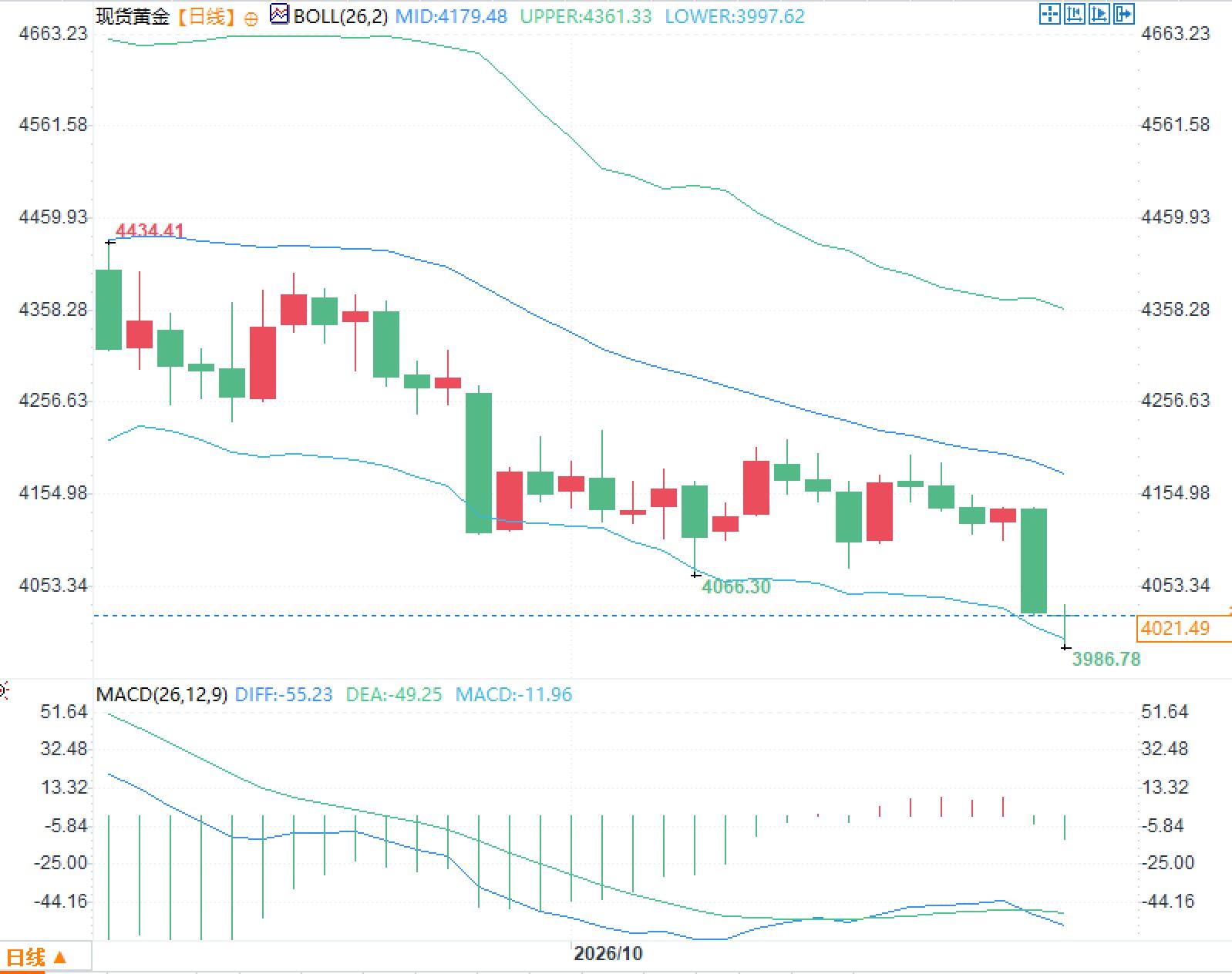
On Friday, October 23, spot gold was trading around $4,020, with a cumulative weekly decline of over 3%, including a 2.80% drop on Thursday. Thursday saw significant market volatility, with the S&P 500 falling approximately 1.2% to close near 7,663 points, and the Philadelphia Semiconductor Index hitting its lowest level since July, dragging down equity assets. Meanwhile, government bonds rebounded, with the 10-year Treasury yield falling below 5% and the 2-year yield also dropping below 4.75%. 
Cross-transmission mechanism of market turmoil
Thursday's decline in US equity markets failed to provide effective support for gold, instead occurring in tandem with falling US Treasury yields. Gold's failure to benefit from the weak equity landscape is primarily due to the combined effect of multiple factors. Continued tensions in the Middle East are pushing up energy prices, with West Texas Intermediate crude trading around $102 per barrel, near a five-week high. This resulting inflationary pressure reinforces expectations that interest rates will remain high for an extended period, thus increasing the opportunity cost of holding non-yielding assets. Some market participants are selling precious metals to cover losses in equity assets, and this cross-asset rebalancing behavior exacerbates the downward pressure on gold. The previous break below the range largely maintained since early October may also trigger technical selling. Overall, the safe-haven appeal of gold has not been fully utilized in this volatility, with rising real interest rate expectations and holding costs dominating price performance.The interaction between energy prices and inflation expectations
High oil prices continue to exert upward pressure on inflation expectations. The Federal Reserve raised interest rates by 25 basis points in September, and the market widely expects it to keep rates unchanged at next week's meeting, maintaining the target range for the federal funds rate at 3.75% to 4.00%. Policymakers need to strike a balance between persistent inflation risks and the potential constraint on economic growth from slowing AI-related investment. Any signals suggesting a possible further rate hike in December could affect the relative attractiveness of non-yielding assets. The US dollar index is currently trading around 101.70, slightly higher than the previous day. The 10-year US Treasury yield is around 4.95% to 4.99%. These indicators showed signs of stabilizing after declining on Thursday, further impacting the cost structure of gold holdings. Energy prices support the real interest rate path through the inflation channel, a transmission that is more direct in the current environment.Key points to observe regarding data windows and policy paths
Next week's Federal Reserve meeting will be the focus, as the clarity of its policy path will impact the relative attractiveness of non-interest-bearing assets. Market participants will assess the evolution of real interest rates and inflation dynamics. Gold has remained volatile during its rebound, and signs of stabilization in the dollar and Treasury yields have increased uncertainty. Energy price volatility stemming from conflicts in the Middle East continues to influence interest rate paths through inflation expectations, thus affecting the opportunity cost of gold. Data releases and policy signals will provide further evidence for assessing this interaction mechanism.Frequently Asked Questions
Question 1: Why did gold fail to rise when US stocks plummeted on Thursday? Answer: While a decline in US stocks typically benefits safe-haven assets, this time, the accompanying inflationary pressures from high energy prices reinforced expectations of continued high interest rates, increasing the opportunity cost of holding gold. Simultaneously, some traders sold precious metals to cover equity losses, and technical factors also exacerbated the downward pressure. Question 2: How do current oil price levels affect gold? Answer: West Texas Intermediate crude oil is trading around $102 per barrel, near a five-week high, pushing up inflation expectations. This supports the view that interest rates will remain high for a longer period, thus increasing the holding cost of non-yielding assets and putting downward pressure on gold. Question 3: What key information might the Fed meeting next week release? Answer: The market expects interest rates to remain unchanged. How policymakers balance inflation risks with the potential impact of slowing AI-related investment on growth is crucial. If signals suggest a rate hike is still possible in December, it could affect the relative attractiveness of gold.- Risk Warning and Disclaimer
- The market involves risk, and trading may not be suitable for all investors. This article is for reference only and does not constitute personal investment advice, nor does it take into account certain users’ specific investment objectives, financial situation, or other needs. Any investment decisions made based on this information are at your own risk.