Ahead of the Fed's October Meeting: A Pause in Rate Hikes Remains a Policy Adjustment
2026-10-23 23:22:21
The Federal Open Market Committee (FOMC), the monetary policy-making body of the Federal Reserve, will meet on October 27-28 to assess the economic outlook and determine appropriate monetary policy. We expect the FOMC to maintain the policy rate in the 3.75%-4.0% range, while maintaining a clear tightening bias. The most likely follow-up action is a 25 basis point rate hike in December. 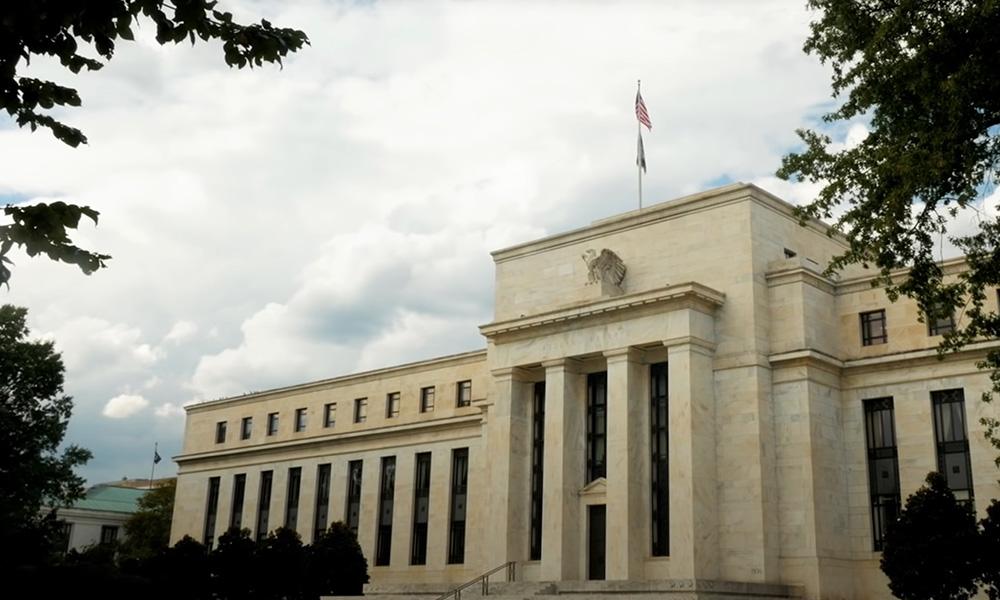 Since the September rate hike, the Federal Reserve leadership has been guiding the market and dispelling expectations of further rate hikes; even higher-than-expected September inflation data did not change this tone. As of this writing, a week before the October meeting, market pricing indicates an approximately 80% probability that the Fed will maintain its current interest rate. Three core questions regarding the Fed's October meeting: This meeting will not release new economic forecasts; therefore, the importance of the interest rate decision itself may be less significant than the following three questions: 1. How will Chairman Kevin Warsh interpret this pause in rate hikes? 2. Will most FOMC members still characterize the September rate hike as a risk management adjustment? 3. How many officials will vote against the rate hike? We believe that the September rate hike and the overall interest rate path outlook are essentially a policy calibration, and there will likely be one or two more rate hikes, which would effectively reverse last year's rate cuts. We also believe that Warsh and the FOMC hope to communicate in this tone to avoid sending overly dovish signals to the market, resulting in a passive easing of financial conditions. Warsh is well aware of the impact of financial conditions. We interpret his statement regarding the September rate hike—"withdrawing some of the accommodative policy"—as a response to the economic stimulus brought about by the loose financial environment. According to the Financial Conditions Index compiled by Federal Reserve staff, in recent years, the strong stock market has provided significant support for economic growth (and the loose financial environment) through the wealth effect: the appreciation of household stock assets boosts consumer spending and drives overall social spending. However, since Warsh took over as chairman in June, long-term interest rates have risen. Using the Federal Reserve's model to calculate the pulling effect of the financial environment, we can see that the rise in long-term interest rates has offset some of the wealth effect. For example, as of the time of writing, the 5-year forward real interest rate is around 3%, a level last seen in the early 21st century; since June, this indicator has risen by about 50 basis points. Higher interest rates will gradually become a headwind for economic growth in the coming quarters and beyond, while simultaneously reducing the risk of persistently high inflation. In the Federal Reserve's September 2026 FOMC economic projections, almost all FOMC members expect one or two more rate hikes after the September adjustment. This baseline expectation aligns with the approach of moderate adjustment. We believe the Fed will first observe the impact of high interest rates on the economy before adjusting this expectation; however, economic data released after the September meeting has been mixed. A minority of FOMC members may vote against the majority decision to "keep interest rates unchanged." At the September meeting, Beth Hammark, Lori Logan, and Neal Kashkari's interest rate path projections implied that all remaining meetings this year would require rate hikes. They had already voted against this at the July meeting, advocating for rate hikes rather than keeping rates unchanged. Even though they disagree with other members on the timing of rate hikes, their projections indicate that they also only support minor adjustments, not the initiation of a sustained rate hike cycle. Looking deeper: Why is artificial intelligence complicating the policy landscape? The combined supply and demand shocks from energy, tariffs, and artificial intelligence have created a complex policy environment for central banks. The textbook solution for dealing with supply shocks is to ignore short-term disturbances and not tighten policy accordingly. However, these rounds of shocks coincided with the implementation of AI investments, and may even accelerate AI investment, while AI itself is driving aggregate demand. AI is boosting domestic demand in the US by accelerating investment and leveraging the wealth effect. This is also why the Federal Reserve has shifted to raising interest rates: policymakers hope to use higher interest rates and tighter financial conditions to offset the upward momentum of domestic demand. This year, the market has revised its expectations for the neutral interest rate to adapt to the constantly changing macroeconomic fundamentals; similarly, we expect high interest rates to persist for a longer period. Although the AI-related investment boom continues, multiple factors still support the Federal Reserve's gradual interest rate hike path. 1. High import ratio weakens the effect of domestic demand: A large number of AI investment products in the US (especially chips and computer equipment) rely on imports, limiting their impact on domestic output. The more the AI industry relies on overseas chips and equipment, the smaller the interest rate increase the US needs to raise to balance supply and demand. However, at the same time, the prices of imported chips and some other technological components have risen sharply this year, already reflected in US inflation data. 2. The US labor market is looser than the unemployment rate suggests, and rising labor costs are not the source of inflation: The application of AI combined with an aging population is structurally changing the composition of the labor market, suppressing the growth rate of unit labor costs for enterprises. Specifically, the increase in the number of retirees and the decline in the labor force participation rate keep the unemployment rate low, but the proportion of the working-age population in the total population has already decreased. The retirement wave combined with the impact of AI on the labor force is concentrated in the high-skilled white-collar group, and the employment structure continues to shift towards low-wage positions, suppressing the growth rate of average wages. 3. The cost of the Fed's tightening falls on economic sectors that are not inflation drivers: AI-related investments are less sensitive to interest rates, but other economic sectors are more sensitive to interest rates. If the Fed tightens its policy excessively to suppress inflation, it is easy to cause excessive shocks to non-inflationary industries. High interest rates constrain the economy, mainly by raising the cost of capital for enterprises and residents. This cost depends on the actual rate of return required for capital, depreciation, and taxes. AI capital is mainly in the form of computer equipment, which depreciates much faster than long-term fixed assets. Therefore, depreciation costs are the dominant component of the capital costs for AI companies. A similar increase in interest rates would raise the cost of capital for AI companies far less than for other industries. Some argue that a larger rate hike is needed to curb AI investment; however, investment in other sectors of the US economy, besides AI, has already begun to contract, indicating that the rest of the economy remains sensitive to interest rates. 4. AI changes both investment and saving behavior: the wealth effect likely lowers the savings rate for some households. Rising energy prices squeeze real income, and residents rely on consumption savings to smooth out consumption, further increasing the difficulty of predicting changes in savings trends. However, in the long term, the employment uncertainty brought about by economic restructuring may prompt households to increase precautionary savings, thereby dragging down aggregate demand. 5. The returns of AI are uncertain, and the risks are asymmetric: it is currently unclear how quickly AI investment will translate into productivity gains and returns. Historical experience shows that even if transformative technologies can reshape the economy in the medium to long term, short-term capital returns often fall short of expectations. Once the returns on AI investment fall short of expectations (or only slow down significantly), the wealth effect will quickly reverse, and financial conditions will tighten accordingly. This is another reason why the Federal Reserve should not raise interest rates prematurely and in a concentrated manner. Summary The Federal Reserve has clearly recognized that artificial intelligence is boosting US domestic demand. Given that multiple inflation indicators remain above target, we believe that offsetting this demand surge through minor interest rate adjustments and tightening of financial conditions is a reasonable policy choice. However, the current economic adjustment has multiple possible paths: while inflation is high, it has not accelerated. This gives the Federal Reserve room to adopt a gradual strategy: first pausing rate hikes to observe the impact of the tightening policy already priced in by the yield curve on the economy, and then deciding on the scope for subsequent rate hikes. This is also the strategy favored by the Federal Reserve at its September meeting; we believe that the incremental data released after September will likely reinforce this approach.
- Risk Warning and Disclaimer
- The market involves risk, and trading may not be suitable for all investors. This article is for reference only and does not constitute personal investment advice, nor does it take into account certain users’ specific investment objectives, financial situation, or other needs. Any investment decisions made based on this information are at your own risk.