Gold prices recovered to $4,000, and central banks around the world are hoarding gold at a rate four times faster than ever before.
2026-10-26 12:06:22
On Monday (October 26) during Asian trading hours, spot gold rebounded slightly, rising above the $4,000 mark and currently trading around $4,010 per ounce. Spot gold fell below the $4,000 per ounce level last Friday (October 23), hitting a three-month low. Supporting gold prices' return above $4,000 is not only due to short-term rebound momentum but also structural support from continued buying by official departments.
Goldman Sachs estimates that global central banks purchased 79 tons of gold in August, more than four times the monthly average of 17 tons before 2022, a finding that is drawing wider attention. Some reserves are shifting from New York to London, with the Dutch central bank transferring 86 tons. Strong buying from official sectors provides a structural buffer for gold prices, but does not guarantee a bottom—the short-term direction still depends on oil prices, yields, and Federal Reserve expectations.
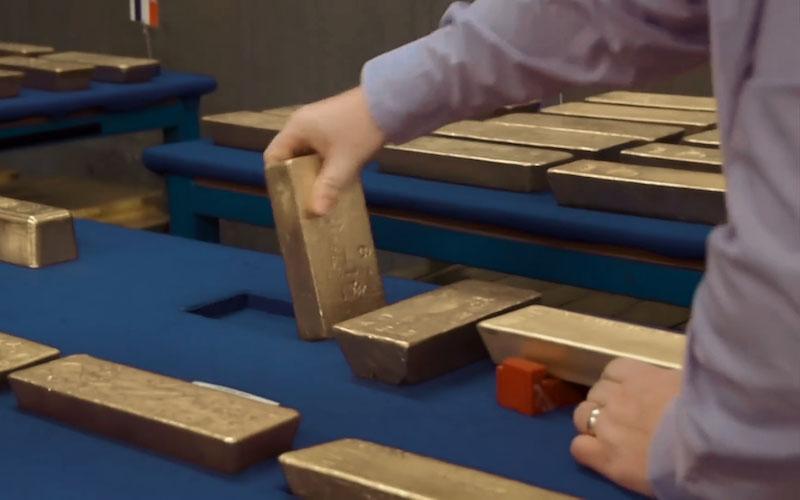
Central banks around the world are buying gold at a rate four times faster than ever before, with Goldman Sachs' estimates drawing mainstream attention.
As speculators sell off gold, central banks are quietly buying at more than four times the historical rate, with some even deciding to store their gold in London rather than New York.
Goldman Sachs estimates that global central banks purchased 79 tons of gold in August, far exceeding the monthly average of 17 tons before 2022 and significantly accelerating from the 44 tons estimated by the bank in July. On a three-month seasonally adjusted basis, this equates to approximately 85 tons per month.
The Asian powerhouse was the largest identifiable buyer, estimated to have purchased 25 tons, up from the official figure of about 20 tons.
Estimation method: Based on trade and capital flow data, exceeding the official disclosure figures.
Goldman Sachs uses trade flow and cross-border capital flow data to build its estimation model, rather than relying solely on gold purchase data officially disclosed by central banks of various countries.
This method can capture some purchases that have not yet been officially announced or completed through non-public channels, so its estimates are significantly higher than the net purchases by central banks as calculated by the World Gold Council based on the official report in August.
Goldman Sachs believes that some central bank buying is occurring ahead of publicly available data, causing a lag in official statistics.
This estimation framework is also consistent with the bank's long-standing view that official data often underestimates the strength of actual demand, and the market should pay more attention to the real pace of purchasing reflected in trade and capital flows.
Geographical shifts in reserves: New York reduced by 40 tons, London increased by 46 tons, and the Netherlands transferred 86 tons.
Another thread in the story is the shift in the location of gold storage. During the statistical period, the gold held by the Federal Reserve Bank of New York decreased by approximately 40 tons, while the Bank of England's holdings increased by 46 tons, demonstrating a clear trend of storage shifting from New York to London.
The Dutch central bank subsequently confirmed that it had spent six months transferring a total of 86 tons of gold from New York and Ottawa to London.
These operations are part of the relocation of existing reserves, aimed at optimizing storage locations and liquidity arrangements, and do not represent new demand for gold.
The market needs to distinguish between two different types of activities: "geographical reallocation" and "net buying," to avoid misinterpreting the transfer as incremental buying.
Market Implications: A tug-of-war between structural support and short-term pressure
Goldman Sachs maintains that it views central bank gold purchases as a structural support for the gold market, rather than a temporary phenomenon.
This context is particularly crucial in recent price volatility – last week, gold prices briefly fell below $4,000 under multiple pressures including speculative selling, rising oil prices, and interest rate concerns.
Official data shows that even with a significant liquidation of short-term speculative positions, long-term buyers continue to accumulate. This tug-of-war between structural buying and short-term selling pressure means that price pullbacks are more likely to present buying opportunities than trend reversal signals.
Market participants should focus on the sustainability of central bank actions, rather than being swayed solely by short-term price noise.
Summarize
Goldman Sachs estimates that global central banks purchased 79 tons of gold in August, more than four times the monthly average of 17 tons before 2022, which is approximately 85 tons per month after seasonal adjustment over three months. Major Asian countries are the largest identifiable buyers. This estimate is based on trade and capital flow data and is higher than the official disclosure figures, suggesting that the actual accumulation may be greater than publicly reported. Geographically, reserves are shifting from New York to London, with the Dutch central bank transferring 86 tons, but this is for reserve management rather than new demand. Global central bank buying provides structural support, supporting the argument that "pullbacks are absorbed by long-term buyers," but it does not guarantee a bottom—short-term gold prices still depend on oil prices, yields, and Fed expectations, and official demand did not prevent the decline below $4,000 last week.
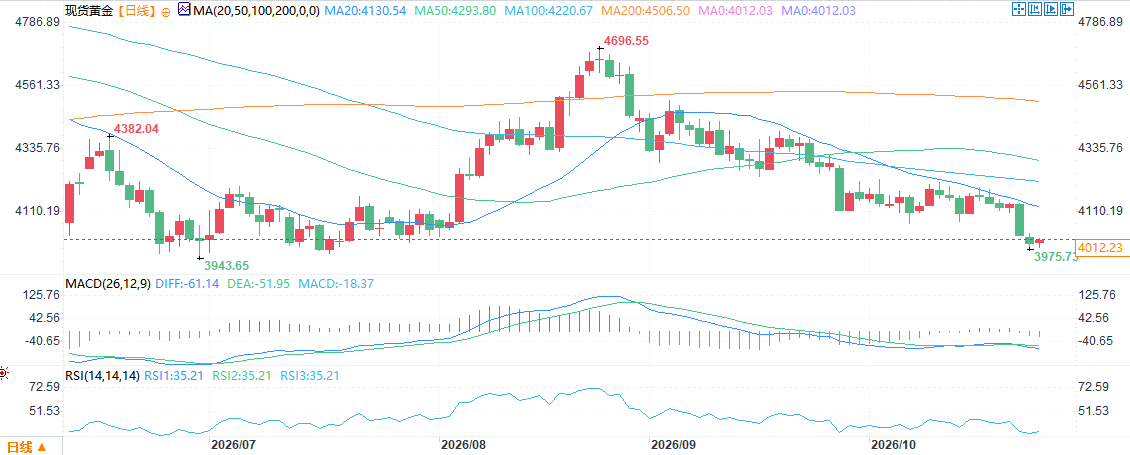
(Spot gold daily chart, source: FX678)
At 12:05 Beijing time, spot gold was trading at $4,010.44 per ounce.
- Risk Warning and Disclaimer
- The market involves risk, and trading may not be suitable for all investors. This article is for reference only and does not constitute personal investment advice, nor does it take into account certain users’ specific investment objectives, financial situation, or other needs. Any investment decisions made based on this information are at your own risk.