The USD/CAD pair rebounded after a sharp drop, driven by waning safe-haven demand and falling oil prices.
2026-10-26 15:26:22
On Monday during the Asian session, the USD/CAD pair traded around 1.4000, with the opening bullish gap quickly filled. The core contradiction in the current exchange rate lies in the fact that Trump's statements simultaneously affect both the US dollar and oil prices – they have withdrawn safe-haven buying of the dollar (negative for USD/CAD), but have also eased supply disruption concerns and suppressed oil prices (negative for the Canadian dollar). This "two-way offsetting" pattern means that pullbacks in the exchange rate are often lacking in smoothness, while rebounds are equally difficult to sustain. 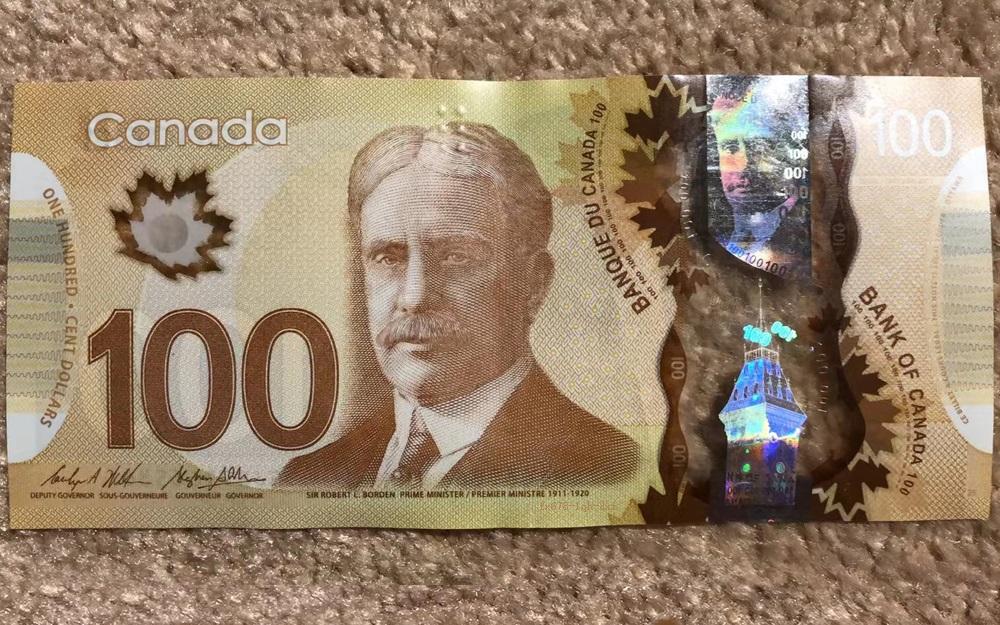 From the perspective of the US dollar, the statement directly altered short-term risk pricing. While ruling out launching an attack that day, Trump retained the options of "getting the job done" or reaching an agreement with Tehran. This intermediate state has a particularly complex impact on the USD/CAD exchange rate: on the one hand, the cooling of safe-haven demand weakened the dollar's impulsive premium; on the other hand, the geopolitical risk premium did not dissipate, but was merely postponed to a window after the Israeli election and the US midterm elections. For the exchange rate, this means that any deep pullback is more likely to encounter support at relatively low levels—funds are betting not on the current easing, but on the asymmetric increase in the probability of conflict; however, at the same time, due to the lack of immediate catalysts, the dollar's rebound also lacks smoothness. This is the fundamental reason why this round of pullback is more persistent than previous rounds. The Canadian dollar, on the other hand, faces a situation of "relatively not bad" rather than "absolutely strong." OCBC strategists point out that safe-haven flows are increasingly diverging among G10 currencies: "AI-related concerns are benefiting the yen, Middle East tensions are supporting the Canadian dollar and Norwegian krone, while French fiscal pressures are benefiting the Swiss franc." This observation has a dual meaning for USD/CAD: firstly, the Canadian dollar's safe-haven attributes have indeed been activated during this round of geopolitical tensions, giving it a certain advantage relative to other commodity currencies; secondly, this support is event-driven and highly fragmented—once the Middle East situation substantially eases, or market focus shifts to growth concerns, the Canadian dollar's safe-haven premium may be given back faster than it has accumulated. In other words, the Canadian dollar's current strength comes more from "conflict dividends" than from substantial improvements in fundamentals. On the fundamental front, Canadian economic data constitutes the most obvious headwind for the Canadian dollar. RBC analysts point out that domestic demand remains under pressure, "the housing market remains weak," and expect the August GDP data to be released next Friday "should confirm that third-quarter economic growth slowed after the surge in the second quarter," thus reinforcing the judgment that the economy has slowed down. This outlook has two negative implications for the Canadian dollar: first, slower growth weakens the Bank of Canada's case for maintaining a tight stance, making it difficult to widen the interest rate advantage; second, the continued weakness in the housing market means there's a lack of leverage for domestic demand recovery, and any negative surprises in the data could trigger an accelerated sell-off of the Canadian dollar. For USD/CAD, this is the most easily underestimated downside support variable in this round—as long as the Canadian growth narrative remains weak, the Canadian dollar will find it difficult to break out of its trend based on oil prices or safe-haven sentiment. Policy expectations provide another constraint. Although the market widely expects the Federal Reserve to hold rates steady before the midterm elections, the tightening path at the end of the year has not been disproven. According to the CME FedWatch tool, the market prices a probability of keeping rates unchanged at the October meeting at about 90.6%, and a probability of a rate hike in December at about 79.7%. For USD/CAD, this is an environment of "short-term weakness in the US dollar and a floor in the medium term": holding rates steady next week is widely expected and unlikely to provide additional negative news; however, the fact that the tightening path at the end of the year has not been disproven means that any breakout of the Canadian dollar is likely to encounter selling pressure at relatively high levels. This is also the structural reason why the exchange rate has failed to smoothly break below 1.4000 after falling from its high. From a cross-asset perspective, the current USD/CAD fluctuations are essentially a confluence of four factors: first, the passive pullback of the US dollar due to waning safe-haven demand; second, the headwind for the Canadian dollar caused by easing upward pressure on oil prices; third, the fundamental drag from slowing Canadian growth and weak housing conditions; and fourth, the valuation floor provided by the fact that the Fed's year-end path has not been disproven. It is worth noting that oil prices play a double-edged sword here—they are both a traditional source of support for the Canadian dollar and a vehicle for the current geopolitical premium. When conflict pushes up oil prices, the Canadian dollar benefits, but the US dollar also strengthens due to safe-haven demand; when conflict eases and oil prices fall, the US dollar falls, but the Canadian dollar also loses support. After offsetting these factors, the net direction of the USD/CAD depends more on the relative strength of interest rate expectations and the Canadian growth narrative than simply on oil price movements. This also explains why, during this round of tensions, the currency pair's volatility has consistently remained within its trading range. RBC's cautious forecast for Canadian growth, coupled with OCBC's recognition of the Canadian dollar's safe-haven status, creates a "bearish fundamentals, bullish sentiment" combination. This reflects a shift in market pricing of the Canadian dollar from a simple comparison to oil prices to a triple assessment of growth, interest rate differentials, and risk sentiment. For investors, this means the probability of success for those relying solely on oil prices to go long on the Canadian dollar is declining—only when Canadian housing and growth data show substantial improvement, or the Fed's year-end path is completely disproven, will the decline in USD/CAD have a trend basis. Until then, any pullback is more appropriate to view as a technical correction within the range. On the daily chart, USD/CAD is trading around 1.4000, below the 9-period and 50-period exponential moving averages. Short-term EMA clusters form dense resistance, and the price has faced layers of upward pressure since its recent high. The 14-day Relative Strength Index (RSI) is at 37, leaning towards oversold territory, indicating that upward momentum is weakening rather than a decisive reversal, a typical "bearish consolidation with exhausting momentum" pattern. The upside resistance levels to watch are the 50-period EMA around 1.4067, the 9-period EMA around 1.4073, and the strong horizontal resistance around 1.4300. Only a decisive break above 1.4073 on the daily chart can alleviate the current bearish bias and open up space for further upward movement. On the downside, the first support level is 1.3732, followed by the more distant structural bottom at 1.3482. Since there is a lack of near-term technical support between 1.4000 and 1.3732, a break below the 1.4000 level could lead to a downward move without clear technical support, requiring a wait for a new demand zone to emerge. On the 4-hour chart, the exchange rate has slowly retreated along the short-term moving average after a gap-up opening. The MACD histogram is close to the zero line, with the fast and slow lines repeatedly intertwined, indicating weak momentum. Currently, the price is fluctuating narrowly between 1.3990 and 1.4015. If it breaks below 1.3980 with significant volume, it may seek support at 1.3732 or even 1.3482. An upward breakout requires the coordination of the Federal Reserve's decision and Canadian GDP data. Until then, it is advisable to treat the market within a range and avoid chasing highs and lows.
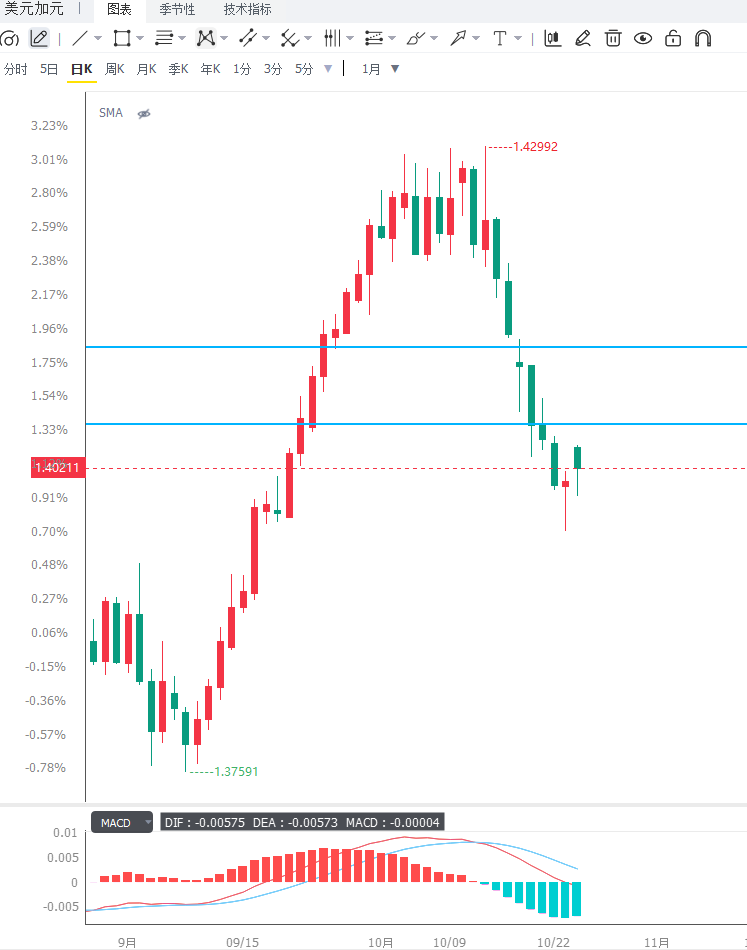 Editor's Summary: The core contradiction in the short-term USD/CAD exchange rate lies in the dual pressures of waning safe-haven demand and falling oil prices. However, the slowdown in Canadian growth and the fact that the Fed's year-end path has not been disproven provide a counterbalancing force. This two-way driving force makes the exchange rate more likely to consolidate within the 1.3980-1.4075 range, awaiting a breakthrough. Three key variables to watch go forward: First, the Canadian August GDP data to be released next Friday, which is direct evidence verifying RBC's assessment of a slowdown in third-quarter growth and is crucial in determining whether the Canadian dollar can escape the drag from fundamentals; second, the Fed's decision, interest rate statement, and Warsh press conference on Wednesday, which will directly affect the tightness of the dollar's interest rate floor; and third, the situation in the Strait of Hormuz, oil price trends, and developments in the Middle East, which will determine whether the Canadian dollar's safe-haven premium can continue and also affect the dollar's impulsive fluctuations.
From the perspective of the US dollar, the statement directly altered short-term risk pricing. While ruling out launching an attack that day, Trump retained the options of "getting the job done" or reaching an agreement with Tehran. This intermediate state has a particularly complex impact on the USD/CAD exchange rate: on the one hand, the cooling of safe-haven demand weakened the dollar's impulsive premium; on the other hand, the geopolitical risk premium did not dissipate, but was merely postponed to a window after the Israeli election and the US midterm elections. For the exchange rate, this means that any deep pullback is more likely to encounter support at relatively low levels—funds are betting not on the current easing, but on the asymmetric increase in the probability of conflict; however, at the same time, due to the lack of immediate catalysts, the dollar's rebound also lacks smoothness. This is the fundamental reason why this round of pullback is more persistent than previous rounds. The Canadian dollar, on the other hand, faces a situation of "relatively not bad" rather than "absolutely strong." OCBC strategists point out that safe-haven flows are increasingly diverging among G10 currencies: "AI-related concerns are benefiting the yen, Middle East tensions are supporting the Canadian dollar and Norwegian krone, while French fiscal pressures are benefiting the Swiss franc." This observation has a dual meaning for USD/CAD: firstly, the Canadian dollar's safe-haven attributes have indeed been activated during this round of geopolitical tensions, giving it a certain advantage relative to other commodity currencies; secondly, this support is event-driven and highly fragmented—once the Middle East situation substantially eases, or market focus shifts to growth concerns, the Canadian dollar's safe-haven premium may be given back faster than it has accumulated. In other words, the Canadian dollar's current strength comes more from "conflict dividends" than from substantial improvements in fundamentals. On the fundamental front, Canadian economic data constitutes the most obvious headwind for the Canadian dollar. RBC analysts point out that domestic demand remains under pressure, "the housing market remains weak," and expect the August GDP data to be released next Friday "should confirm that third-quarter economic growth slowed after the surge in the second quarter," thus reinforcing the judgment that the economy has slowed down. This outlook has two negative implications for the Canadian dollar: first, slower growth weakens the Bank of Canada's case for maintaining a tight stance, making it difficult to widen the interest rate advantage; second, the continued weakness in the housing market means there's a lack of leverage for domestic demand recovery, and any negative surprises in the data could trigger an accelerated sell-off of the Canadian dollar. For USD/CAD, this is the most easily underestimated downside support variable in this round—as long as the Canadian growth narrative remains weak, the Canadian dollar will find it difficult to break out of its trend based on oil prices or safe-haven sentiment. Policy expectations provide another constraint. Although the market widely expects the Federal Reserve to hold rates steady before the midterm elections, the tightening path at the end of the year has not been disproven. According to the CME FedWatch tool, the market prices a probability of keeping rates unchanged at the October meeting at about 90.6%, and a probability of a rate hike in December at about 79.7%. For USD/CAD, this is an environment of "short-term weakness in the US dollar and a floor in the medium term": holding rates steady next week is widely expected and unlikely to provide additional negative news; however, the fact that the tightening path at the end of the year has not been disproven means that any breakout of the Canadian dollar is likely to encounter selling pressure at relatively high levels. This is also the structural reason why the exchange rate has failed to smoothly break below 1.4000 after falling from its high. From a cross-asset perspective, the current USD/CAD fluctuations are essentially a confluence of four factors: first, the passive pullback of the US dollar due to waning safe-haven demand; second, the headwind for the Canadian dollar caused by easing upward pressure on oil prices; third, the fundamental drag from slowing Canadian growth and weak housing conditions; and fourth, the valuation floor provided by the fact that the Fed's year-end path has not been disproven. It is worth noting that oil prices play a double-edged sword here—they are both a traditional source of support for the Canadian dollar and a vehicle for the current geopolitical premium. When conflict pushes up oil prices, the Canadian dollar benefits, but the US dollar also strengthens due to safe-haven demand; when conflict eases and oil prices fall, the US dollar falls, but the Canadian dollar also loses support. After offsetting these factors, the net direction of the USD/CAD depends more on the relative strength of interest rate expectations and the Canadian growth narrative than simply on oil price movements. This also explains why, during this round of tensions, the currency pair's volatility has consistently remained within its trading range. RBC's cautious forecast for Canadian growth, coupled with OCBC's recognition of the Canadian dollar's safe-haven status, creates a "bearish fundamentals, bullish sentiment" combination. This reflects a shift in market pricing of the Canadian dollar from a simple comparison to oil prices to a triple assessment of growth, interest rate differentials, and risk sentiment. For investors, this means the probability of success for those relying solely on oil prices to go long on the Canadian dollar is declining—only when Canadian housing and growth data show substantial improvement, or the Fed's year-end path is completely disproven, will the decline in USD/CAD have a trend basis. Until then, any pullback is more appropriate to view as a technical correction within the range. On the daily chart, USD/CAD is trading around 1.4000, below the 9-period and 50-period exponential moving averages. Short-term EMA clusters form dense resistance, and the price has faced layers of upward pressure since its recent high. The 14-day Relative Strength Index (RSI) is at 37, leaning towards oversold territory, indicating that upward momentum is weakening rather than a decisive reversal, a typical "bearish consolidation with exhausting momentum" pattern. The upside resistance levels to watch are the 50-period EMA around 1.4067, the 9-period EMA around 1.4073, and the strong horizontal resistance around 1.4300. Only a decisive break above 1.4073 on the daily chart can alleviate the current bearish bias and open up space for further upward movement. On the downside, the first support level is 1.3732, followed by the more distant structural bottom at 1.3482. Since there is a lack of near-term technical support between 1.4000 and 1.3732, a break below the 1.4000 level could lead to a downward move without clear technical support, requiring a wait for a new demand zone to emerge. On the 4-hour chart, the exchange rate has slowly retreated along the short-term moving average after a gap-up opening. The MACD histogram is close to the zero line, with the fast and slow lines repeatedly intertwined, indicating weak momentum. Currently, the price is fluctuating narrowly between 1.3990 and 1.4015. If it breaks below 1.3980 with significant volume, it may seek support at 1.3732 or even 1.3482. An upward breakout requires the coordination of the Federal Reserve's decision and Canadian GDP data. Until then, it is advisable to treat the market within a range and avoid chasing highs and lows. Editor's Summary: The core contradiction in the short-term USD/CAD exchange rate lies in the dual pressures of waning safe-haven demand and falling oil prices. However, the slowdown in Canadian growth and the fact that the Fed's year-end path has not been disproven provide a counterbalancing force. This two-way driving force makes the exchange rate more likely to consolidate within the 1.3980-1.4075 range, awaiting a breakthrough. Three key variables to watch go forward: First, the Canadian August GDP data to be released next Friday, which is direct evidence verifying RBC's assessment of a slowdown in third-quarter growth and is crucial in determining whether the Canadian dollar can escape the drag from fundamentals; second, the Fed's decision, interest rate statement, and Warsh press conference on Wednesday, which will directly affect the tightness of the dollar's interest rate floor; and third, the situation in the Strait of Hormuz, oil price trends, and developments in the Middle East, which will determine whether the Canadian dollar's safe-haven premium can continue and also affect the dollar's impulsive fluctuations.
- Risk Warning and Disclaimer
- The market involves risk, and trading may not be suitable for all investors. This article is for reference only and does not constitute personal investment advice, nor does it take into account certain users’ specific investment objectives, financial situation, or other needs. Any investment decisions made based on this information are at your own risk.