With the Bank of Canada's policy decision and the FOMC meeting looming, the USD/CAD pair has rebounded and is approaching resistance, awaiting a directional move.
2026-10-28 15:24:23
On Wednesday during the Asian session, USD/CAD traded above the 1.4000 level, continuing its recovery this week. The core driver of this rally is the US dollar: the expectation of an over 80% probability of a Fed rate hike in December, coupled with lingering geopolitical risk premiums in the Middle East, has provided buying support for the safe-haven dollar for the fourth consecutive trading day. The US has informed several Gulf Arab states to prepare for "a brief but intense military action against Iran" after the November 3rd midterm elections; this news, while pushing up oil prices, has also strengthened the safe-haven appeal of the dollar. However, the current exchange rate structure exhibits a clear two-way characteristic—the same geopolitical developments benefit both the dollar and the Canadian dollar, which is the underlying reason why the USD/CAD rebound has consistently been limited. 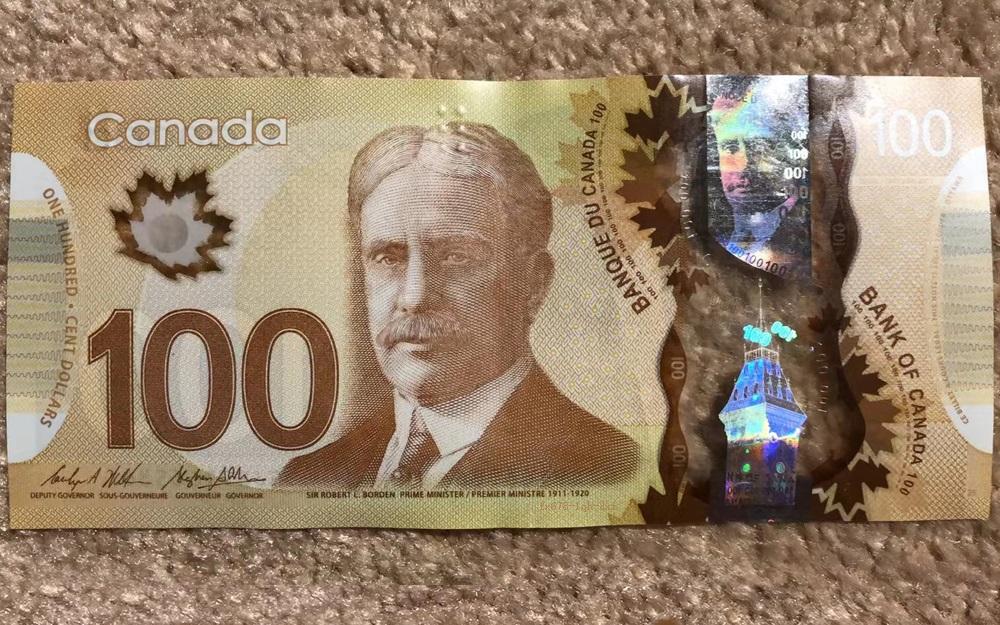 From a supporting perspective, the US dollar's advantage mainly stems from the relative certainty of its policy path. With the preliminary US Q3 GDP figures and core PCE price index set to be released on Thursday, the market is attempting to glean clues about the Fed's year-end actions, and high energy prices provide real support for the "sticky inflation" narrative. Warsh acknowledged his "deep wounds from the global financial crisis," while emphasizing structural growth and the investment boom, and refusing to predict October and December decisions—this cautious tone, though not explicitly hawkish, is sufficient to maintain the expectation of a year-end rate hike. Comparing it to other G10 currencies, Societe Generale points out that "the Fed has been the strongest performing currency among the four G10 central bank decisions this week," although "the positive backdrop for the US dollar triggered from Warsh's Jackson Hole speech to the September FOMC meeting is gradually being dragged down by the weighting of long dollar positions." This advice also applies to USD/CAD: crowded positions limit the upward slope, and any less hawkish statements than expected could trigger concentrated selling. The Canadian dollar, on the other hand, faces a situation where "positive factors are being offset." On the one hand, the Bank of Canada is expected to raise interest rates by 25 basis points, and oil prices, after retreating from multi-month highs reached last Friday, have attracted renewed buying interest, providing substantial support for commodity currencies. On the other hand, as a typical risk-sensitive currency, the Canadian dollar often fails to fully enjoy a safe-haven premium when geopolitical tensions escalate, and its gains are easily offset by the simultaneous strengthening of the US dollar. Furthermore, if the Bank of Canada's rate hike is in line with expectations and its wording is neutral, the market may react with a "buy the rumor, sell the fact" mentality, thus weakening the policy's positive impact on the Canadian dollar. Therefore, the core risk that bulls need to be wary of is not a decline in oil prices, but rather the combination of "rising oil prices coupled with a hawkish Bank of Canada stance"—this would simultaneously activate the Canadian dollar's commodity and interest rate differential attributes, creating a double-edged suppression of the USD/CAD pair. From a cross-asset perspective, the current volatility of USD/CAD is essentially a confluence of four factors: first, interest rate differential support from the Fed's year-end rate hike expectations; second, safe-haven inflows driven by the Middle East situation; third, the reverse boost to the Canadian dollar from oil prices through commodity channels; and fourth, the policy variables brought about by the Bank of Canada's decision. It's worth noting that this interconnected structure makes this currency pair more suitable for a range-bound trading strategy than a one-sided bet: when oil prices and the dollar rise in tandem, the exchange rate often becomes volatile; only when the two move in opposite directions does a trend-driven market have a basis. A single-day rebound should not be viewed in isolation, but rather evaluated within the transmission chain of "interest rate differential—oil price—hedging—positions". On the 4-hour chart, USD/CAD maintains a bullish bias for the day, with the price trading above the 100-period EMA and the 23.6% Fibonacci retracement level at 1.4046, indicating short-term momentum leaning towards the upside. Resistance levels to watch are the 38.2% retracement at 1.4095, the 50% retracement at 1.4134, and the 61.8% retracement at 1.4173. Support is initially seen at 1.4046, followed by the 100-period EMA at 1.4036; a deeper pullback would test the structural bottom around 1.3968. On the daily chart, the pair has been trading near its lows since September 16th. The price rebounded and recovered the 1.4000 level, but it is still in the middle of this week's recovery. A decisive break above 1.4095 is needed to confirm a continuation of the bullish structure. Currently, the price is consolidating between 1.4000 and 1.4060. If it retraces to 1.4036-1.4050 and finds support, there is still a chance for a short-term upward move towards 1.4095-1.4134. If it breaks below 1.4036 with significant volume, it may seek support at 1.3968. An upward breakout will require confirmation from the FOMC decision, the Bank of Canada statement, and Thursday's macroeconomic data. Until then, a range-bound trading strategy is advisable, avoiding chasing highs and lows.
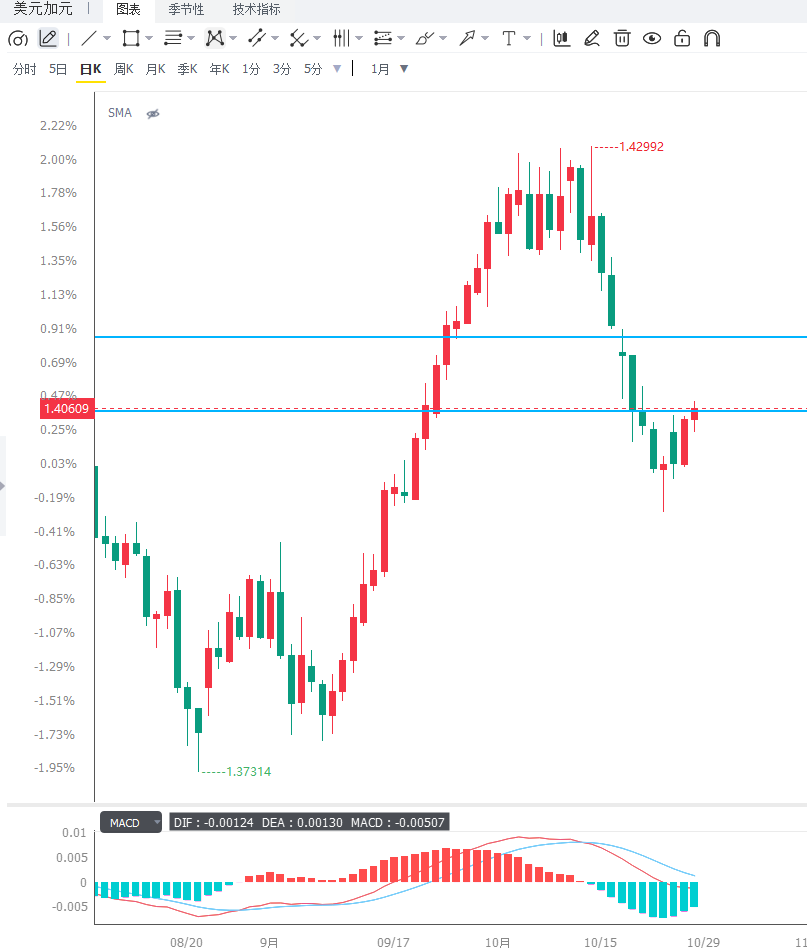 Editor's Summary: The core contradiction in the USD/CAD pair in the short term lies in the support provided by the high probability of a Fed rate hike at the end of the year and geopolitical safe-haven demand, while the strengthening oil price boosting the Canadian dollar, the Bank of Canada's decision, and crowded long positions in the US dollar act as constraints. This two-way driving force makes the exchange rate more likely to consolidate within the 1.4000-1.4095 range, awaiting a breakthrough from the decisions of the two major central banks and macroeconomic data. Three variables need to be closely watched going forward: first, the FOMC decision, policy statement, and Warsh press conference to be released later, whose statements on the year-end path will directly determine the strength or weakness of the US dollar; second, the Bank of Canada's interest rate decision and statement, which is the primary policy basis for judging whether the Canadian dollar can shift from a passive to an active position; and third, the preliminary US Q3 GDP and PCE price index to be released on Thursday, the strength or weakness of which will verify the stickiness of inflation and the rationality of rate hike expectations. In addition, the trends of Brent and WTI crude oil, the geopolitical window after the US-Iran negotiations and the midterm elections, the US dollar index, and US Treasury yields also need to be monitored simultaneously.
From a supporting perspective, the US dollar's advantage mainly stems from the relative certainty of its policy path. With the preliminary US Q3 GDP figures and core PCE price index set to be released on Thursday, the market is attempting to glean clues about the Fed's year-end actions, and high energy prices provide real support for the "sticky inflation" narrative. Warsh acknowledged his "deep wounds from the global financial crisis," while emphasizing structural growth and the investment boom, and refusing to predict October and December decisions—this cautious tone, though not explicitly hawkish, is sufficient to maintain the expectation of a year-end rate hike. Comparing it to other G10 currencies, Societe Generale points out that "the Fed has been the strongest performing currency among the four G10 central bank decisions this week," although "the positive backdrop for the US dollar triggered from Warsh's Jackson Hole speech to the September FOMC meeting is gradually being dragged down by the weighting of long dollar positions." This advice also applies to USD/CAD: crowded positions limit the upward slope, and any less hawkish statements than expected could trigger concentrated selling. The Canadian dollar, on the other hand, faces a situation where "positive factors are being offset." On the one hand, the Bank of Canada is expected to raise interest rates by 25 basis points, and oil prices, after retreating from multi-month highs reached last Friday, have attracted renewed buying interest, providing substantial support for commodity currencies. On the other hand, as a typical risk-sensitive currency, the Canadian dollar often fails to fully enjoy a safe-haven premium when geopolitical tensions escalate, and its gains are easily offset by the simultaneous strengthening of the US dollar. Furthermore, if the Bank of Canada's rate hike is in line with expectations and its wording is neutral, the market may react with a "buy the rumor, sell the fact" mentality, thus weakening the policy's positive impact on the Canadian dollar. Therefore, the core risk that bulls need to be wary of is not a decline in oil prices, but rather the combination of "rising oil prices coupled with a hawkish Bank of Canada stance"—this would simultaneously activate the Canadian dollar's commodity and interest rate differential attributes, creating a double-edged suppression of the USD/CAD pair. From a cross-asset perspective, the current volatility of USD/CAD is essentially a confluence of four factors: first, interest rate differential support from the Fed's year-end rate hike expectations; second, safe-haven inflows driven by the Middle East situation; third, the reverse boost to the Canadian dollar from oil prices through commodity channels; and fourth, the policy variables brought about by the Bank of Canada's decision. It's worth noting that this interconnected structure makes this currency pair more suitable for a range-bound trading strategy than a one-sided bet: when oil prices and the dollar rise in tandem, the exchange rate often becomes volatile; only when the two move in opposite directions does a trend-driven market have a basis. A single-day rebound should not be viewed in isolation, but rather evaluated within the transmission chain of "interest rate differential—oil price—hedging—positions". On the 4-hour chart, USD/CAD maintains a bullish bias for the day, with the price trading above the 100-period EMA and the 23.6% Fibonacci retracement level at 1.4046, indicating short-term momentum leaning towards the upside. Resistance levels to watch are the 38.2% retracement at 1.4095, the 50% retracement at 1.4134, and the 61.8% retracement at 1.4173. Support is initially seen at 1.4046, followed by the 100-period EMA at 1.4036; a deeper pullback would test the structural bottom around 1.3968. On the daily chart, the pair has been trading near its lows since September 16th. The price rebounded and recovered the 1.4000 level, but it is still in the middle of this week's recovery. A decisive break above 1.4095 is needed to confirm a continuation of the bullish structure. Currently, the price is consolidating between 1.4000 and 1.4060. If it retraces to 1.4036-1.4050 and finds support, there is still a chance for a short-term upward move towards 1.4095-1.4134. If it breaks below 1.4036 with significant volume, it may seek support at 1.3968. An upward breakout will require confirmation from the FOMC decision, the Bank of Canada statement, and Thursday's macroeconomic data. Until then, a range-bound trading strategy is advisable, avoiding chasing highs and lows. Editor's Summary: The core contradiction in the USD/CAD pair in the short term lies in the support provided by the high probability of a Fed rate hike at the end of the year and geopolitical safe-haven demand, while the strengthening oil price boosting the Canadian dollar, the Bank of Canada's decision, and crowded long positions in the US dollar act as constraints. This two-way driving force makes the exchange rate more likely to consolidate within the 1.4000-1.4095 range, awaiting a breakthrough from the decisions of the two major central banks and macroeconomic data. Three variables need to be closely watched going forward: first, the FOMC decision, policy statement, and Warsh press conference to be released later, whose statements on the year-end path will directly determine the strength or weakness of the US dollar; second, the Bank of Canada's interest rate decision and statement, which is the primary policy basis for judging whether the Canadian dollar can shift from a passive to an active position; and third, the preliminary US Q3 GDP and PCE price index to be released on Thursday, the strength or weakness of which will verify the stickiness of inflation and the rationality of rate hike expectations. In addition, the trends of Brent and WTI crude oil, the geopolitical window after the US-Iran negotiations and the midterm elections, the US dollar index, and US Treasury yields also need to be monitored simultaneously.
- Risk Warning and Disclaimer
- The market involves risk, and trading may not be suitable for all investors. This article is for reference only and does not constitute personal investment advice, nor does it take into account certain users’ specific investment objectives, financial situation, or other needs. Any investment decisions made based on this information are at your own risk.