The Fed holds rates steady! Warsh suggests "wait and see," but the market interprets it as a signal of easing? A complete analysis of the interest rate dilemma before the midterm elections.
2026-10-29 07:00:23
At a critical juncture of heightened tension in global financial markets, the Federal Reserve formally announced on Wednesday (October 28) that it would maintain the target range for the federal funds rate at 3.75% to 4.00%. This decision was passed smoothly with 10 votes in favor and 2 against, fully in line with widespread market expectations and profoundly reflecting the complex trade-offs policymakers are currently making between inflation stickiness, economic resilience, financial market reactions, and the political cycle. In its latest policy statement, the Federal Open Market Committee (FOMC) explicitly stated that gathering more information will help the Committee determine the appropriate policy stance to ensure that inflation returns to the Committee's 2% target in a timely manner, and reiterated the Committee's firm commitment to achieving price stability. At the post-meeting press conference, Fed Chairman Kevin Warsh did not provide any specific guidance on the outlook for monetary policy, but repeatedly emphasized that "a lot of things can happen," and explicitly stated that he did not endorse predicting the outcome of future meetings. This cautious and restrained stance was interpreted by some investors as a slightly dovish signal, strengthening their expectations that there might not be a rapid and continuous series of interest rate hikes in the coming months. 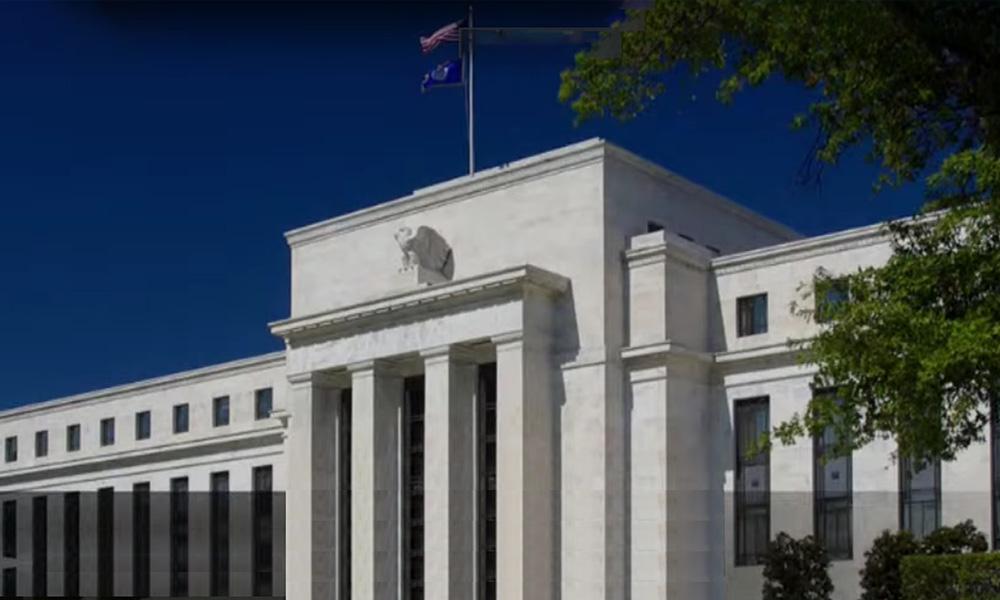
The contradictory situation of a significant upward revision of economic assessments coexisting with persistent inflationary pressures.
Compared to the September 15-16 meeting, this policy statement showed a significantly more positive shift in its description of the economy. The Federal Reserve officially upgraded economic activity from "solid" expansion to "strong," specifically noting resilient spending, robust productivity growth, solid capital investment, and employment growth broadly in line with labor force growth. This change in wording conveys policymakers' recognition of the current resilience of the U.S. economy and suggests that current interest rate levels have not significantly dampened overall growth. The statement also acknowledged that inflation remains high, with little substantial improvement in recent months, currently about one percentage point above the Fed's 2% target. More notably, U.S. inflation has failed to reach its target for five and a half years, a fact that has caused concern among some officials. Businesses and households are gradually adapting to a faster pace of price increases and adjusting their long-term plans accordingly, making it more difficult for inflation to fall. High energy costs, particularly diesel prices, continue to put direct pressure on shipping, agriculture, and other key industries. Oil prices remaining above $100 per barrel further exacerbate concerns about inflation spreading to broader sectors. It is against this backdrop that the Federal Reserve chose to hold rates steady until after next week's midterm elections, awaiting more key data on the path of inflation. At the press conference, Warsh acknowledged that the Fed has not yet achieved price stability, stating, "We are working on it." He also pointed out that since the September rate hike, financial and credit conditions have tightened significantly, and the policy is beginning to take effect, propelling the economy towards a longer period of more sustainable growth and price stability. This statement acknowledges that the policy's effects are becoming apparent, while also suggesting that the committee is in no hurry to tighten further, but rather hopes to use more data to confirm whether inflation is moving towards its target.Internal dissent and the publicizing of policy disagreements
One of the most notable details of this meeting was the appearance of two dissenting votes. Federal Reserve Governor Lisa Cook cast a dissenting vote for the first time in a policy decision, explicitly advocating for a 25-basis-point rate hike; Cleveland Fed President Beth Hammark, a traditionally hawkish figure, also supported a similarly large rate hike. Cook's dissenting vote was particularly surprising, as the market had previously expected Hammark and Logan to be the main hawks. This divergence indicates that there are still significant differences of opinion within the committee regarding whether the current policy stance is sufficiently restrictive. Some officials viewed the September rate hike as a risk management measure aimed at preventing entrenched inflation; others believed that rates needed to rise further to a level sufficient to effectively curb overheating of the economy. Expert opinions also fully reflect this internal division. David Krakauer, Vice President of Portfolio Management at Mercer Advisors, pointed out that maintaining the current interest rate was not a dovish stance of holding back. The statement's positive assessment of the economy sounded more like a Fed that believed the economy could withstand further policy tightening, thus shifting the focus of the debate from "whether to raise rates" to "when to raise rates." He advised investors to remain patient, as the earnings growth prospects for equities remain attractive, and fixed-income portfolios currently offer substantial real returns. While the road ahead may be bumpier as Warsh reduces forward guidance, investors will be rewarded for their patience. Bill Mann, chief investment strategist at Motley Fool Asset Management, believes there is significant disagreement within the Federal Reserve regarding the extent to which oil prices are driving inflation, and that geopolitical imbalances cannot be resolved solely through monetary policy actions. He even questioned whether the 2% inflation target remains the Fed's top priority, arguing that it is somewhat symbolic. Kay Haig, global head of fixed income and liquidity solutions and chief investment officer at Goldman Sachs Asset Management, expects the Fed to resume rate hikes in December, noting that strong September consumer price index data reminds people that inflation still faces upside risks. If energy prices rise again, or economic data continues to be strong, policy tightening may occur further next year.The muted market reaction reflects a wait-and-see attitude and structural concerns.
Following the policy announcement, market reactions were generally muted and mixed. US stocks slightly pared gains after the decision, with the Dow Jones Industrial Average ultimately rising about 0.2%, and the S&P 500 and Nasdaq both rising about 0.3%. The bond market showed a clear divergence, with short-term yields declining and long-term yields rising. The 10-year Treasury yield hovered slightly above 5%, up from 4.992% the previous day. Short-term interest rate futures rose slightly as traders slightly reduced their bets on future Fed rate hikes, but still considered the probability of a December rate hike to be around 78%, and the probability of three more rate hikes by the end of next year to be around 57%. Many investors view the Fed as one of the biggest potential threats to the current stock market. Expectations of further rate hikes would push up Treasury yields, thereby increasing borrowing costs across the economy and enhancing the attractiveness of Treasuries relative to risk assets. Earlier this month, the 10-year Treasury yield rose to a 24-year high of over 5.3%, before investors sold tech stocks and bought bonds as a safe haven, causing yields to fall back below 5%. Analysts warn that if tech stocks continue their rally while inflation remains high, yields could easily rise again. Unprecedented capital spending by tech companies is seen as a key support for the resilience of the US economy, which is one reason why the Federal Reserve may need to raise interest rates further. Rising interest rates will eventually slow the economy, but this process could take longer. Kelly Brown, CEO of deposit management firm Ampersand, cautioned the market that maintaining current interest rates does not mean we can relax. This is the Fed telling ordinary people and businesses to continue waiting. With inflation still at 3.7% and oil prices above $100 a barrel, businesses cannot expect borrowing costs to fall anytime soon.A cautious stance amid political cycles and data waiting
The outcome of this week's meeting was widely anticipated by the market. After the Federal Reserve decided to raise interest rates by 25 basis points last month, several senior officials stated that they did not believe there was any need to rush into another rate hike, despite stronger-than-expected inflation data and growing concerns that price pressures were spreading to all sectors of the economy. Inflation and the overall cost of living have always been central issues in political campaigns. These elections will determine on November 3 whether the Trump-led Republican Party can retain control of both houses of Congress, or whether the Democrats will gain leadership and stronger oversight, including oversight of the Federal Reserve. It is precisely during this politically sensitive period that the Federal Reserve chose to postpone its actions, both to avoid its policy being interpreted as political interference and to buy itself more time to observe data. Data to be released on Thursday is expected to show that the core PCE price index rose slightly above 3% year-on-year in September, well above the Fed's 2% target. Some investors remain optimistic that even without further rate hikes, inflation can gradually fall back to 2%, citing temporary factors such as tariffs and rising energy costs. Some Federal Reserve officials described the September rate hike as a risk management measure aimed at preventing inflation from becoming entrenched, rather than the start of a series of rate hikes; however, other officials believed that interest rates needed to rise to a level sufficient to effectively curb the economy.Conclusion: A prudent choice awaiting more information and the uncertainty of the future path.
Overall, the Fed's decision to hold rates steady is both a pragmatic response to the politically sensitive period ahead of the midterm elections and a cautious choice given the continued uncertainty surrounding the inflation path. Warsh's reduced forward guidance suggests that future policy may be more data-dependent and more volatile. Markets have entered a wait-and-see mode in the short term, with investors paying close attention to key data such as the upcoming core PCE, while also being wary of potential upside risks from energy prices and geopolitical factors. Given that inflation has not yet returned to target but the economy has shown strong resilience, the Fed's next move will depend on the accumulation of more information and the building of internal consensus. This interest rate dilemma is far from over; the real test may have just begun.Frequently Asked Questions
Q: Why did the Federal Reserve choose to keep interest rates unchanged before the midterm elections? A: The core reason was to wait for more inflation data. The statement emphasized the need to accumulate information to determine the policy stance, while the economic assessment was upgraded to "strong," indicating that current interest rates have not significantly suppressed growth. Adjusting interest rates before the election is easily politicized, and the committee chose to postpone it to maintain its independence. Q: What internal divisions did the two dissenting votes reflect? A: Cook and Hammark advocated a 25 basis point rate hike, indicating that some members believed the policy was not restrictive enough. Cook's first dissenting vote was particularly unexpected. This revealed different assessments of inflation stickiness and economic resilience, but the 10 votes in favor still dominated, and maintaining the status quo was the mainstream view. Q: Why was Warsh's statement interpreted by the market as slightly dovish? A: He emphasized that financial conditions had tightened, policy was beginning to take effect, and refused to prejudge future meetings, lowering expectations of a hawkish rate hike. The market interpreted this as a decrease in the possibility of rapid and continuous rate hikes, supporting US stocks, and short-term interest rate futures also slightly lowered their rate hike bets. Q: What substantial impact does the current inflation situation have on policy decisions? A: Inflation remains about 1 percentage point above the target, failing to meet it for five and a half years, with energy costs remaining high. Officials are concerned that once businesses and households adapt to higher inflation, it will be more difficult for prices to fall back. Maintaining interest rates unchanged is not a easing measure, but rather a wait-and-see approach to confirm whether the path of interest rates has improved. Q: What are the market's specific expectations for the future path of interest rate hikes? A: Interest rate futures indicate a 78% probability of a rate hike in December, and a 57% probability of three more rate hikes by the end of next year. Experts believe the focus has shifted from "whether to raise rates" to "when to raise rates." If energy prices rise or data continues to be strong, policy may be further tightened.- Risk Warning and Disclaimer
- The market involves risk, and trading may not be suitable for all investors. This article is for reference only and does not constitute personal investment advice, nor does it take into account certain users’ specific investment objectives, financial situation, or other needs. Any investment decisions made based on this information are at your own risk.