The Fed voted 10-2 to keep rates unchanged, with two hawkish dissenters: paving the way for a December rate hike.
2026-10-29 08:34:26
On Thursday (October 29) during the Asian session, the US dollar index fluctuated at high levels, currently trading around 102.25. The strength of the dollar index is precisely the market's response to the "pause but not a shift" stance. The Federal Reserve voted 10-2 early Thursday morning to maintain the benchmark interest rate in the 3.75% to 4% range, pausing after last month's rate hike, while reinforcing market expectations of another rate hike in December. The decision itself was widely anticipated; the surprise lay in the dissent. Federal Reserve Governor Lisa Cook voted against maintaining the rate and supported a higher rate, breaking her record of consistently aligning with the committee's consensus since joining the central bank more than four years ago. Cook—whom President Trump has been trying to remove for over a year—has recently expressed concern that inflation remains a problem, but has not indicated that she believes further rate hikes are urgently needed. The second dissent came from Cleveland Fed President Beth Hammark, which was more in line with expectations. Hammark is one of the most hawkish members of the committee this year and voted to tighten policy in April and July. 
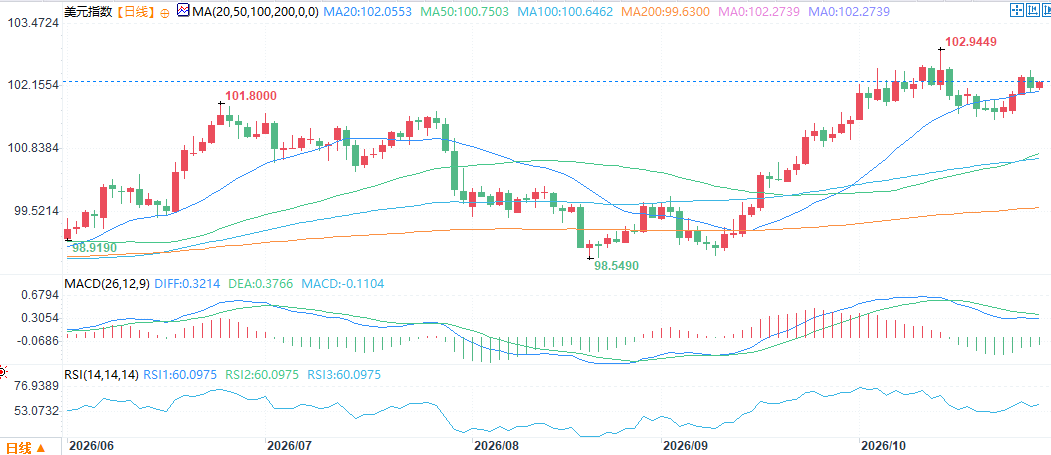 (US Dollar Index Daily Chart, Source: FX678) At 8:28 Beijing time, the US Dollar Index was at 102.27.
Warsh stated that restoring 2% inflation is the top priority, and a pause does not equate to a relaxation of efforts.
In the post-meeting press conference, Federal Reserve Chairman Warsh sought to clarify that the pause did not mean the Fed had relaxed its efforts to suppress inflation. He stated that restoring inflation fully to the 2% target was the overriding priority, and that the Fed had recommitted itself to this goal since he took office, with last month's rate hike marking the beginning of that effort. Warsh acknowledged that the Fed had not yet achieved price stability but said it was working towards it, and offered little challenge to market expectations regarding a December rate hike.Meeting schedule reform: Seven interest rate decisions next year, reduced to six in 2028.
Warsh also announced adjustments to the Federal Reserve's meeting schedule. Next year, policymakers will only vote on interest rates in seven of the eight meetings, with the remaining one reserved for broader strategic discussions. In 2028, the number of interest rate decisions will decrease to six, with two meetings reserved for strategic discussions. This adjustment completely overhauls the schedule that has been in place for 45 years. Warsh first raised the idea internally this summer. This move aligns with his preference for a low-key Federal Reserve. Under his leadership, post-meeting statements have become shorter, and he has also opted not to participate in the quarterly dot plot of officials' forecasts.Market Implications: Hawkish Support Expands; December Meeting to Become Key Test
With two officials already pushing for rate hikes, the December meeting now becomes the next crucial test of the Fed's tightening path. Given Trump's attempt to remove Cook from office, his dissent could also be politically interpreted, intensifying scrutiny of the Fed's independence. The reduced number of interest rate decisions starting next year means each meeting carries more weight, potentially amplifying market volatility around those dates.Summarize
The Federal Reserve maintained its benchmark interest rate at 3.75% to 4% by a vote of 10 to 2, pausing after last month's rate hike. Governor Lisa Cook unexpectedly voted against raising rates, marking her first deviation from the consensus in over four years; Cleveland Fed President Beth Hammark also dissented, consistent with her stance in April and July. Chairman Warsh emphasized that restoring 2% inflation is the top priority, stating that the pause does not equate to easing, and barely challenged market expectations for a December rate hike. The Fed also announced an adjustment to its meeting schedule, reducing the number of meetings to seven next year and to six in 2028, a reform of the 45-year-old schedule, consistent with Warsh's preference for a low-key Fed approach. The two hawkish dissenters broadened the scope of support for a rate hike beyond the committee's usual hardliners, reinforcing the broad-based arguments for a December rate hike. Cook's dissent could also be politically interpreted, intensifying scrutiny of the Fed's independence. The December meeting will be the next key test, and the reduced number of decisions could amplify market volatility. (US Dollar Index Daily Chart, Source: FX678) At 8:28 Beijing time, the US Dollar Index was at 102.27.
- Risk Warning and Disclaimer
- The market involves risk, and trading may not be suitable for all investors. This article is for reference only and does not constitute personal investment advice, nor does it take into account certain users’ specific investment objectives, financial situation, or other needs. Any investment decisions made based on this information are at your own risk.