The pound fell back after encountering resistance against the dollar, and the oscillating pattern continued as the dollar's strength and the interest rate differential between the US and the UK persisted.
2026-10-29 14:34:24
On Thursday during Asian trading hours, the pound traded around 1.3300 against the dollar, with the previous day's rebound from the 1.3270 area failing to continue. The key to this level is that the dollar's brief pullback after the FOMC meeting has been corrected, and rising energy prices and inflationary risks have rapidly fueled market expectations for another Fed rate hike this year. The CME FedWatch tool shows traders currently valuing a December rate hike at around 80%, a level close to the "high probability pricing" range, meaning the dollar's strength is not simply a sentimental impulse, but rather structural support based on interest rate differential expectations. Meanwhile, continued tensions in the Middle East provided additional safe-haven buying for the dollar: Vice President Vance reportedly sent a letter to Iran's Supreme National Security Council Secretary Rezaei attempting to restart peace talks, while Trump threatened to resume military action within weeks, with the Wall Street Journal citing officials suggesting a possible brief but high-intensity military operation after the midterm elections. This situation of "negotiations and threats in parallel" has created high uncertainty, leading safe-haven funds to hold the dollar.  From the perspective of the pound sterling, the core contradiction lies in the tug-of-war between "expectations of tightening by the Bank of England" and "the pressure from a strong dollar." Expectations of a Bank of England rate hike have provided a floor for the pound, and the market has largely priced in a November rate hike. However, this positive factor has been partially priced in, making it difficult to push the exchange rate significantly higher against the backdrop of a strong dollar. It's worth noting that the exchange rate found support and rebounded in the 1.3270-1.3275 area the previous day, but lacked follow-through buying after reaching the 1.3330-1.3350 range, indicating insufficient bullish confidence. This pattern of "support below and resistance above" essentially reflects the equilibrium of the US-UK interest rate differential expectations: the hawkish stance of the Federal Reserve and the hawkish stance of the Bank of England create a hedge, making the exchange rate more likely to fluctuate within a range rather than exhibit a trend. In a horizontal comparison, the pound's current situation differs significantly from that of the euro and the yen. The euro is constrained by both energy costs and the ECB's indecisiveness, while the yen is passively pressured by safe-haven outflows and reliance on intervention. The pound is relatively in the middle – benefiting from expectations of tightening from the Bank of England but constrained by the overall strength of the dollar. This means the pound is relatively independent, its movements depending more on the comparison of data and policy pace between the US and UK, rather than simply following the dollar or safe-haven sentiment. From a cross-asset perspective, the current volatility of the pound is essentially a combination of three factors: first, the valuation ceiling created by the high probability of a Fed rate hike at the end of the year; second, the bottom support provided by the Bank of England's wait-and-see approach and tightening expectations before the November decision; and third, the allocation of safe-haven funds between the dollar and the pound due to the situation in the Middle East. On the 4-hour chart, the pound/dollar pair is trading around 1.3300, with an overall mildly bullish bias. The exchange rate is trading above the 100-period SMA and has stabilized near the 38.2% Fibonacci retracement level of approximately 1.3311, indicating buying interest on dips in the near term. This is a typical "bullish trend, consolidation before breakout" pattern. Resistance levels to watch are the 23.6% Fibonacci retracement level at approximately 1.3352, 1.3380, and the period high at approximately 1.3417. Support levels to watch are first the 38.2% Fibonacci retracement level at approximately 1.3311, followed by the 50.0% retracement level at approximately 1.3278. A deeper pullback would test the structural support zone around 1.3246 and even 1.3199, with the 1.3140 area serving as a medium-term bottom reference. On the daily chart, the exchange rate rebounded after touching 1.3270 the previous day, indicating strong buying pressure in the area, but the rebound was limited. The RSI (14) was around 50 in the neutral zone, suggesting that the forces of bulls and bears were balanced, and a directional breakout would require data catalysts.
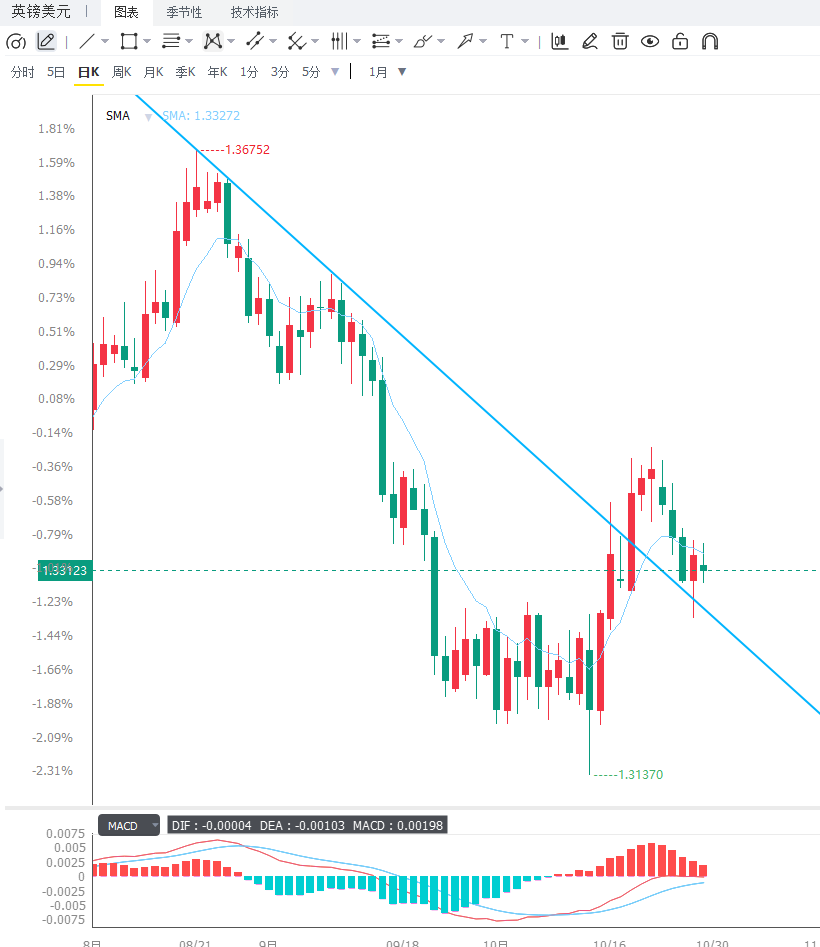 Editor's Summary: The core contradiction for the GBP/USD exchange rate in the short term lies in the downward pressure exerted by the Fed's hawkish rhetoric and year-end rate hike expectations, while the Bank of England's tightening expectations provide bottom support. This two-way dynamic makes the exchange rate more likely to consolidate within the 1.3311-1.3352 range, awaiting a breakthrough in the US Q3 GDP and September PCE data. Three key variables need to be monitored: first, the upcoming release of the US Q3 GDP preliminary estimate and the September core PCE price index; the strength or weakness of these data will directly verify the Fed's assertion that "monetary medicine is working" and determine the year-end path; second, the Bank of England's November interest rate decision and statement, which is the primary policy basis for judging whether the pound can shift from a passive to an active stance; and third, whether the exchange rate can hold the 38.2% Fibonacci retracement level of 1.3311 and the 100-period SMA, which is the primary technical basis for judging whether the bullish momentum continues.
From the perspective of the pound sterling, the core contradiction lies in the tug-of-war between "expectations of tightening by the Bank of England" and "the pressure from a strong dollar." Expectations of a Bank of England rate hike have provided a floor for the pound, and the market has largely priced in a November rate hike. However, this positive factor has been partially priced in, making it difficult to push the exchange rate significantly higher against the backdrop of a strong dollar. It's worth noting that the exchange rate found support and rebounded in the 1.3270-1.3275 area the previous day, but lacked follow-through buying after reaching the 1.3330-1.3350 range, indicating insufficient bullish confidence. This pattern of "support below and resistance above" essentially reflects the equilibrium of the US-UK interest rate differential expectations: the hawkish stance of the Federal Reserve and the hawkish stance of the Bank of England create a hedge, making the exchange rate more likely to fluctuate within a range rather than exhibit a trend. In a horizontal comparison, the pound's current situation differs significantly from that of the euro and the yen. The euro is constrained by both energy costs and the ECB's indecisiveness, while the yen is passively pressured by safe-haven outflows and reliance on intervention. The pound is relatively in the middle – benefiting from expectations of tightening from the Bank of England but constrained by the overall strength of the dollar. This means the pound is relatively independent, its movements depending more on the comparison of data and policy pace between the US and UK, rather than simply following the dollar or safe-haven sentiment. From a cross-asset perspective, the current volatility of the pound is essentially a combination of three factors: first, the valuation ceiling created by the high probability of a Fed rate hike at the end of the year; second, the bottom support provided by the Bank of England's wait-and-see approach and tightening expectations before the November decision; and third, the allocation of safe-haven funds between the dollar and the pound due to the situation in the Middle East. On the 4-hour chart, the pound/dollar pair is trading around 1.3300, with an overall mildly bullish bias. The exchange rate is trading above the 100-period SMA and has stabilized near the 38.2% Fibonacci retracement level of approximately 1.3311, indicating buying interest on dips in the near term. This is a typical "bullish trend, consolidation before breakout" pattern. Resistance levels to watch are the 23.6% Fibonacci retracement level at approximately 1.3352, 1.3380, and the period high at approximately 1.3417. Support levels to watch are first the 38.2% Fibonacci retracement level at approximately 1.3311, followed by the 50.0% retracement level at approximately 1.3278. A deeper pullback would test the structural support zone around 1.3246 and even 1.3199, with the 1.3140 area serving as a medium-term bottom reference. On the daily chart, the exchange rate rebounded after touching 1.3270 the previous day, indicating strong buying pressure in the area, but the rebound was limited. The RSI (14) was around 50 in the neutral zone, suggesting that the forces of bulls and bears were balanced, and a directional breakout would require data catalysts. Editor's Summary: The core contradiction for the GBP/USD exchange rate in the short term lies in the downward pressure exerted by the Fed's hawkish rhetoric and year-end rate hike expectations, while the Bank of England's tightening expectations provide bottom support. This two-way dynamic makes the exchange rate more likely to consolidate within the 1.3311-1.3352 range, awaiting a breakthrough in the US Q3 GDP and September PCE data. Three key variables need to be monitored: first, the upcoming release of the US Q3 GDP preliminary estimate and the September core PCE price index; the strength or weakness of these data will directly verify the Fed's assertion that "monetary medicine is working" and determine the year-end path; second, the Bank of England's November interest rate decision and statement, which is the primary policy basis for judging whether the pound can shift from a passive to an active stance; and third, whether the exchange rate can hold the 38.2% Fibonacci retracement level of 1.3311 and the 100-period SMA, which is the primary technical basis for judging whether the bullish momentum continues.
- Risk Warning and Disclaimer
- The market involves risk, and trading may not be suitable for all investors. This article is for reference only and does not constitute personal investment advice, nor does it take into account certain users’ specific investment objectives, financial situation, or other needs. Any investment decisions made based on this information are at your own risk.