Europe will release 42 million barrels of oil.
2026-10-30 02:24:23
On Thursday (October 29), French Economy Minister Roland Lescull said that in order to lower fuel prices before winter, Europe will release 42 million barrels of emergency oil reserves over the next three months, half of which will be diesel. 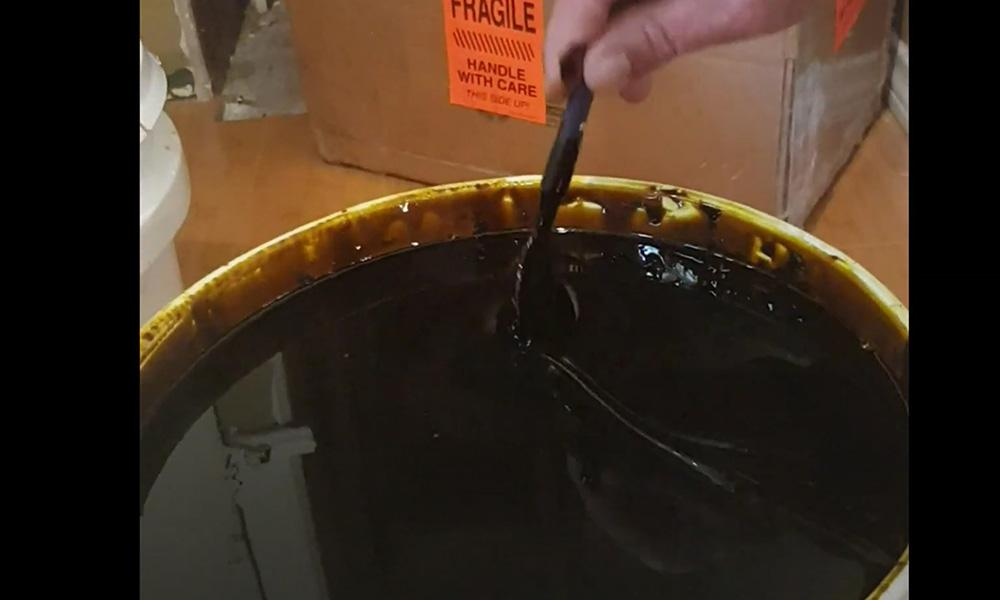 France's share includes 10 million barrels of diesel. Lescuer stated that this fuel will begin entering the market in the coming days, supplied at cost price, and is expected to lower diesel prices by 12 to 18 euro cents per barrel, with the price reaction expected as early as next week. This is also the first time France has released strategic reserves specifically to lower oil prices (confirmed by an advisor to the Ministry of Economy). Distributors are encouraged to advertise price reductions as early as November 1st, and small distributors in remote areas can also obtain interest-free loans. This batch of 10 million barrels of diesel represents about one-fifth of France's total strategic diesel reserves—the entire reserve was designed to guarantee three months of diesel consumption nationwide; the government's final decision not to replenish the reserves after release means exchanging a quarter's energy security buffer for three months of price respite. Overall, this European reserve release is equivalent to approximately 460,000 barrels per day over three months, of which approximately 230,000 barrels per day are diesel. This is part of the G7's October agreement to release up to 100 million barrels of crude oil and fuel reserves over four months, included in the 400 million barrel emergency release coordinated by the International Energy Agency (IEA), rather than an additional round of reserve releases. The IEA Governing Council stated on October 15 that it would accelerate the release of remaining reserves, including releasing over 20 million barrels of diesel as soon as possible; some member countries have already released more than the 400 million barrels pledged in March. European diesel consumption exceeds its refining capacity, while damage to Middle Eastern refineries and Russian export restrictions have further drained the already record-high diesel market. In September, European diesel futures prices briefly exceeded $200 per barrel. IEA estimates that Middle Eastern refined petroleum product exports are currently less than half of pre-war levels, with a shortfall of approximately 600,000 barrels per day for diesel alone. Coupled with Russia's July diesel export ban and ongoing attacks on refineries, Russian diesel exports have plummeted from the usual 700,000-900,000 barrels per day to 100,000-200,000 barrels per day, resulting in a combined shortfall of millions of barrels. The release of 230,000 barrels per day from reserves is only marginally supplementary. Diesel crack spreads have surged from $20-40 per barrel before the conflict to around $100 in October; Brent crude fluctuated around $110 this week (closing at $111.64 per barrel on October 28, and WTI at $102.78 per barrel), with year-on-year increases still exceeding 70%. Increased Persian Gulf crude oil shipments have not led to a corresponding rebound in refined petroleum product exports. On the diplomatic front, Macron toured five Gulf states, reaching agreements with Saudi Arabia, Kuwait, the UAE, and Bahrain for an additional 300,000 tons of diesel per month, equivalent to about one-sixth of France's monthly diesel consumption. Simultaneously, France is pushing for a multilateral arrangement to lower insurance costs for ships transiting the Strait of Hormuz—a strait under Iranian blockade since the US-Israel strikes earlier this year. European policymakers are also re-evaluating their refining strategy—which for the past two decades has largely involved shutting down refineries. EU Energy Commissioner Dan Jorgensen called the shutdowns a mistake on Wednesday, and EU energy ministers met in Luxembourg the following day. One proposal was to relax technical requirements to allow operating refineries to increase production. This release of reserves comes after months of unusually large inventory depletion. In early October, industry analysts pointed out that global oil inventories had reached a point where any further major supply disruptions could drive oil prices significantly higher. Analysts generally believe that emergency reserves can only "buy time" and cannot solve the supply problem: even if direct supply disruptions are alleviated, the tight balance of refined oil products is likely to continue until mid-2027; moreover, subsequent restocking by various countries will inversely boost crude oil demand—the US strategic petroleum reserve has fallen to 282.7 million barrels, the lowest since 1982. Europe's emergency reserves can immediately release diesel into the market, but domestic refining capacity is still insufficient to meet demand, leaving the entire continent continuously dependent on imported fuel. High energy prices have played a key role in the political context of this round of reserve releases—fuel shortages and soaring living costs are igniting protests across Europe. French government data shows that 11% of gas stations nationwide are short of at least one type of fuel, and 677 gas stations are completely out of stock (a 21% increase compared to the previous period); hundreds of thousands of people took to the streets on October 17, a curfew was imposed on Place de la République in Paris on the night of October 21, and 135 people were arrested on October 24 alone. Meanwhile, the yield on French 10-year government bonds hit 5.14% on October 22, the highest since July 2002, widening the spread with German bonds to approximately 175 basis points, the widest since the 2011 European debt crisis—market concerns are focused on the budget rather than diesel. The situation for natural gas is similarly bleak: European wholesale gas prices briefly touched €100 per megawatt-hour this week, the first time since December 2022, and the EU's gas storage rate is 75%, lower than the 83% at the same time last year.
- Risk Warning and Disclaimer
- The market involves risk, and trading may not be suitable for all investors. This article is for reference only and does not constitute personal investment advice, nor does it take into account certain users’ specific investment objectives, financial situation, or other needs. Any investment decisions made based on this information are at your own risk.