Geopolitical risks push up oil prices, while liquidity pressures continue to suppress gold prices.
2026-10-30 18:18:25
On Friday (Asian and European sessions), spot gold experienced a sharp drop followed by a slight rebound, but overall continued its downward trend. The traditional safe-haven and inflation-hedging logic was temporarily overwhelmed by the selling pressure from the Fed's hawkish expectations and market deleveraging. The focus remains on the situation in the Middle East; without a de-escalation of the situation, gold prices are unlikely to see significant movement. 
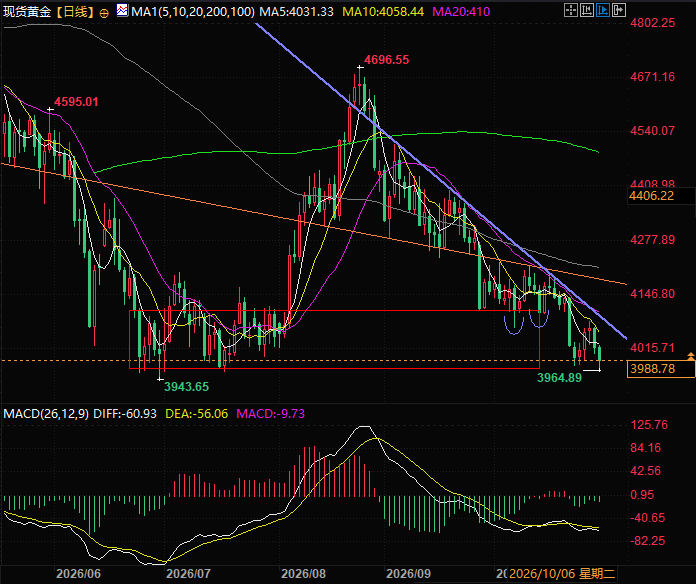 (Spot gold daily chart, source: EasyTrade) At 18:15 Beijing time, spot gold is currently trading at $3984 per ounce.
Geopolitical tensions continue to escalate, with high oil prices and rising aviation costs remaining the main drivers of the market.
The current market focus remains on the escalating geopolitical conflict, which is driving up oil prices and increasing air travel costs, leading to a surge in cost pressures for downstream enterprises. The US is simultaneously pressuring Iran while pursuing diplomatic mediation, with Qatari mediators traveling to Tehran to push for US-Iran negotiations. The US is prioritizing the nuclear issue while acknowledging Iran's sovereignty and economic reconstruction demands. However, the US military is also continuously supplying air defense munitions to its Middle Eastern bases, raising high expectations of a post-election strike against Iran. During the same period, the conflict between Saudi Arabia and the Houthis escalated again, with both sides launching missile and airstrikes. Riyadh has been repeatedly attacked by ballistic missiles. Even though Persian Gulf shipping has maintained export resilience through rerouting, the market is beginning to worry that damage to core oil and gas infrastructure will not be enough to fill the supply gap. The Russia-Ukraine conflict is also characterized by a mix of peace talks and military strikes. Ukraine has expressed a willingness to engage in direct consultations, but Russia continues to attack energy and port facilities. Ukraine's temporary suspension of attacks on Russian refineries is merely a tactical concession before the election, and the energy risks have not been eliminated. Overall, easing news and new risks alternated, and the geopolitical risk premium was difficult to clear quickly. Oil prices remained strong amid repeated fluctuations, continuing to suppress most risky assets such as precious metals and equities.Equity markets are under pressure, and gold is experiencing a "safe-haven asset paradox," being sold off to replenish margin.
Global equity markets continued their correction, impacted by high oil prices and inflation expectations. Amid leverage pressures and margin calls on equity portfolios, gold, with its ample liquidity and ease of conversion to cash, became the preferred target for institutional selling to recoup funds and replenish margin. The traditional safe-haven logic temporarily gave way to liquidity needs. Simultaneously, the liquidity shortage resulting from the global equity market decline also affected gold, causing its price to weaken in tandem.The Fed's hawkish signals have been implemented, and the collective wait-and-see attitude of central banks suggests an unwillingness to tighten monetary policy.
On the monetary policy front, the Federal Reserve maintained interest rates at 3.75%-4.00% as expected in October. However, two dissenting votes emerged on the FOMC supporting an immediate 25 basis point rate hike, while forward guidance was completely eliminated. Coupled with stronger-than-expected US GDP and core inflation data, the CME Group's FedWatch tool indicated a 75% probability of a December rate hike. Warsh's reforms, aimed at reducing the frequency of Fed communication and shortening the interest rate decision window, essentially amplified policy uncertainty. Theoretically, Treasury yields should have risen to compensate for the policy risk premium, but instead, they have fallen. However, current high oil prices suppressing equities and a passive tightening of global liquidity have led to safe-haven buying into US Treasuries, coupled with a slight decline in expectations for a December Fed rate hike, causing US Treasury yields to fall. Furthermore, because the reasons for this decline are similar to those for gold price drops, both gold and US Treasury yields have fallen. Looking overseas, the Bank of Japan has postponed rate hikes despite rising inflation and falling unemployment, and the European Central Bank is also maintaining a wait-and-see approach. Major central banks are generally wary of further damaging the already fragile real economy with continued rate hikes. The market implicitly believes that as long as geopolitical conflicts in the Middle East and oil price pressures ease temporarily, central banks will have room to restart quantitative easing.Summary and Technical Analysis:
The key focus going forward will be on three main threads: whether the situations between the US and Iran, Saudi Arabia and the Houthis, and Russia and Ukraine can see substantial easing; and the pullback in oil prices from their highs, which will directly influence the strength of inflation expectations. US CPI, core PCE, and employment data will validate the judgments of hawkish Fed members and influence market pricing in a December rate hike. Simultaneously, we will continue to monitor US Treasury yields and the dollar's performance, paying attention to whether the deleveraging trend of "selling gold to replenish margin" is receding. Short-term interest rate and liquidity pressures are dominant, and gold is in a weak bottom-seeking pattern. Only when geopolitical tensions ease and rate hike expectations are disproven can gold potentially shift back to its inflation hedging role. Technically, spot gold has found support at the bottom of its trading range; close observation of the price consolidation is crucial to assessing its future strength. (Spot gold daily chart, source: EasyTrade) At 18:15 Beijing time, spot gold is currently trading at $3984 per ounce.
- Risk Warning and Disclaimer
- The market involves risk, and trading may not be suitable for all investors. This article is for reference only and does not constitute personal investment advice, nor does it take into account certain users’ specific investment objectives, financial situation, or other needs. Any investment decisions made based on this information are at your own risk.