Falling oil prices pressured the Canadian dollar, and the USD/CAD pair continued to fluctuate at low levels.
2026-11-03 14:24:26
On Tuesday during Asian trading hours, the USD/CAD pair ended its slight upward trend from the previous day, with the price retreating slightly and fluctuating around 1.3990. As the largest exporter of crude oil to the United States, Canada's currency is highly correlated with the energy market. After a sharp drop of nearly 7% in the previous trading day, WTI crude oil rebounded, rising to $95.80 per barrel. This recovery in oil prices provided direct support for the Canadian dollar, putting downward pressure on the USD/CAD pair. 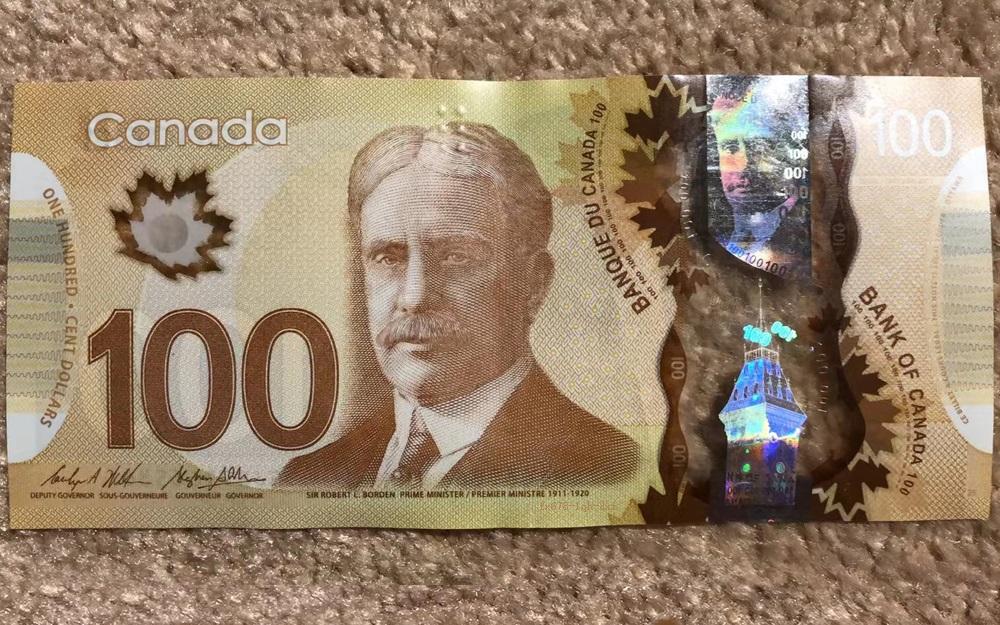 However, geopolitical tensions continue to limit further upside potential for crude oil. Iran confirmed that indirect negotiations between the US and Iran aimed at ending the eight-month conflict are still progressing. After multiple rounds of consultations between Iranian officials and Qatari mediators, a revised proposal has been drafted, but no key breakthrough has been achieved. Iranian Foreign Minister Araqchi stated that communication among all parties remains intensive, and Iran has presented its conditions; further progress depends on the political decisions of the US. The US President previously stated that there would be no military action against Iran before the midterm elections, and diplomatic expectations continue to influence the risk premium for crude oil. Domestic political developments in the US also affect the overall macroeconomic environment. With the midterm elections underway, high energy prices are putting considerable pressure on the Trump administration and the Republican Party. Polls show that the Democrats are likely to win the House of Representatives, while the Senate race is fierce. The uncertainty surrounding the policy outlook brought about by the elections has spurred some safe-haven buying, limiting the downside potential of the USD/CAD exchange rate to some extent. Market concerns about inflation and fiscal deficits have resurfaced, with CME Group showing that the probability of a Fed rate hike in December has fallen to 73%, down from 80% a week ago. Brown Brothers Harriman analysis points out that although US inflation improvement has stalled, Federal Reserve Chairman Warsh's cautious policy stance, coupled with market concerns about a slowdown in AI investment, has dampened US growth expectations. Short-term US Treasury yields have weakened in tandem with the dollar, further pressuring the USD/CAD pair. Trade concerns are not the primary driver; oil prices, US-Iran geopolitical tensions, the US midterm elections, and Fed rate expectations are all contributing to the downward pressure on this commodity currency pair. On the daily chart, USD/CAD maintains a short-term bearish bias, with the price trading below the 100-day simple moving average at 1.4047, currently near the 61.8% Fibonacci retracement level at 1.3969. The 50.0% Fibonacci retracement at 1.4033 and the 100-day moving average form a dense resistance zone, making any price rebound vulnerable to selling pressure. The RSI indicator is in neutral territory, indicating that bearish momentum has not yet fully dissipated, and a short-term technical correction is possible. Key resistance levels on the daily chart are 1.4047, 1.4096, and 1.4175. Initial support lies at the 78.6% Fibonacci retracement level of 1.3878, with deeper support at the recent swing low of 1.3763. A break above 1.4047 would reverse the short-term bearish trend; a break below 1.3878 would likely extend the downtrend. On the 4-hour chart, prices are trending downwards, with the moving average system acting as resistance. Indicators are not yet oversold, suggesting further downside potential. Short-term price action is seen within the 1.3960-1.3990 range, with significant resistance at 1.4033-1.4047. A rebound to this range is likely to be met with further downward pressure. The first support level to test is 1.3878; a break below this level would likely lead to a drop to 1.3763. The market is highly dependent on crude oil price fluctuations and US events; a range-bound trading strategy is recommended until key levels are broken.
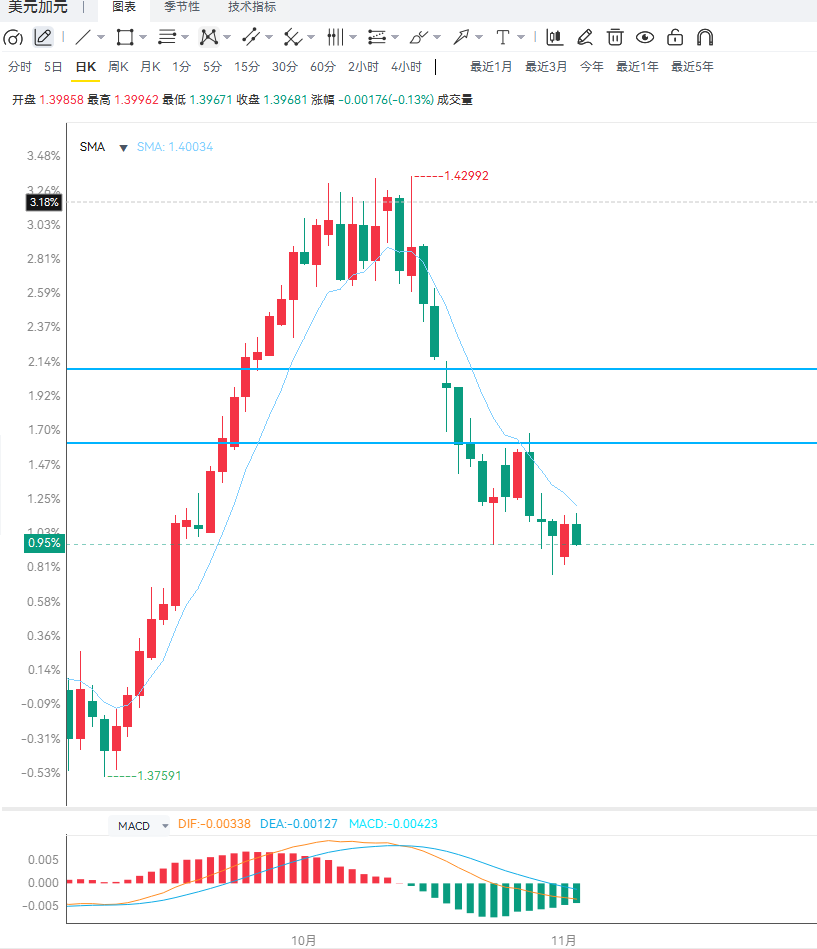 Editor's Summary: The USD/CAD pair is currently caught in a tug-of-war between the Canadian dollar's strength due to the rebound in oil prices and the safe-haven demand supporting the US dollar from the US election. Fluctuations in oil prices directly impact the exchange rate, while any progress in US-Iran negotiations will simultaneously alter the energy risk premium and the demand for the US dollar as a safe haven. Short-term risks include another sharp drop in oil prices, pushing the exchange rate upward to test resistance; potential opportunities lie in continued strength in oil prices coupled with a continued cooling of expectations for a Fed rate hike, causing the USD/CAD pair to test support. Blindly chasing highs and lows is not advisable. Focus on monitoring oil prices and the US midterm election results, and wait for a valid breakout from the 1.3878-1.4047 range before making any moves. Be aware of the risk of rapid jumps and falls driven by event-driven factors.
However, geopolitical tensions continue to limit further upside potential for crude oil. Iran confirmed that indirect negotiations between the US and Iran aimed at ending the eight-month conflict are still progressing. After multiple rounds of consultations between Iranian officials and Qatari mediators, a revised proposal has been drafted, but no key breakthrough has been achieved. Iranian Foreign Minister Araqchi stated that communication among all parties remains intensive, and Iran has presented its conditions; further progress depends on the political decisions of the US. The US President previously stated that there would be no military action against Iran before the midterm elections, and diplomatic expectations continue to influence the risk premium for crude oil. Domestic political developments in the US also affect the overall macroeconomic environment. With the midterm elections underway, high energy prices are putting considerable pressure on the Trump administration and the Republican Party. Polls show that the Democrats are likely to win the House of Representatives, while the Senate race is fierce. The uncertainty surrounding the policy outlook brought about by the elections has spurred some safe-haven buying, limiting the downside potential of the USD/CAD exchange rate to some extent. Market concerns about inflation and fiscal deficits have resurfaced, with CME Group showing that the probability of a Fed rate hike in December has fallen to 73%, down from 80% a week ago. Brown Brothers Harriman analysis points out that although US inflation improvement has stalled, Federal Reserve Chairman Warsh's cautious policy stance, coupled with market concerns about a slowdown in AI investment, has dampened US growth expectations. Short-term US Treasury yields have weakened in tandem with the dollar, further pressuring the USD/CAD pair. Trade concerns are not the primary driver; oil prices, US-Iran geopolitical tensions, the US midterm elections, and Fed rate expectations are all contributing to the downward pressure on this commodity currency pair. On the daily chart, USD/CAD maintains a short-term bearish bias, with the price trading below the 100-day simple moving average at 1.4047, currently near the 61.8% Fibonacci retracement level at 1.3969. The 50.0% Fibonacci retracement at 1.4033 and the 100-day moving average form a dense resistance zone, making any price rebound vulnerable to selling pressure. The RSI indicator is in neutral territory, indicating that bearish momentum has not yet fully dissipated, and a short-term technical correction is possible. Key resistance levels on the daily chart are 1.4047, 1.4096, and 1.4175. Initial support lies at the 78.6% Fibonacci retracement level of 1.3878, with deeper support at the recent swing low of 1.3763. A break above 1.4047 would reverse the short-term bearish trend; a break below 1.3878 would likely extend the downtrend. On the 4-hour chart, prices are trending downwards, with the moving average system acting as resistance. Indicators are not yet oversold, suggesting further downside potential. Short-term price action is seen within the 1.3960-1.3990 range, with significant resistance at 1.4033-1.4047. A rebound to this range is likely to be met with further downward pressure. The first support level to test is 1.3878; a break below this level would likely lead to a drop to 1.3763. The market is highly dependent on crude oil price fluctuations and US events; a range-bound trading strategy is recommended until key levels are broken. Editor's Summary: The USD/CAD pair is currently caught in a tug-of-war between the Canadian dollar's strength due to the rebound in oil prices and the safe-haven demand supporting the US dollar from the US election. Fluctuations in oil prices directly impact the exchange rate, while any progress in US-Iran negotiations will simultaneously alter the energy risk premium and the demand for the US dollar as a safe haven. Short-term risks include another sharp drop in oil prices, pushing the exchange rate upward to test resistance; potential opportunities lie in continued strength in oil prices coupled with a continued cooling of expectations for a Fed rate hike, causing the USD/CAD pair to test support. Blindly chasing highs and lows is not advisable. Focus on monitoring oil prices and the US midterm election results, and wait for a valid breakout from the 1.3878-1.4047 range before making any moves. Be aware of the risk of rapid jumps and falls driven by event-driven factors.
- Risk Warning and Disclaimer
- The market involves risk, and trading may not be suitable for all investors. This article is for reference only and does not constitute personal investment advice, nor does it take into account certain users’ specific investment objectives, financial situation, or other needs. Any investment decisions made based on this information are at your own risk.