Why did the Australian dollar fall after the Reserve Bank of Australia raised interest rates to 4.85%?
2026-11-03 19:10:27
On Tuesday, November 3rd, the Reserve Bank of Australia's Monetary Policy Committee voted 6-3 to raise the cash rate target by 25 basis points to 4.85%, the highest level since 2008, marking the fifth rate hike until 2026. The Australian dollar is currently down about 0.3% against the US dollar, trading around 0.6970, reflecting that the market has fully priced in this action and interpreted the cautious wording in the statement. Australian inflation remains significantly above the 2%-3% target range, with the latest forecasts indicating a return to the upper limit of the target will be delayed until around the end of 2027. This is partly due to rising fuel and commodity prices caused by conflicts in the Middle East, while domestic production pressures and AI-related investments are driving rapid increases in technology product prices. The economic growth outlook has been simultaneously downgraded, housing prices have fallen significantly, and the unemployment rate has risen, raising the threshold for further tightening within the committee. 
Inflation-driven factors and expectation adjustments in interest rate hike decisions
The Reserve Bank of Australia (RBA) stated that inflation remains high and broad, and the latest staff forecasts have been substantially revised upwards on the inflation outlook. Key reasons include rising fuel and other commodity prices due to conflicts in the Middle East, and slightly higher-than-expected domestic production pressures. Business contacts indicate continued cost pressures, with many businesses having already raised or planning to raise prices. AI-related investments are driving rapid growth in technology goods prices, further pushing up price levels. Current forecasts indicate that inflation will remain high for most of 2027, possibly reaching the upper end of the target range only by the end of 2027, approximately three quarters later than previously projected. Recent increases in some survey-based inflation expectations indicators have increased the risk of embedded expectations. The Committee emphasized that the multiple rate hikes since the beginning of the year have tightened financial conditions, but given the upward revision of the inflation path and the continued presence of upside risks, it judges that further tightening is still necessary to support a return to the inflation target.Economic slowdown and internal caution signals
The decision also acknowledged the economic slowdown, significant declines in home prices, and rising unemployment. Forecasts indicate that output growth will slow further over the next year, which will help alleviate capacity pressures and assist inflation in receding. Higher interest rates and declining home prices and sales volumes are expected to drag down residential investment and private consumption next year. In contrast, near-term growth in business investment is expected to be stronger, including data center-related investments. The unemployment rate is expected to continue rising, and by a greater magnitude than previously anticipated. While employment will still grow, the labor market will be more accommodative. The committee voted 6-3 to raise interest rates, with three members advocating for maintaining the rate at 4.60%, highlighting internal concerns about downside risks to the economy, particularly the weak home market and rising unemployment. The statement removed the previous explicit statement about "further rate hikes if necessary," which the market interpreted as a significant increase in the threshold for further rate increases.Impact of external interest rate expectations on the path of the Australian dollar
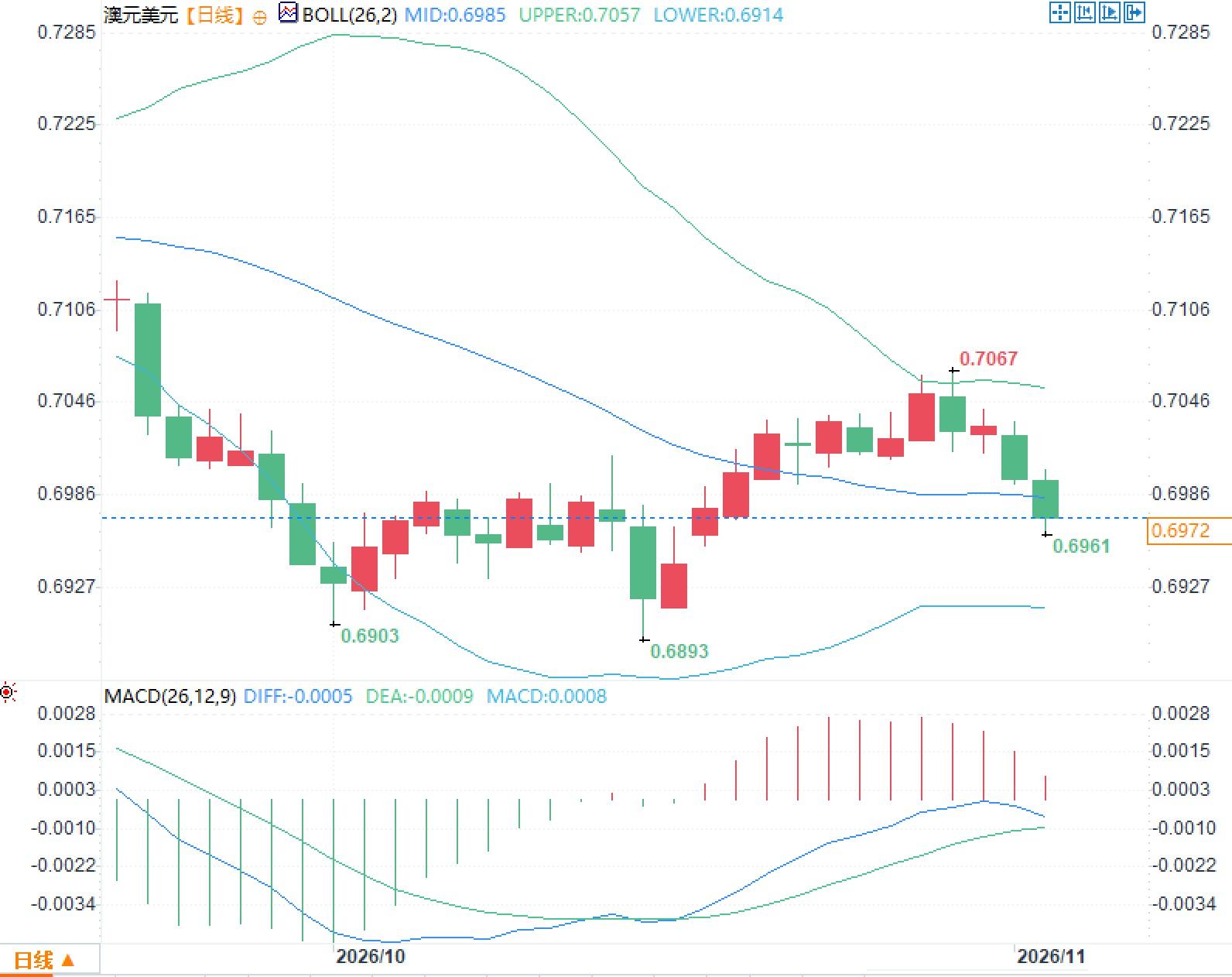
Commerzbank analysts point out that although the rate hike pushed the policy rate to 4.85%, the Australian dollar failed to find support because it was already fully priced in by the market and survey consensus, and the AUD/USD pair fell in the short term after the decision. They believe that economic growth and labor market forecasts have softened, and inflation is partly driven by external fuel shocks; therefore, they do not expect further rate hikes from the Reserve Bank of Australia. The future performance of the Australian dollar will mainly depend on the evolution of interest rate expectations from the Federal Reserve and the European Central Bank. If the market over-prices further tightening in other major economies, and the actual path is relatively mild, it may provide relative support for the Australian dollar. Currently, the AUD/USD daily chart shows the price trading near the middle Bollinger Band, located at 0.6985, with the upper band at 0.7057 and the lower band at 0.6914. The MACD indicator shows the DIFF and DEA near the zero line, and the histogram bars, after turning positive, are showing signs of decline, reflecting recent converging volatility.Frequently Asked Questions
Question 1: Why did the Australian dollar fall against the US dollar after the interest rate hike? Answer: The market and survey consensus had already fully priced in a 25 basis point rate hike to 4.85%. The removal of further rate hike statements in the statement, accompanied by a split vote of 6 to 3, indicated internal caution, leading the market to reassess the subsequent path, putting pressure on the Australian dollar by approximately 0.3%. Question 2: Why has the return of Australian inflation to the target been delayed? Answer: The latest forecasts indicate that inflation may not reach the upper limit of the target until the end of 2027, mainly due to the conflict in the Middle East pushing up fuel and commodity prices, and domestic production capacity pressures and AI-related investment driving up technology product prices, increasing the risk of embedded risks. Question 3: What does the revised economic growth outlook mean for policy? Answer: Output growth has been revised down to 1.3% by the end of 2027. Falling house prices and rising unemployment indicate an economic slowdown. The Reserve Bank of Australia (RBA) judges that higher interest rates will further suppress residential investment and consumption, thus raising the threshold for further rate hikes.- Risk Warning and Disclaimer
- The market involves risk, and trading may not be suitable for all investors. This article is for reference only and does not constitute personal investment advice, nor does it take into account certain users’ specific investment objectives, financial situation, or other needs. Any investment decisions made based on this information are at your own risk.